I've built signs for everything from a strip-mall pizza joint to a 2,000-seat megachurch with a budget that could buy a small house. And here's what nobody tells you about church signs: most churches waste money. Big time. They buy from a local fabricator who charges $800 for a front-lit stainless letter when the exact same letter, same Samsung LEDs, same 304 steel, ships from our factory for $120. That's not a discount. That's daylight robbery.
The ugly truth is that too many church boards get sold on "certified" or "American-made" labels without checking the fine print. I've watched a church pay $15,000 for a sign that would have cost $5,000 from our floor in Lu'an — and we still gave them a 2-year LED warranty and a 1-year power supply warranty. They got less for more.
I see churches every day that picked a sign based on price alone. Then the acrylic yellows in two years and the paint peels off by year three. Don't be those guys.
Here's the real data. For the acrylic face, you've got two choices: Mitsubishi or Degussa UV-resistant stuff — 90-92% light transmittance, lasts 5-8 years outside before yellowing. Or you go with cheap domestic acrylic, which starts looking like a nicotine-stained fingernail after 12-18 months. The price difference? About 40% more for the good stuff. Worth every penny. And if your sign is over 2.5 meters wide, you need 5mm acrylic minimum. Nobody tells you that until it starts bowing in the sun.
For the metal, stainless steel 304 is your default — 10-plus years outdoor life, 18% chromium, 8% nickel. Works in 90% of locations. But if your church is on the coast in Miami Beach or near an industrial plant with acid rain, step up to 316 stainless. It's got 2-3% molybdenum, resists pitting corrosion, and adds 20-30% to the material cost. I've seen 304 letters look like rusted junk in 3 years on the Gulf Coast. Don't learn that the expensive way.
Aluminum is lighter — one-third the weight of steel — and naturally rust-proof. It'll give you 8-12 years outdoors. Anodized or powder-coated finishes hold up well. But aluminum dents easier. If your sign sees parking lot bumps from delivery trucks or snow plows, stainless is the move.
Quickest way to spot bad LED modules: look at the solder joints. Dull gray means cheap lead-free solder that'll crack inside 18 months. Shiny silver means proper process — that'll hit L70 at 50,000 hours (about 5.7 years of 24/7 operation). Quality modules from Samsung or Osram will run 5-plus years in real-world conditions. Cheap stuff? You're replacing them in 12-18 months. I've got a bin in my shop full of failed modules from churches that tried to save $50.
Color temperature matters for churches too. Warm 3000-3500K feels cozy, works for hospitality-style lobbies. Neutral 4000-5000K is for corporate or retail — fine for a sign, but don't put it in the sanctuary. Cool 6000-6500K is for highway truck stops. If your church sign screams like a gas station, you've got the wrong LED.
For brightness, SMD 2835 gives 100-150 lumens per watt — that's the industry standard for channel letters. If you need RGB color-changing (some churches do holiday themes), use SMD 5050 modules. For raw punch — like a tall monument sign — SMD 5730 hits 40-60 lumens per chip, but runs hotter. Don't cram them into a tiny space without ventilation.
And please, stop asking about IP rating. IP65 means it's dust-tight and can handle water jets from any direction. That's the minimum for outdoor. But IP65 does NOT mean your sign survives a Florida hurricane with horizontal rain at 100 mph. For coastal or flood-prone areas, demand IP68 — submersible. It costs more, but you won't be replacing electronics every rainy season.
I've built signs that passed inspection and signs that got rejected the same day because the mounting height was wrong. Church boards always overlook this. Then they blame me.
For Americans, NEC Article 600 governs electric signs. That's the National Electrical Code — it dictates wiring, grounding, disconnect switches. If your sign isn't UL-listed, your local inspector might fail you. UL 48 certification costs $4,000-15,000 and takes 4-9 months with quarterly audits. ETL is a cheaper alternative (10-30% less), but some jurisdictions only accept UL. Ask before you order.
Don't forget CE marking if you're outside the US. I've seen factories print "CE" on a box without the real paperwork. Ask to see the certificate with today's date — watch them sweat. Genuine CE costs 20,000-50,000 RMB (roughly $2,800-7,000) and takes 2-8 weeks.
ADA rules apply to church signs if the building is open to the public (and they usually are). Tactile characters need Grade 2 Braille, non-glare finishes, and mounting height 48-60 inches to the baseline. Many churches put their sign at eye level for standing people — that's 60-66 inches — and fail ADA because they forgot wheelchair users. That's a lawsuit waiting to happen. And a $500 fine.
You've bought the sign. It's sitting in a crate from China. Now what?
The ugly truth is that LCL sea freight — that's less-than-container-load — gets handled 6-8 times between our dock and yours. Every lift is a chance for damage. That's not in the brochure. If you're ordering a fragile sign with thin acrylic, pay for air freight ($4-12/kg, about 10 days) or express ($30-100, 7-10 days) if the order is small. For big signs, sea freight ($80-200 per cubic meter, about 65 days) is fine — but over-pack. Foam, carton, then plywood crate. I tell every client: if you can't jump on the crate without it squishing, it's not packed enough.
And don't forget the Section 301 tariff on Chinese goods — about 30%. That's on top of your material cost. Factor that into your budget before you get sticker shock at customs.
Installation itself? Self-tapping screws into brick? Fine. Into concrete block? Use proper wedge anchors. I've seen a $3,000 sign fall off a wall because someone used drywall anchors. Don't be that guy.
about 5-15 days production if you approve the proof the same day. Longer if you keep changing your mind on font or color. Shipping adds 7 days by express, 10-20 by air, 50-70 by sea. Total time from "yes" to "on your wall" is usually 3-6 weeks. If someone promises two weeks door-to-door from China, they're lying or they're air freighting a $500 sign — good luck with that.
Yes. Our MOQ is one piece. But shipping a single small letter by air might cost more than the letter itself. Bundle with another church order or use express courier for $30-100. Don't complain when the freight bill is higher than the product.
2 years on the LEDs, 1 year on the power supply. That covers manufacturing defects. It does NOT cover you hitting the sign with a lawn mower or vandalism. And if you try to claim a warranty on cheap no-name modules you bought off Alibaba? We don't even argue — we just show you the solder joint photos. Get quality parts.
No. We ship to your door. You hire a local sign installer or electrician. We provide detailed installation drawings and a video guide if needed. Don't ask me to fly to Ohio to mount your sign. I've got 50 workers and a 3,000m² factory to run. Hire a local guy. He'll charge $75-150 an hour and it'll be done in a morning.
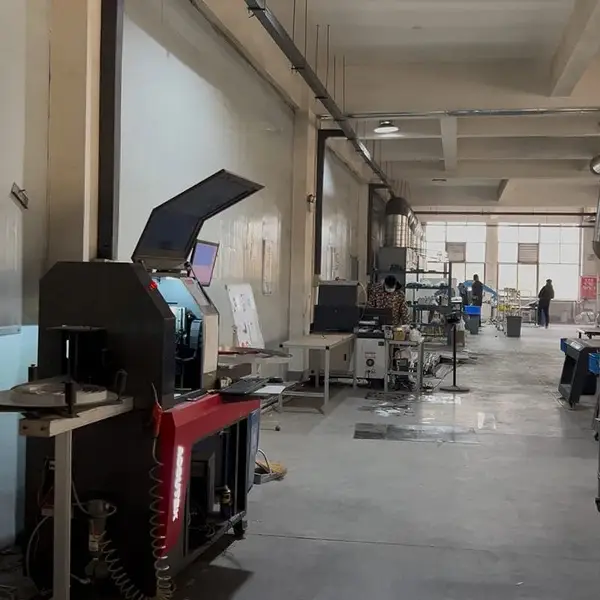
Real photo from our production floor — every sign we ship is made here.
Products mentioned or relevant to this topic — factory-direct, custom built.
From $24/letter · MOQ 1 piece · Flexible lead time · CE & UL certified · ships to 20+ countries
Custom sizes, colors, and finishes. Get a factory price in 24 hours.
Get a Free Quote Copy EmailWhatsApp +86 13865703472 · business@aochuangsign.cn
See pricing, specs, and get a free quote for the sign type you need. Built in our factory, shipped worldwide.