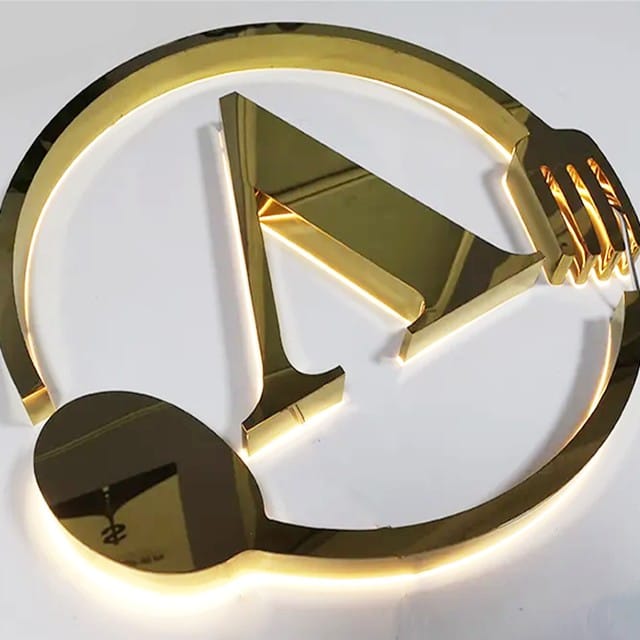
Look, if you're stuck between COB and SMD for illuminated signage, you're probably comparing a smooth light line against a row of individual dots. That's the visible difference. Everything else is heat, cost, and failure points.
SMD 2835 remains the default for most front-lit channel letters we build. It's not because COB is bad. It's because SMD gives you 100-150 lumens per watt, costs less, and replacements are simple.
COB gives you that clean no-dot line. You'll pay more for that look.
Here's what nobody tells you: SMD and COB are both LED packaging. The diodes themselves often come from the same wafer. The difference is how they're mounted and covered.
SMD 2835 means individual surface-mount diodes soldered onto a PCB, then coated in silicone. You can see the individual bright spots if the acrylic face is too close or too thin. At 100-150 lumens per watt, it's the industry standard for a reason. It's cheap, predictable, and every repair guy on earth knows how to swap a module.
COB means chip-on-board. Dozens of tiny dies sit directly on the substrate under one continuous phosphor strip. No individual LED housings. No dots. Just an even ribbon of light.
The ugly truth is COB looks better in shallow sign cans. But it's not automatically brighter. Brightness depends on diode quality and drive current, not just packaging.
I've seen this go wrong: a contractor ordered 150 meters of cheap COB for a restaurant chain, ran it at full brightness, and every strip started yellowing the acrylic within 14 months. Not because COB is bad. Because cheap COB runs hot, and heat kills phosphor faster than anything else.
SMD 2835 with quality modules from Samsung or Osram hits L70 ≥50,000 hours. That's five-plus years of real outdoor use before you lose 30% brightness. COB can match that, but only if the substrate and diffusion are engineered right. Most cheap COB strips are not.
If you want raw punch from a distance, high-output SMD 5730 chips deliver 40-60 lumens per chip. That's still the highest single-chip brightness we stock for large highway signs and industrial pylons.
If you want an even glow on a backlit halo sign where someone's standing six feet away, COB wins visually every time.
Factory prices don't lie. A standard front-lit channel letter runs $20-80 from us, depending on size and finish. A back-lit halo letter runs $35-120. That's with SMD modules.
Switch to COB and the LED cost per meter jumps 30-50% on average. Sometimes more if you need high-density COB for a shallow return. That doesn't sound like much until you're doing 40 letters for a shopping center. Then it's real money.
Here's the part most factories won't say: COB is often overkill for front-lit channel letters with a 100mm deep return. The diffuser does the work. SMD 2835 spaced correctly gives you a clean face at half the cost.
For backlit halo letters, the story changes. COB hides hotspots better, especially on returns under 80mm. I'd spec it there without blinking.
Look, a cheap SMD module dies in 12-18 months. A cheap COB strip dies in the same window. The packaging doesn't save you from garbage diodes.
Quality SMD modules last 5+ years real-world. We warranty our LEDs for 2 years, power supplies for 1 year, because we know what fails and when. I won't pretend COB lasts longer. It doesn't. It just looks different while it's alive.
The biggest failure point on COB is heat concentration under that continuous phosphor. If the PCB isn't thick enough or the installation doesn't allow airflow, you cook the strip from the inside out. SMD spreads heat across individual pads and gaps. COB doesn't get that breathing room.
That's why IP65 alone won't save you. IP65 means dust-tight and water-jet resistant. It doesn't mean the sign survives a Florida summer with no ventilation.
Use SMD 2835 for standard front-lit channel letters, light boxes, and anything with a diffuser face deeper than 80mm. Use SMD 5730 if you need maximum punch for highway signs. Use SMD 5050 if you need RGB capability.
I've watched sign shops pay $800 for a front-lit letter. Same 304 stainless, same Samsung LEDs. We ship that letter for $120. That's the factory-direct difference. SMD keeps that gap wide because the components are commodity-priced and every supplier stocks them.
For acrylic light boxes, SMD strips behind a 10mm or thicker acrylic face look perfectly even. Don't overthink it.
You want day-night visibility on a storefront? SMD dual-lit letters with a white acrylic face and clear polycarbonate backing do the job at a price your client won't fight you on.
COB earns its price on shallow returns. If your backlit halo letter return is 50mm or less, SMD dots will show as hot spots. COB won't. That's the whole argument.
It also earns its price on high-end architectural signs where the client walks up close. A bank lobby, a law firm, a hotel reception. Those buyers notice the difference between a glowing line and a string of dots. Charge them for it.
For neon flex signs, COB is replacing a lot of traditional neon because it gives that continuous tube look without glass or gas. It's not the same as real neon, but it's safer and easier to ship. I'll sell you that all day, as long as you understand it's not a 15-year product.
Most factories that say they sell COB are buying the same generic strips as everyone else. Ask who makes the diodes. If they can't name the chip brand, you're buying mystery silicone.
Here's the second ugly truth: some buyers ask for COB because a competitor quoted it, not because the job needs it. That's how you end up with a $12,000 sign order that looks identical to a $6,000 SMD order from ten feet away. Know your customer's viewing distance before you pick the LED.
We can build COB. We can build SMD. We can't make COB cheap and good at the same time, and neither can anyone else. If a supplier says they can, walk.
Ask for the exact LED module brand. Not "uses Samsung." Ask which series. Ask for the L70 rating in writing. Ask what happens if the strip fails at month 18.
Ask for a video of a test sign in direct sunlight, not a render. Ask for the power supply brand. A great LED on a garbage power supply dies fast. That's why we warranty power supplies separately and ship with Mean Well or equivalent unless you specify otherwise.
And for the love of your profit margin, don't order 5mm acrylic for a sign over 2.5 meters. That face will bow and crack. We use 5mm+ on anything that size, UV-resistant Mitsubishi or Degussa sheet when the job demands it. Domestic acrylic yellows in 1-2 years outdoors. Imported holds 5-8 years. Charge your client accordingly.
If your client wants a storefront sign that looks clean, ships fast, and doesn't blow the budget, SMD 2835 in a front-lit channel letter is still the smartest money in signage.
If they want a premium backlit look and they're paying for architectural detail, spec COB on the halo letters. Give them the smooth glow. Just don't let them believe it's brighter. It's not.
We ship both. We build both. We've argued with suppliers about both. And after 16 years on the floor, I'll tell you the same thing I tell every contractor who calls: the LED packaging matters less than the diode quality, the heat path, and the power supply you pair it with.
Get those three right. The rest is just dots or no dots.
Factory-direct since 2010. Free quote within 24 hours — no obligation.
Get a Free Quote → Copy EmailMOQ: 1 piece · Flexible lead time · 2-year warranty · Worldwide shipping
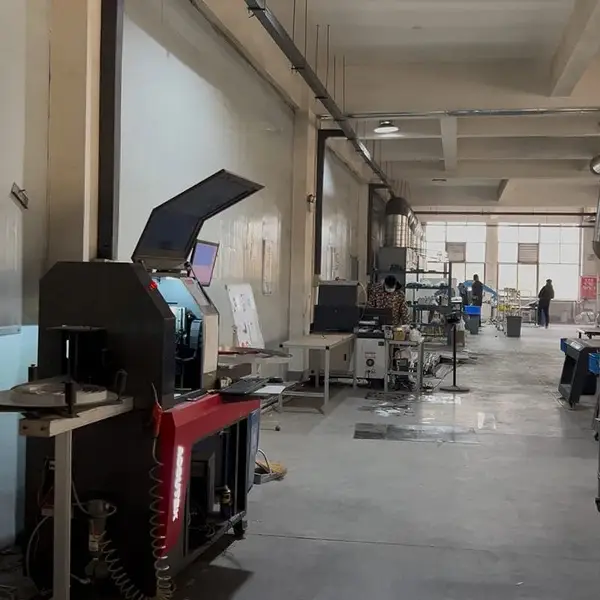
Real photo from our production floor — every sign we ship is made here.
See pricing, specs, and get a free quote for the sign type you need. Built in our factory, shipped worldwide.