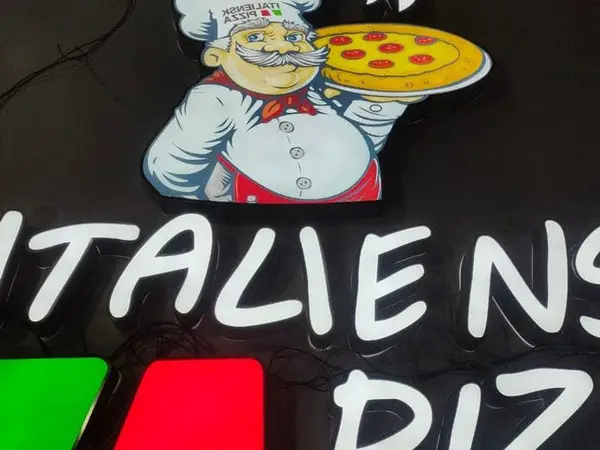
I've Been Watching Sign Owners Make This Mistake for Decades
Here's what nobody tells you: the sign you buy today will cost you twice as much in five years if you only look at the initial price tag. I've watched a boutique owner pay $4,500 for a set of
front-lit channel letters from a domestic shop, then spend another $1,200 on power supplies and LED modules before year three. Meanwhile, the dry cleaner down the street bought non-illuminated stainless letters for $600 and hasn't touched them since installation.
The ugly truth is that both approaches have hidden traps. And the answer isn't simple—it depends on where you are, what you're selling, and whether your landlord cares about nighttime visibility. But if you're a sign pro advising a client, you need the real numbers, not the brochure promises.
Upfront Costs: The Sticker Shock Nobody Accounts For
Let's start with what lands on the invoice. A factory-made front-lit
channel letter—say, 12 inches tall, 304 stainless steel face, 3mm acrylic with SMD 2835 LEDs—costs between $20 and $80 per letter from our shop in Lu'an. That's 50 to 65 percent below what a US fabricator will quote you. For a typical storefront sign with ten letters, that's $200 to $800 from us, versus $2,000 to $7,000 installed domestically.
But here's the catch: shipping adds $80 to $200 for sea freight (LCL), plus a 30 percent tariff under Section 301. Suddenly your $500 sign becomes $800 landed. Still a steal compared to $4,000, but you need to factor that in.
Non-illuminated
stainless steel letters come in at $15 to $40 per letter from the same factory. No LEDs, no power supplies, no wiring. Ten letters: $150 to $400. Shipping and tariff similar, maybe slightly less because they weigh about the same. So you're looking at $400 to $650 landed. Domestic? Triple that.
The rookie mistake? Thinking you can skip the tariff. You can't. Customs has your number.
Operating Costs: Where the LED Sign Earns Its Keep
Look, a non-illuminated sign costs zero to run. No electricity, no burned-out modules, no dimming after 50,000 hours. But that's only part of the story.
An LED sign running 12 hours a day draws about 30 watts for a standard front-lit letter set. At $0.12 per kWh, that's $13.14 per year. Over five years, $65.70. Negligible.
Here's what nobody tells you: the real operating cost isn't the electricity—it's the replacement schedule. Quality LED modules from Samsung or Osram (the ones we use) have an L70 rating of 50,000 hours. That's 11.4 years at 12 hours a day. Cheap modules—the ones your competitor bought from a guy on Alibaba—die in 12 to 18 months. Their sign goes dark, and the landlord calls.
The ugly truth is that I've walked into shops where the owner saved $30 on modules and spent $400 on a service call plus new modules within two years. Every time.
Maintenance and Replacement: The Five-Year Reality
For an LED sign, plan on one power supply replacement in five years. Our warranty covers the power supply for one year. A decent Mean Well unit costs $35 wholesale. Add an hour of labor and a ladder. Your cost: $90 if you do it yourself, $200 if you call a tech.
Non-illuminated stainless letters? Zero electrical maintenance. But they aren't zero-maintenance overall. If you used domestic acrylic (the cheap stuff that yellows in 1-2 years) instead of Mitsubishi or Degussa UV-resistant material (5-8 years), the face looks like old Tupperware by year three. My rule: pay for the good acrylic upfront. The 2% difference in light transmission between 2mm and 3mm is nothing compared to the 40% cost bump, but the UV resistance is everything.
In coastal areas, 304 stainless will show pitting by year five. I've seen it in Miami Beach storefronts. The customer saved 20 percent by not upgrading to 316, then paid 30 percent more for a replacement at year four. If you're near saltwater, spec 316 or you'll be replacing letters in 3 years. That's not me being dramatic—that's 16 years of rust.
Hidden Costs That Wreck Your Budget
I've seen this go wrong: A client orders a beautiful set of halo-lit letters from China, pays $600 for the sign and $150 for LCL sea freight. The crate gets handled six to eight times between our dock and theirs. One forklift driver sneezes, and the acrylic face cracks. Nobody's fault, but now the client pays $150 for a replacement face plus expedited shipping. Suddenly their "cheap" sign costs $900.
The fix? Ask for plywood crating instead of cardboard. We charge an extra $30. Worth every penny.
Another hidden cost: compliance. If a non-illuminated sign is going in a building with ADA requirements, it needs Grade 2 Braille and specific mounting heights. Fabricating an ADA-compliant
stainless steel sign adds $40 to $80 per letter for the tactile elements. Your quote won't show that until you ask.
The Final Tally: Which Sign Wins Over Five Years?
Let me lay out two scenarios.
Scenario A: A retail store in a midwestern strip mall. Open 8am to 9pm, six days a week. Wants visibility from the road. Front-lit channel letters with quality LEDs, 304 stainless, UV-resistant acrylic. Upfront: $800 landed + $200 installation (self-installed). Power over five years: $65. One power supply replacement: $90. Total five-year cost: $1,155. Sign still looks great at year five, LEDs at 60% brightness (still fine for nighttime visibility).
Scenario B: An office lobby in a suburban office park. Signage only needs to be read during daylight hours. Non-illuminated stainless letters, brushed #4 finish, 1.5mm thick, 304 grade. Upfront: $350 landed + $100 mounting hardware and adhesive. Zero power cost. Zero maintenance. Total five-year cost: $450.
Clear winner for the office: stainless. Clear winner for the retailer: LED, because a non-illuminated sign is invisible at night and costs them sales. I've done the math for a dozen clients, and the ROI on illuminated signs always beats non-illuminated when nighttime foot traffic matters.
But here's the kicker: if that retailer had bought cheap LED modules from an unknown supplier, their five-year cost jumps to $1,500 after two module replacements. Suddenly the stainless sign looks like the smarter play—except it doesn't work at night.
FAQ — Because I Still Get These Questions
Does LED really last five years without replacement?
Depends on the chips. Quality SMD 2835 modules from Samsung or the rebranded ones (like our factory uses) hit L70 at 50,000 hours. That's 11 years of 12-hour days. Cheap modules with dull-gray solder joints? 18 months, tops. Pop the lens cover and check the solder—if it's dull, it will fail. If it's shiny silver, you got good stuff.
Is stainless steel cheaper overall than illuminated?
In upfront and operating costs, yes. But only if you don't need lighting. A client who "saves" money on a non-illuminated sign for a nighttime business is actually losing revenue every month. Do the math on lost sales versus electricity costs. It's not even close.
What about coastal environments — should I just buy local to avoid corrosion?
No. I can ship you 316 stainless letters for the same price as domestic 304. The steel grade matters more than the distance. Specify 316, ask for PVD coating, and make sure the sealing is done with neutral silicone—not cheap acidic stuff that eats the metal. We've sent marine-grade signs to Singapore, Dubai, and the Bahamas. They outlast anything built down the street using 304.
How do I avoid getting burned on hidden tariffs and shipping damage?
Ask the factory for a complete landed-cost quote including tariff and insurance. We do this on every export order. For shipping, pay the extra $30 for plywood crating. And for God's sake, don't use LCL for fragile
acrylic signs unless you're okay with a 10-percent damage rate. Air freight is faster and gentler, but costs more per kilo. Your call.