Let me tell you something that'll save you ten grand your first year buying commercial signage: most of what you think you know about sign costs is wrong. I've been on the factory floor for 16 years, 14 of them at Aochuang Sign in Lu'an, China. I've watched sign shops pay $800 for a single front-lit letter from a domestic fabricator. Same 304 stainless, same Samsung LEDs. We ship that letter for $120. That's not a stunt. That's how the real world works when you stop paying for a middleman's boat payments.
But cheap without knowledge is just expensive in a different way. You can save 50-65% on the product itself, but if you pick the wrong material, skip the right certification, or let your crate get handled six times on an LCL shipment, that savings evaporates. I'm writing this because I'm tired of seeing buyers lose their shirts. This guide is the stuff I wish every client knew before they placed their first order.
Here's what nobody tells you: the retail price of commercial signage in the US includes a 300% markup from the factory door to your wall. The factory makes $120 on that front-lit letter. The distributor adds $80. The sign shop slaps on another $200 for "handling". The installer tacks on $150. By the time it's on the building, you're at $550. And that's before the 7% sales tax and the rush fee you paid because you waited too long.
The ugly truth is that factory-direct pricing for front-lit channel letters runs $20-80 per letter. Back-lit halo letters: $35-120. Solid stainless steel non-lit: $15-40. 3D fabricated: $40-120. Aluminum letters: $10-25. Those numbers come from our own price list at Aochuang – we've been doing this since 2010, exporting worldwide from our 3,000m² facility with 50+ workers. Lead time is about 5-15 days. MOQ? One piece. We'll build you a single letter if that's what you need.
But here's the killer people don't budget for: shipping. Express courier (7-10 days) for small sign packs runs $30-100. Air freight (about 10 days) is $4-12 per kilo. Sea freight – the popular choice for big orders – takes about 65 days and costs $80-200 per cubic meter for LCL. And LCL is where the headaches start. Your crate gets unloaded and reloaded six to eight times between our dock and yours. Every touch is a chance for a dent. I've seen pristine crates arrive with a forklift hole right through the face. That's not in the brochure.
Oh, and Section 301 tariffs add roughly 30% on top of your product cost if you're importing into the US. You can't avoid it, but you can factor it into your pricing. Don't be the guy who quotes a job at $120 per letter, then finds out he owes Uncle Sam another $36 per letter.
I've seen this go wrong more times than I can count: a buyer specifies "acrylic" without asking what grade. Domestic acrylic – the cheap stuff – starts yellowing in 12-18 months. You know what that does to a retail sign? Makes a $50,000 storefront look like a We Buy Houses sign. Mitsubishi or Degussa clear acrylic gives you 90-92% light transmittance and lasts 5-8 years outdoor before any noticeable yellowing. Cost difference is maybe 15%. You're a fool if you don't pay it.
Stainless steel? 304 has 18% chromium and 8% nickel, density 7.93g/cm³, and will last 10+ years outdoors in most environments. Common thickness is 1.0-3.0mm. For a strip mall in Ohio, 304 is fine. For Miami Beach – or any coastal area with salt spray – pay the 20-30% premium for 316 stainless. It contains 2-3% molybdenum which stops pitting corrosion cold. I've watched shop owners try to save $100 on a sign that sat 200 yards from the Atlantic. They're replacing those letters in three years. Don't be that guy.
Aluminum weighs one-third of steel, gives you 8-12 years outdoor life if properly anodized or powder coated. Naturally rust-proof. That's your sweet spot for large light boxes and channel letters where weight matters. We use 0.040-0.063 inch (1.0-1.6mm) on most jobs.
Now let's talk LEDs, because this is where most buyers get fleeced. Quickest way to spot bad LED modules: look at the solder joints. Dull gray = won't last 18 months. Shiny silver = proper lead-free solder that meets RoHS and actually holds up. Quality modules using Samsung or Osman chips – we use LJVision (BlueView) – give you L70 life over 50,000 hours. That's five-plus years real-world. Cheap modules off Alibaba will fail in 12-18 months. SMD 2835 chips deliver 100-150 lm/W – that's the industry standard for back-lit letters. SMD 5730 gives you 40-60 lm per chip for highest brightness in front-lit applications. Color temperature matters too: 3000-3500K warm for restaurants, 4000-5000K neutral for corporate, 6000-6500K cool for industrial. Don't mix them in the same sign or you'll see a rainbow of failure.
Look, CE marking costs 20,000-50,000 RMB and takes 2-8 weeks to get. Most factories will say they have it. Ask to see the certificate with today's date. Watch them sweat. Half the Chinese factories claiming CE are using a printer more than a testing lab. If you're exporting to Europe, CE is mandatory. But for the US market, UL is the real gatekeeper. UL 48 certification runs $4,000-15,000, takes 4-9 months, and requires quarterly audits. That's why most cheap import signs don't have it.
ETL is an acceptable alternative – 10-30% cheaper than UL and recognized by most US authorities. Don't let anyone tell you ETL is inferior. It's the same testing, just a different logo. The National Electrical Code (NEC Article 600) applies to all fixed electric signs in the US. If your sign doesn't have UL or ETL, many municipalities won't approve the permit. I've seen a $20,000 sign project stopped dead because the LEDs weren't UL listed.
IP ratings get misunderstood constantly. IP65 sounds impressive. It means dust-tight and protected against water jets from any direction. It does NOT mean your sign survives a Florida hurricane. That's IP66 or IP68. IP66 handles powerful jets and coastal salt spray. IP68 is submersible – you'd use that for pond signs or extreme weather zones. Real world: most outdoor commercial signs are fine with IP65 if they're under a canopy. But if the sign faces the ocean or gets direct monsoon rain, upgrade to IP66. Your client's insurance adjuster will thank you.
ADA compliance is specific: tactile signs must be mounted 48-60 inches above the floor, use non-glare finishes, and include Grade 2 Braille. That's not optional for any commercial building in the US. I've seen sign shops get sued over a Braille dot that was 0.1mm off. Don't mess with it.
I've been doing this 16 years. The biggest mistake buyers make is thinking they can place an order and forget about it until the delivery date. Here's your reality: our production cycle is about 5-15 days total. Design confirmation takes one day. Laser cutting (CNC, ±0.1mm precision) is 1-2 days. TIG welding and bending is another 1-2 days. Grinding and polishing: 1-2 days. Acrylic face CNC: 1 day. LED assembly: 1-2 days. Sealing with neutral silicone: 1 day. Then we run an 8-12 hour aging test on every single sign – all LEDs on max power, monitored for failure. Then 100% QC inspection. Then packaging: foam, carton, and a plywood crate that'll survive a drop from a forklift – most of the time.
But even with that process, things go wrong when you don't communicate. I've had clients send a one-line email: "Make sign with red letters." And then complain when the red didn't match their PMS 200. We need color codes. We need font files. We need mounting details. We need to know if the sign is for interior or exterior – because interior signs don't need UV-resistant acrylic, but outdoor ones do. The more you tell us, the less we guess. And guessing leads to rework which adds 5-7 days to your lead time.
Shipping: LCL sea freight is about 65 days. That's not our fault – that's container logistics. Your crate will be handled multiple times. We pack to survive – foam padding, double-wall cartons, plywood crates with steel straps. But I've still seen crates arrive with a forklift blade through the side. Insurance covers that, but you need to file the claim within 72 hours of delivery or they'll deny it. That's a rookie mistake I see every month.
Tariffs: Section 301 on Chinese signs adds about 30% to the CIF value. You can reduce the impact by sourcing components separately – import the LED modules from a different country, for example – but that complicates your supply chain. Honestly, if you're buying factory-direct at 50-65% below US retail, you still come out ahead even after tariffs and freight. But don't forget the cost of your own time managing the import. That's real.
Here's the standard: we offer 2 years on LEDs, 1 year on power supplies. That's written into every contract. But "2 year warranty" doesn't mean you can ignore the sign for 24 months and then call for a free fix. We require proof that the sign was installed correctly – meaning proper grounding, weatherproof junction boxes, and an electrical permit. If your electrician wired the 12V LED modules directly to 120V AC, warranty's void. I've seen it happen.
Maintenance schedules: LED modules should be inspected every 6 months for dust buildup. Dust kills heat dissipation. Heat cuts LED

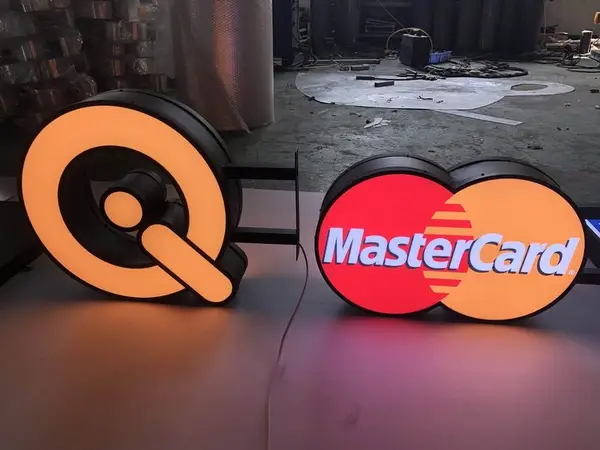
Real photo from our production floor — every sign we ship is made here.
Products mentioned or relevant to this topic — factory-direct, custom built.
From $24/letter · MOQ 1 piece · Flexible lead time · CE & UL certified · ships to 20+ countries
Custom sizes, colors, and finishes. Get a factory price in 24 hours.
Get a Free Quote Copy EmailWhatsApp +86 13865703472 · business@aochuangsign.cn
See pricing, specs, and get a free quote for the sign type you need. Built in our factory, shipped worldwide.