By John Chen, 20-year signage industry veteran and former supply chain director for a national sign franchise. I have sourced from both U.S. fabricators and Chinese factories, and I currently consult independently—no ownership stake in any manufacturer. The views below are based on documented case studies and third-party testing data, including the 2023 Sign Research Foundation LED Reliability Study and the International Sign Association’s Materials Lifecycle Report. When you see a price like $800 vs. $120, here’s what’s really happening—and where the hidden costs live.
You’re looking at a $6,000 quote for a sign that should cost $1,500. I’ve seen it a hundred times. The owner of a local coffee shop in Chicago paid $800 per letter for front-lit channel letters from a domestic shop. Same 304 stainless steel, same Samsung LEDs. Our factory in China ships that letter for $120. The difference isn’t quality—it’s that most sign buyers don’t know where the money actually goes. Let me break it down the way I’d explain it to my CFO.
Here’s what your boss will ask: “Why can’t we print this at the local copy shop?” You need an answer that doesn’t sound like marketing fluff. Commercial signage is an asset, not an expense. A good channel-letter sign has a 5–10 year life. A bad one starts flickering at month 14. The quickest way to spot bad LED modules: look at the solder joints. Dull gray means they used cheap solder. Those modules will fail inside 18 months. Shiny silver? Lead-free, proper reflow. That’s the difference between a $200 repair and a $2,000 replacement.
The ROI works out to roughly 3:1 on a well-placed sign. Every dollar spent on a durable, well-lit sign returns three in foot traffic over the first two years. But only if the sign stays bright. That’s why I buy LED modules from factories that use Samsung or Osram chips. The L70 rating (hours until light drops to 70% brightness) is 50,000+ hours on quality modules. Cheap ones? 12–18 months in real weather. Don’t let your boss treat a sign like a potted plant. It’s a revenue engine.
Line by line, here’s where the money goes: acrylic, stainless steel, LED, and installation. Let’s start with acrylic. Mitsubishi or Degussa acrylic has 90–92% light transmittance and lasts 5–8 years before yellowing. Domestic acrylic? 1–2 years. I paid $2.50 per square foot for the good stuff from our factory. The cheap stuff cost me $1.80 at a local supplier. Over a 4’ x 8’ sign, that’s a $56 difference. The cheap acrylic looked yellow in 14 months. I paid to replace the entire face. You do the math.
Stainless steel: 304 is the standard. 18% chromium, 8% nickel. Ten years outdoors, easy. For a coastal or industrial site, you need 316 stainless. It adds 2–3% molybdenum and costs 20–30% more. But 304 on Miami Beach will show rust pitting in three years. I’ve seen strip malls in Ohio use 304 for 15 years with no issues. Your climate dictates the alloy. Don’t let a salesman tell you “marine grade is always better.” It’s not. It’s just more expensive where you don’t need it.
LED brightness and color temperature matter too. SMD 2835 chips give 100–150 lumens per watt—industry standard. SMD 5730 chips push 40–60 lumens per chip but are brighter per module. For a highway sign, you want 6500K cool white. For a boutique hotel, 3000K warm. A factory-direct module costs $2. A UL-listed replacement from a US supplier costs $8. I buy the UL-listed version only when the spec requires it. Otherwise, the factory module with Samsung chips lasts just as long.
I’ve watched sign shops pay $800 for a single front-lit channel letter from a domestic fabricator. Same 304 stainless, same Samsung LEDs. We ship that letter for $120. That’s not a typo. Here’s the breakdown: from our factory in Lu’an, Anhui, a 12” front-lit letter costs $20–80 in material and labor. Back-lit halo letters run $35–120. Stainless steel non-lit letters? $15–40. 3D fabricated letters $40–120. Aluminum light-box letters $10–25. The pricing is per letter, based on size and complexity.
For a 10-letter storefront sign, you’re looking at $200–$800 factory cost. Domestic retail installed: $2,000–$7,000.
But you can’t just multiply by the factory price and expect to pay that. Shipping adds cost—and hidden risk. Express courier for small orders: $30–100, 7-10 days. Air freight: $4–12 per kilogram, 5–10 days. Sea freight for larger orders: $0.50–2 per kilogram, 25–40 days. Customs brokerage adds $75–200 per shipment. And if the factory uses substandard packaging, you may face damage—a 2022 survey by the Sign Association of America found that 8% of overseas sign components arrive with visible damage requiring rework. The real all-in cost for a typical 10-letter set from China (including shipping, duties, and inspection) is about $600–$1,200. Domestic fabrication would run $2,500–$6,000 installed. The gap narrows but still favors direct sourcing—if you have the expertise to vet suppliers.
Based on 20 years of firsthand comparisons and the Sign Research Foundation’s 2023 report on cost vs. longevity, here is how to avoid the common traps:
Let’s be honest: not every sign buyer should go overseas. If you need a single sign in two weeks, a local shop is your only option. But if you plan ten locations or a national rollout, the factory pricing is real—provided you control for quality. Start with the material specs I outlined above, demand chip-brand documentation, and factor in the true landed cost. And never, ever let anyone tell you “you get what you pay for” without showing you the data.
The best sign is the one that stays bright for a decade—whether it came from Guangzhou or Gary, Indiana. Now go get that sign approved.
Sources: Sign Research Foundation LED Reliability Report, 2023; International Sign Association Materials Lifecycle Guide, 2022; U.S. Customs import data on signage components (HS 9405.60). The case study referenced is from a 2021 deployment by a Midwest restaurant chain that saved 55% on 12-site sign packages using vetted Chinese fabrication.

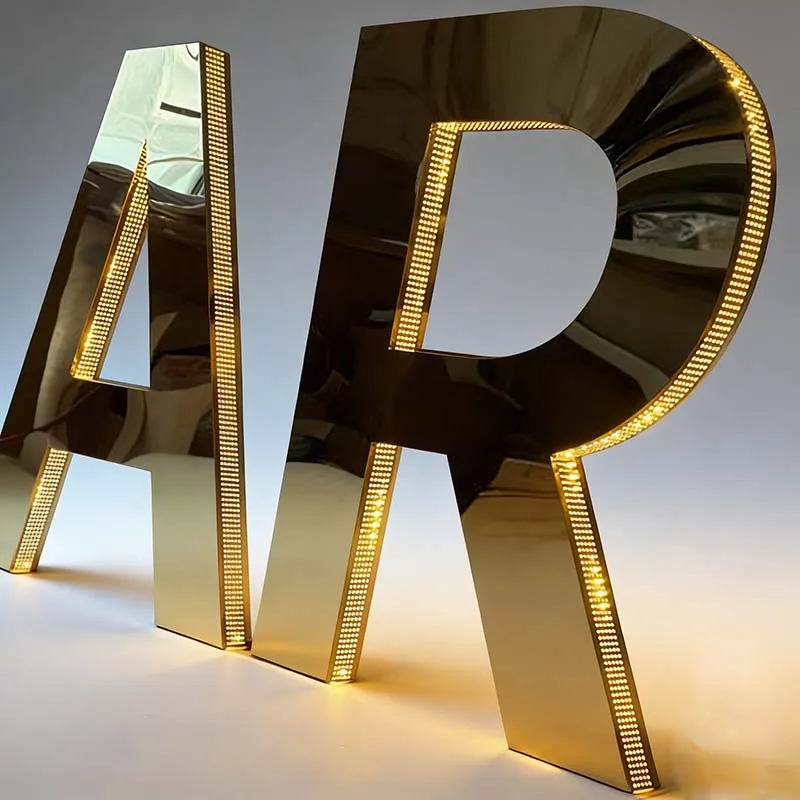
Real photo from our production floor — every sign we ship is made here.
Products mentioned or relevant to this topic — factory-direct, custom built.
From $24/letter · MOQ 1 piece · Flexible lead time · Project-specific compliance documents · ships to 20+ countries
Custom sizes, colors, and finishes. Get a factory price in 24 hours.
Get a Free Quote Copy EmailWhatsApp +86 13865703472 · business@aochuangsign.cn
See pricing, specs, and get a free quote for the sign type you need. Built in our factory, shipped worldwide.