Stop Making the Same Signage Mistakes Every Convention Center Makes
I've watched convention centers spend $8,000 on a set of temporary directional signs that looked like garbage by day two. Then they call us to fix it. Here's what nobody tells you: temporary doesn't mean cheap. And permanent doesn't mean indestructible. You're about to read the kind of advice you'd get from a guy who's burned his hands on hot acrylic and argued with suppliers about why their "waterproof" LEDs quit after one rainy trade show.
The ugly truth is most event venues treat signage like an afterthought. They rent banners from some print shop, slap them on easels, and wonder why attendees can't find Hall C or the VIP entrance. I've seen it go wrong: a convention center in Chicago used paper-based signs for a medical conference. Two hours in, they had to redirect three hundred people because the "Men's Restroom" sign fell off its stand.
Let's start with the basics. You've got two worlds: temporary directional signs for events that change every week, and permanent directional signs for the building itself. They're not the same animal. I don't care what the sign company tells you. Different materials, different construction. Mix 'em up, and you'll either overpay or underperform.
Temporary Directional Signs: When Speed and Flexibility Beat Everything
Here's what the sales brochures won't tell you: most temporary sign rentals are a complete ripoff. You're paying for a 2mm acrylic face that'll yellow within a year if it's domestic-grade. I've seen convention centers sign three-year contracts with rental companies, only to discover they're getting the same sign every time – worn, scratched, and faded.
Look, temporary signs need to be light, easy to move, and impossible to tip over. But here's a fact most people ignore: the stand matters more than the sign. If you're using a 3mm
acrylic sign on a flimsy metal base, a kid bumping into it will send it flying. I've designed temporary signs for a convention center in Las Vegas that had to survive drunk attendees and rolling luggage. We used 5mm acrylic with a weighted steel base. It cost more upfront, but they didn't have to replace them every month.
The other mistake is thinking temporary means cheap materials. It doesn't. If you're using domestic acrylic from China that isn't Mitsubishi or Degussa, you'll get 1-2 years before it turns yellow. For an event venue that uses signs six months out of the year, that's maybe three events before you're embarrassed. I tell clients: pay for UV-resistant acrylic. 5-8 years of clarity. Your temporary signs will outlast some of the permanent ones down the hall.
And the LEDs? Don't get me started. The quickest way to spot bad LED modules is to look at the solder joints. Dull gray equals cheap knockoffs that won't last 18 months. Shiny silver means proper lead-free solder. If you're buying temporary illuminated signs, insist on Samsung or Osram chips. Even a budget module with those chips will run 50,000 hours. The no-name stuff? Twelve months max.
Permanent Directional Signs: The 10-Year Investment That Actually Pays Off
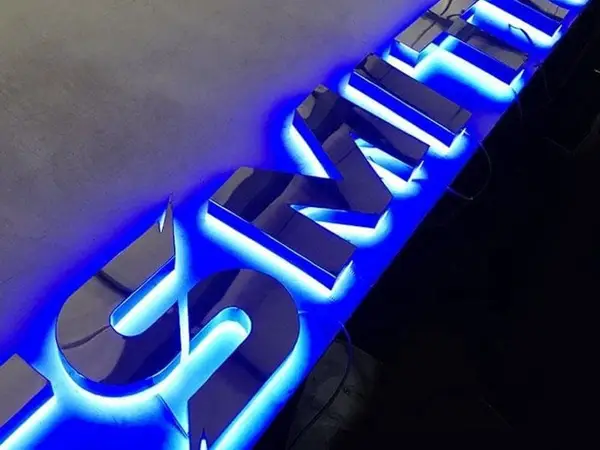
The ugly truth is most convention centers buy permanent signs based on a cheap initial quote and then replace them three years later. I've done the math for a client in Houston: paying $120 per letter for a 304 stainless steel front-lit letter from us in China, versus $800 from a domestic fabricator. That's a 50-65% savings, and the sign lasts just as long – 10+ years for 304 stainless with proper 18% Cr and 8% Ni.
But you can't cut corners on materials for permanent signs. Here's why: a convention center sees thousands of people, HVAC temperature swings, cleaning chemicals, and the occasional food spill. Your permanent directional signs need to survive all of it. Stainless steel 304 is the baseline. If you're coastal – Miami, Seattle, New York – pay the 20-30% premium for 316 marine grade. That extra 2-3% molybdenum stops pitting corrosion. I've seen a 304 sign in a Boston seafood convention fail in 4 years because of salt air. The 316 signs next to it still looked new.
What about aluminum? It's one-third the weight of steel, lasts 8-12 years outdoors, and is naturally rust-proof. For interior permanent signs – think "Exhibit Hall A" or "Registration" – anodized aluminum with powder coating is your best bet. It won't dent as easily as acrylic, and you can get brushed finishes that hide fingerprints. For exterior signs, you want 1.6mm thickness minimum. Anything thinner bends in wind.
And the LEDs for permanent signs? Don't even think about using the same modules as your temporary signs. Permanent installation means you can't just swap a failing module without a ladder and a screwdriver. Insist on SMD 2835 chips from a brand you trust. They give 100-150 lumens per watt, and with a quality driver, they'll last the L70 lifespan – 50,000 hours before they drop to 70% brightness. That's 6 years running 24/7. But here's what nobody tells you: the power supply fails before the LEDs. Your warranty should cover two years on the power supply, minimum. Ours does – 2 years LED chips, 1 year power supply. Anything less and you're buying headaches.
The Dark Art of Certification: CE, UL, IP Ratings, and Why Most Signs Aren't What They Claim
I've answered the certification question a hundred times. "Does your sign have CE?" Yes, we pay 20,000-50,000 RMB to get it. But I've been in Chinese factories where the owner prints a fake CE sticker and slaps it on every crate. The test? Ask to see the certificate with today's date. Watch them sweat.
For convention centers in the US, UL listing is the real gatekeeper. UL 48 costs $4,000-15,000 and takes 4-9 months. That's why most imported signs are sold without it. Your fire marshal won't care about CE if they're looking for UL. ETL is a cheaper alternative at 10-30% less, and UL accepts it as equivalent. But don't tell a building inspector "equivalent." Show them the ETL mark.
IP ratings are the most abused spec in our industry. IP65 sounds impressive. It means dust-tight and water jets from any direction. It does NOT mean your sign survives a Florida hurricane. I've seen IP65 signs leak after a three-hour rainstorm because the silicone sealant wasn't applied thick enough. At Aochuang, we seal every permanent sign with neutral silicone and run an 8-12 hour aging test before it leaves the factory. That's our standard. It's a process most sign shops skip.
For interior permanent directional signs, you really only need IP20 – no water protection. But if you're putting signs in a loading dock or near a hose-down area, spec IP66. And if it's a pool or waterfront convention center, IP68. Submersible. That's the only way to guarantee zero water ingress.
And don't forget ADA compliance if it's a US venue. Tactile signs need to be mounted 48-60 inches high, non-glare, with Grade 2 Braille. I've watched a convention center in Atlanta get fined $10,000 for a missing braille dot. That's not a sign problem – that's a contractor who didn't read the spec.
Shipping and Tariffs: The Hidden Costs That Wreck Your Budget
Here's what nobody tells you: your cheap Chinese sign doesn't stay cheap once it hits the port. The US Section 301 tariff adds ~30% onto the declared value. That's not our fault, but you need to know before you order.
Then there's LCL sea freight – less than container load. Your crate gets handled 6-8 times between our dock and yours. Every touch is a chance for damage. That's not in the brochure. For convention center signs, I always recommend air or express shipping if you're under $300 Freight. Express takes 7-10 days, $30-100 for small orders. Air runs $4-12 per kilogram and about 10 days. Sea freight is about 65 days. If your event is in three months, don't cheap out on shipping. You'll be signing replacement orders while the crates float across the Pacific.
Our factory pricing starts at $20-80 per letter for front-lit
channel letters, $35-120 for back-lit halo. Compare that to US retail installed: $200-700 per letter for front-lit. The savings are real, but you have to factor in shipping and tariffs. For a set of 10 letters at $50 each, you're looking at $500 product cost, $150 shipping (if you go LCL), and $150 tariff. Total $800 – still less than half of US retail.
But please don't ask me for a firm quote without telling me your location. We need to know if you're coastal or inland. The shipping crates we use for inland freight are lighter. For coastal, we double-box. That's not a charge – it's common sense.
Build It Right or Don't Build It At All: Production Process That Matters
I've watched sign shops in the US weld a
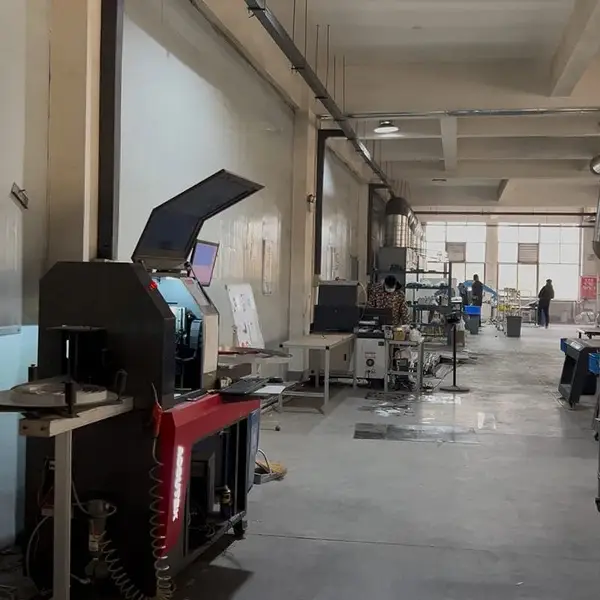
stainless steel letter with visible seam lines and call it "industrial chic." Bullshit. That's just poor craftsmanship. Our production process takes about 5-15 days total. Here's a real breakdown:
Day 1: Design confirmation. We don't start cutting until you've signed off. No surprises.
Days 2-3: Laser cutting at ±0.1mm tolerance. We don't own a plasma cutter for signs. Laser only.
Day 4-5: Bending and TIG welding. TIG, not MIG. TIG gives cleaner joints that don't need half an inch of filler.
Days 6-7: Grinding and polishing. For stainless, we use a brushed #4 finish. For mirror, it's #8. No shortcuts.
Day 8: Acrylic face CNC cutting. We program the profile, then machine it. Laser won't cut thick acrylic cleanly.
Days 9-10: LED assembly. Each module is soldered individually – not clamped, not crimped.
Day 11: Sealing with neutral silicone. Not acid cure. Neutral silicone won't corrode your wiring.
Day 12: Aging test. 8-12 hours at full brightness. If a module fails, we replace it.
Day 13: 100% QC inspection. Every sign. Not a random sample.
Days 14-15: Export packaging – foam, then carton, then plywood crate.
If a factory tells you they can do this in 5 days, they're lying. Either they're skipping steps or they're running a sweatshop. Our lead time is about 5-15 days. It's written in our ISO 9001 certification. We don't break it.
Now, about that MOQ – we do 1 piece. That's not a marketing gimmick. If you need a single emergency sign for a convention center that lost one in storage, we'll build it. You'll pay a premium for setup and tooling, but you'll get it. Most factories won't touch a one-off order.
Frequently Asked Questions (Because I've Answered These a Hundred Times)
How long do temporary convention signs really last?
If you buy cheap domestic acrylic with no UV protection? One trade show season before it looks like a yellowed menu board. If you spend the extra on Mitsubishi or Degussa acrylic with proper LED modules, five years minimum. I don't care what the rental company told you. Ask for the material spec sheet. They'll fumble.
Why are your prices so much lower than US manufacturers?
Because we don't have a sales commission structure that adds 30% overhead. We have 3,000 square meters, 50 workers, and we ship direct. No middlemen. The US shop pays $800 for a 304 stainless letter because they have rent, marketing, and a salesman's BMW payment. We build that same letter for $120 and export it. The tariff eats some savings, but you're still paying 50-65% less. Check the math.
Do I really need UL certification for interior signs?
If your fire marshal requires it, yes. But most interior signs use low-voltage LED drivers that don't need UL if they're class 2 power supplies. Check your local code. I've seen inspectors demand UL on a 12-volt sign that runs off a wall wart. That's overkill, but you won't win the argument. If in