I’ve been doing this 16 years. 16 years on the factory floor, burning my hands on hot acrylic, arguing with suppliers about LED chips, and watching sign buyers screw up the same way again and again. You’d think after all that time I’d be sick of it. I’m not. But I am tired of seeing people overpay for junk or wait four months for a sign that should’ve taken two weeks.
So here’s the thing: ordering custom business signs isn’t rocket science. But there’s a ton of noise out there—websites promising “cutting-edge” this and “game-changing” that. Stuff that doesn’t matter. Stuff that’ll cost you money or headaches down the road.
I run a 3,000m² shop in Lu’an, Anhui, with 50+ workers and a laser cutter that’s seen more late nights than my marriage. If you want real answers, read this. If you want fluff, go somewhere else.
Here’s what nobody tells you: the material you pick decides how many years that sign lasts. Not the design. Not the lights. The metal or plastic you start with.
Take acrylic. You’ve got Mitsubishi or Degussa stuff – 90-92% light transmittance, UV-resistant for 5-8 years. Then you’ve got domestic acrylic, the cheap stuff. That starts yellowing in 1-2 years. I’ve seen signs that looked like old teeth after 18 months because someone saved $3 per sheet. Pick the right material once, or pick a cheap one twice.
For outdoor signs in most of the US, stainless steel 304 is your workhorse. 18% chromium, 8% nickel, density 7.93g/cm³. 10+ year life. Common thickness: 1.0 to 3.0mm. Over 2.5 meters tall? Go 5mm acrylic or thicker steel. I’ve seen sign shops pay $800 for a front-lit letter from a domestic fabricator. Same 304 stainless, same Samsung LEDs. We ship that letter for $120. The markup in the US can be significant—but that’s the market. Know what you’re paying for.
But if you’re putting a sign on Miami Beach, 304 ain’t enough. You need 316 stainless – marine grade with 2-3% molybdenum. It costs 20-30% more. Yes, it stings. But replacing rusted letters in 3 years stings worse. For a strip mall in Ohio, 304 is fine. For coastal or industrial areas, pay for 316.
Aluminum? Weighs one-third of steel. 8-12 year outdoor life. Options: anodized, powder coated, brushed. Naturally rust-proof. Good for lightweight signs or big light boxes. But it dents easier than steel. Pick your trade-off.
Case study: A client in Galveston, TX ignored our advice to use 316 stainless for their beachfront hotel sign. They went with 304 to save 25%. After 22 months, pitting corrosion appeared on the letter edges. Replacement cost was double the original savings. Don’t let a short-term budget decision become a long-term liability.
Don’t scrimp.
I’ve seen this go wrong a thousand times. A client orders a halo-lit sign with “premium LEDs.” Six months later half the letters are dark. They blame the factory. Nine times out of ten, the factory used cheap modules.
Quickest way to spot bad LED modules: look at the solder joints. Dull gray = won’t last 18 months. Shiny silver = proper lead-free solder. That’s not in any sales brochure. But it’s real.
Here’s the data. SMD 2835 chips: 100-150 lumens per watt. Industry standard for channel letters. SMD 5050: for RGB color. SMD 5730: 40-60 lumens per chip, highest brightness – good for big back-lit signs. L70 rating: minimum 50,000 hours. That’s about 5.7 years if left on 24/7. Quality modules with Samsung or Osram chips? These last 5+ years. Cheap modules? 12-18 months. Then you’re paying a sign installer $150 per hour to swap them out.
LEDs fail.
Color temperature matters too. 3000-3500K warm for restaurants and hospitality. 4000-5000K neutral for corporate or retail. 6000-6500K cool for industrial or highway signs. The remaining project-specific details depend on the approved design, installation conditions and local code; confirm them before ordering.

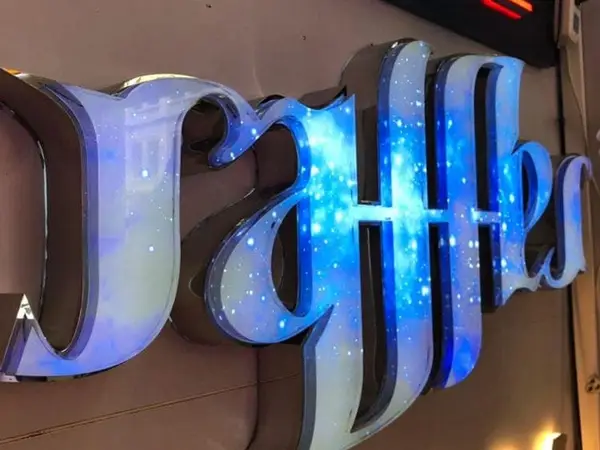
Real photo from our production floor — every sign we ship is made here.
Products mentioned or relevant to this topic — factory-direct, custom built.
From $24/letter · MOQ 1 piece · Flexible lead time · Project-specific compliance documents · ships to 20+ countries
Custom sizes, colors, and finishes. Get a factory price in 24 hours.
Get a Free Quote Copy EmailWhatsApp +86 13865703472 · business@aochuangsign.cn
See pricing, specs, and get a free quote for the sign type you need. Built in our factory, shipped worldwide.