So you're tired of paying retail. Of watching the local sign shop mark up a sheet of acrylic 400 percent and calling it "custom fabrication." I've been in this business for 16 years, and I've seen the same pattern a thousand times.
Here's what nobody tells you: the price you see on an invoice has nothing to do with what the materials cost. It has everything to do with how much risk the middleman is transferring to you.
Let's cut through the nonsense.
First, What the Hell Are You Actually Paying For?
When you buy from a US shop, you're paying for their rent, their insurance, their three trucks, the receptionist's salary, and the owner's boat payment. That's fine. It's how business works. But you're also paying for their fear of the unknown.
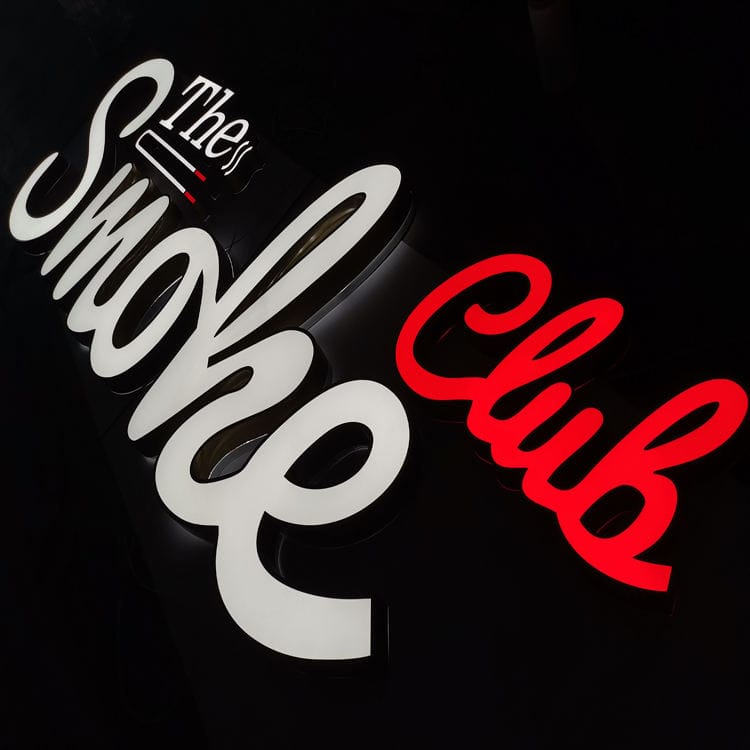
A front-lit channel letter at US retail runs $200 to $700 per letter. That's insane. That same letter, built to the same spec with the same materials, ships factory-direct from us for $20 to $80.
Let me be crystal clear about something: I'm not saying American shops are ripping you off. I'm saying they charge for speed, convenience, and liability. If you need a sign installed next Tuesday, pay them. If you have a week of lead time and can handle your own installation, you're bleeding money.
The ugly truth is that the gap between factory-direct and retail isn't 20 percent. It's 50 to 65 percent. That's not a discount. That's a whole different price universe.
The Price Breakdown Nobody Shows You
Let me walk you through what actually goes into a
front-lit channel letter before it ever touches a truck.
Material costs matter. Stainless steel 304 with 18 percent chromium and 8 percent nickel runs about 20 to 30 percent less than marine-grade 316. Do you need 316? Only if you're within a mile of saltwater. For a strip mall in Ohio, 304 is fine. For Miami Beach, pay for 316 and stop complaining about the price.
Acrylic faces are where factories cut corners. The good stuff — Mitsubishi or Degussa — transmits 90 to 92 percent of light and holds up for 5 to 8 years outside. The cheap domestic stuff yellows in 12 to 24 months. Nobody tells you that when they quote you $40 per letter.
I've seen this go wrong: a client in Texas bought "discount" channel letters with cheap acrylic. Eighteen months later, they were yellow, dim, and embarrassing. Replacing them cost double what quality letters would have cost upfront. Penny wise, pound foolish.
How to Actually Talk to a Factory
Look, I'll tell you what every importer needs to hear: we're not mind readers. And we're not Amazon — you don't just click buy and get a manifest.
The first mistake rookie buyers make is asking "how much for a sign?" That's like asking "how much for a car?" A Kia and a Mercedes are both cars. A $20 aluminum letter and a $120 dual-lit halo letter are both signs.
Send us something real. A vector file. Dimensions. A photo of the building. A note about whether you're facing the ocean or a dusty highway.
The second mistake: negotiating before you've shared the specs. You can't get a real price from a factory until they know exactly what they're quoting.
The Real Numbers — Factory Direct Pricing
These are honest numbers from our floor. Not rounded marketing figures.
Plain stainless steel letters, not lit, run $15 to $40 per letter. Front-lit aluminum channel letters: $20 to $80. Back-lit halo letters: $35 to $120. If you want the premium
dual-lit channel letters that work day and night, plan on $45 to $150 per letter.
Light boxes run $80 to $250 per square meter. Neon flex signs start around $30 and can hit $200 depending on complexity. The 3D fabricated stuff that architects love runs $40 to $120 per letter.
These are factory prices. They assume you're buying multiple letters, not one. They assume standard sizes, not something that requires custom tooling — that's a different quote.
Volume Discounts and MOQs
Everyone asks about minimum order quantities. I'll say it once, slowly: our MOQ is one.
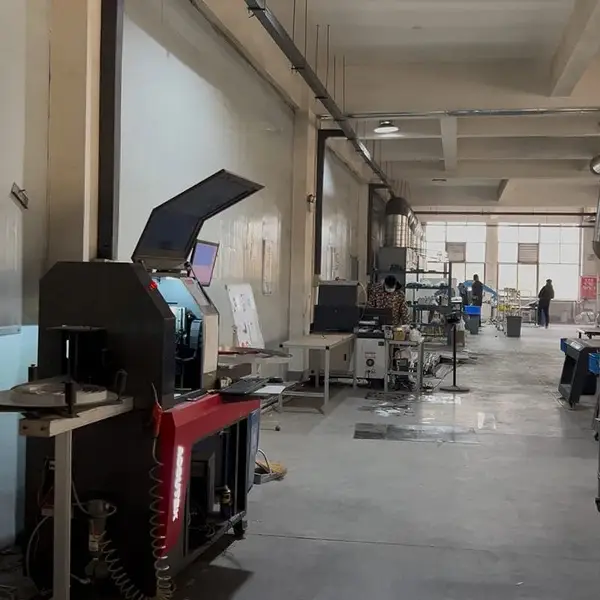
That's not a sales trick. It's a production reality. We have 50 workers in a 3,000 square meter facility in Lu'an, Anhui. We do custom work every single day. One-letter signs are how we prove ourselves. A 200-letter order for a hotel chain is how we pay our electricity bill.
But here's the honest part: you get better pricing per unit when you order more. That's not a secret. It's logistics. Same setup time, same programming, same packing materials spread across more letters.
If you're ordering an entire storefront, ask about a package price. If you're outfitting ten locations, ask about a project price. We'll work with you because we want the repeat business, not the one-off.
LED Modules: The Battlefield of Quality
Here's where I earn my skepticism from buyers.
LED quality is the single biggest variable in sign manufacturing. The cheap modules from no-name brands last 12 to 18 months. Then you're on a ladder with a heat gun, replacing strips, and your profit vanishes.
Quality modules — Samsung, Osram, or the better Chinese brands like Landmark (Blueview) — last 5 years or more. L70 rating means 50,000 hours before the LED dims to 70 percent output. That's the standard you want.
SMD 2835 is the workhorse: 100 to 150 lumens per watt. SMD 5730 gets you the highest brightness per chip. If you need RGB color changing, that's SMD 5050.
Price difference between garbage LEDs and good LEDs? Maybe 15 percent of the total sign cost. The lifespan difference? Four years. Do the math.
Shipping: The Hidden Monster
Here's what nobody tells you: the factory price isn't the final price. Shipping is where importers lose their shirts.
Express courier for small samples: $30 to $100, arriving in 7 to 15 days. Air freight: $4 to $12 per kilogram, 10 to 20 days. Sea freight: $80 to $200 per cubic meter for LCL (less than container load), 50 to 70 days. A full 40-foot container runs $1,200 to $3,000.
And don't forget the US Section 301 tariffs. About 30 percent on most fabricated metal signs. That's real, that's current, and if your supplier quotes you a price and doesn't warn you about it, they're not doing their job.
The good news: we know this. We've shipped worldwide. We can give you a landed cost estimate, not just an ex-works price.
Certifications: Stop Wasting Money on the Wrong Ones
CE marking costs us 20,000 to 50,000 RMB. It takes 2 to 8 weeks. It's what European buyers ask for.
UL 48 is the American standard for electric signs. It costs $4,000 to $15,000 and takes 4 to 9 months. Then there are quarterly audits. Most Chinese factories don't have it. If an American buyer demands it, the price reflects that.
ETL is a UL alternative — about 10 to 30 percent cheaper, same insurance approval.
IP65 is the minimum for outdoor. It means dust-tight and protected against water jets. It does NOT mean your sign survives a hurricane. If you're coastal, ask for IP66 or IP68. It costs more. It's worth it.
Here's what I see go wrong with certifications: buyers assume "CE" means everything. It doesn't. It means we can legally sell in Europe. It's not a quality badge.
The 10-Step Process That Explains Production Time
Lead time is a trust issue. If someone quotes you 3 days for custom channel letters, either they're lying or they're already making your sign before you ordered it.
Our process takes 7 to 15 days. Design confirmation takes a day. Laser cutting to plus or minus 0.1mm takes 1 to 2 days. Bending and TIG welding takes another 1 to 2. Grinding and polishing is 1 to 2 days. The acrylic faces need a day on the CNC. LED assembly is 1 to 2. Then sealing with neutral silicone. Then an 8 to 12 hour aging test. Then 100 percent QC inspection. Then export packaging — foam, carton, plywood crate.
You can't compress that without cutting corners. If you want it fast, pay for express. If you want it right, respect the process.
Negotiation Tactics That Work (and Ones That Don't)
"Can you make it cheaper?" — this is what every amateur says. It's also what every factory expects.
The buyers who get better pricing ask better questions: "Can we reduce the aluminum gauge from 1.5mm to 1.2mm?" "Can we use a standard LED module instead of a custom one?" "Can we simplify the return flange?"
The ugly truth is that good factories don't discount their quality to win your order. They adjust specs to meet your budget. A sign shop that cuts price by 30 percent without changing specs is either overcharging you at the start or planning to cut corners you'll discover later.
I've seen this go wrong: buyer negotiates a price too low, factory "adjusts" by using thinner acrylic or cheaper LEDs, buyer gets exactly what they paid for — a sign that fails in 2 years.
Don't negotiate like that. Instead, negotiate on scope.
The "Cheap Factory" Trap
If a quote is 40 percent below everyone else, run. Not walk — run.
The people who think they win by finding the cheapest factory in Guangdong end up with letters that delaminate, LEDs that die, and shipping delays that cost them their client relationship.
I say this knowing it sounds self-serving. I have a factory in Anhui. I want your order. But I've also been in this industry long enough to watch the bottom-feeders come and go. Cheap isn't a business strategy. It's a race to the bottom.
Quality costs more in labor and materials. It pays off in repeat business and referrals. That's not corporate wisdom. That's my survival instinct talking.
Payment Terms: What's Fair and What's a Red Flag
Standard for factory-direct: 30 percent deposit, 70 percent before shipment. Some factories want 50/50. Some want 100 percent upfront. The 100 percent ones? Be careful.
A reliable factory has money for materials. They don't need your payment to buy acrylic. They have cash flow.
You should expect to pay a deposit because we're cutting material to your spec. If you cancel after we've laser-cut 100 letters, we can't resell them to someone else. That deposit covers our risk.
The Metal Letters Difference
If you're doing outdoor branding that has to last, don't cheap out on metal.
Stainless steel 304 with brushed #4 finish is the workhorse. It lasts 10 years outside. Mirror finish #8 looks stunning but shows every fingerprint. PVD coating adds color while keeping the metal structure.
Aluminum letters are lighter — a third the weight of steel — and naturally rust-proof. They last 8 to 12 years. If you're shipping internationally, the weight savings on aluminum can pay for the shipping difference.
For that premium look,
brass letters run 20 to 30 percent more than steel. They make a statement. They also require maintenance to keep their shine. Know what you're signing up for.
The Halo Lit Premium
Ask any architect:
back-lit halo letters are the premium choice for a reason. Light glowing from behind the letter creates depth and shadow. It says "expensive" before any client reads a word.
But halo letters cost 40 to 60 percent more than front-lit. The fabrication is more complex: no face, an acrylic back, LED strips mounted inside, and precise spacing so the halo is consistent.
For a law firm or a bank? Worth it. For a pizza place on a highway? Waste of money. Your front-lit options will do the job.
When to Use a Local Shop vs. Factory Direct
The honest answer: if you need a sign installed next week, use a local shop. If you need to match an existing sign that's 5 years old, use a local shop — they'll come take measurements and match the color in person.
If you need a full project — new storefront, multi-location rollout, replacement of an aging sign that's beyond repair — go factory direct.
The math is simple: 50 to 65 percent savings. The risk is that you're doing your own project management. That's not for everyone.
Our Factory, With All the Warts
We're in Lu'an, Anhui. Founded 2010. CE, RoHS, and ISO 9001 certified. You can verify those certificates with dates, not just logos.
What we can do: manufacture any sign in this catalog to your spec. Ship it anywhere. Care about it being right.
What we can't do: replace a local permit process, install your signs, or guarantee a turnkey project. We're a manufacturer, not a general contractor. That's the honest distinction.
We can tell you how to handle permitting and installation. We've seen enough of it to give decent advice. But the liability stays with you.
The Final Word
Here's what it comes down to: factory-direct pricing isn't a secret. It's a decision.
Pay the local shop for speed and convenience. Or work with a factory like ours for the 50 to 65 percent discount. Both are legitimate. Both have real tradeoffs.
The smart buyers don't just ask "what's your price?" They ask "what's my landed cost?" They verify certifications. They order samples before bulk production. They plan for lead times.
They don't get burned because they don't rush into anything.
If you want a real quote — with real numbers, honest shipping estimates, and the tariff math already done — reach out. Send your drawings. Give me the location, the environment, and your budget. I'll tell you what's possible and what's not.
I won't promise you a miracle. I'll promise you a straight answer from someone who's spent 16 years in this industry and doesn't have time for games.
That's the deal.