Let's Start With the Ugly Truth
The ugly truth is this: most "factory direct" prices you see online are inflated 30-40% to cover the middleman's markup. I've watched sign shops pay $800 for a front-lit letter. Same 304 stainless, same Samsung LEDs, same 3mm acrylic. We ship that letter for $120. That's not a brag. That's just what happens when you buy from a trading company instead of the guy who cuts the steel.
But here's what nobody tells you: not every factory can actually deliver what they quote. I've seen buyers chase the lowest price and end up with warped returns, dead LEDs, and a shipping container full of scrap. You don't need the cheapest quote. You need the right quote from a factory that's still breathing after the order.
What "Factory Direct" Actually Means
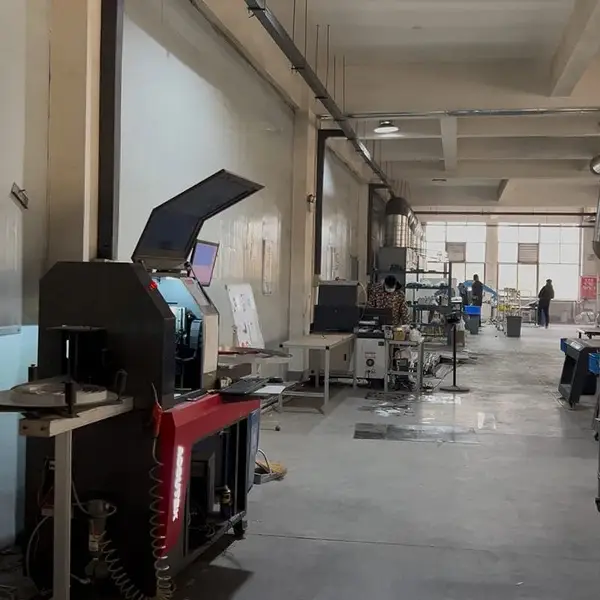
When you buy direct from Aochuang Sign in Lu'an, Anhui, you're skipping the distributor, the agent, and the guy who "takes care of logistics." You're talking to the production floor. We've been at it since 2010, running 3,000m² with 50+ workers. We export worldwide. That's not a sales pitch — that's context so you know you're not emailing some guy in a bedroom with a CNC machine.
You don't get some walled-off "overseas sales team" that knows nothing about welding. You get quotes based on actual material costs, LED specs, and labor hours. That's why our MOQ is 1 piece. Not because we're nice. Because we don't need to move 500 units to make rent.
Now, let's talk money.
You Need to Know the Real Price Ranges
Here's what factory prices actually look like in 2025 — not retail, not installed, not "list price with a discount code." Per letter:
- Front-lit channel letters: $20–80
- Back-lit halo letters: $35–120
- Stainless steel non-lit: $15–40
- 3D fabricated letters: $40–120
- Aluminum letters: $10–25
- Light boxes: $80–250 per square meter
- Neon flex signs: $30–200 per sign
For comparison, US retail installed runs $200–700 per letter for front-lit, $400–1,000 for halo. So you're looking at 50-65% savings on product. You won't save that on shipping, and you won't save that on tariffs. But the product itself? That's where the factory direct win happens.
Look, I've had contractors tell me they "sourced from China" and paid $180 for a
stainless steel letter that we'd quote at $55. They didn't get screwed by the factory. They got screwed by their own lack of research. The factory still made money. The trading company made more. The installer made more. And the contractor ate the difference.
How to Negotiate Like Someone Who's Done This Before
Don't walk in with "can you do better?" That's what every tourist says. The factories who survive on tourist quotes just add 20% and "discount" it back to the real price. You want to negotiate from a position of knowing exactly what you're buying.
First, break down the quote. Ask for material specs line by line: acrylic thickness (2mm, 3mm, 5mm), stainless grade (304 vs 316), LED brand (Samsung/Osram vs generic), and power supply type. If they won't separate it, they're either hiding a cheap build or they don't understand their own production.
Second, bundle. If you're ordering 50 letters plus a light box and a set of neon flex signs, ask for a package price. Factories love volume because it evens out the workflow. You can get 5-8% off just by putting it all on one PO.
Third, negotiate on payment terms, not price. If you pay 50% upfront instead of 30%, that's worth something to the factory. Offer a wire transfer instead of PayPal. Those fees add up. You might get free wooden crating or upgraded packaging out of it. That's real money you don't have to spend later.
The one thing you shouldn't negotiate on is QC. Don't ask them to skip the 8-12 hour aging test to save a buck. I've seen that go wrong: a buyer wanted to shave two days off lead time by skipping the burn-in. Shipment arrived with 8 dead modules out of 200. The factory fixed it, but the customer paid air freight and lost a week. Cheap move, expensive outcome.
Hidden Costs That Wreck Your Savings
Here's what nobody tells you: the quote is not the invoice. If you're importing from China to the US, you're paying roughly 30% Section 301 tariff on many fabricated
metal signs. That's a fact, not a surprise. Plan for it.
Shipping costs vary by method, and you need to match the method to your timeline:
- Express (DHL/UPS): 7–15 days, $30–100 for small packages
- Air freight: 10–20 days, $4–12/kg
- Sea freight: 50–70 days, $80–200/m³ LCL, or $1,200–3,000 for a full container
The biggest hidden cost isn't freight — it's rework. If you buy from a factory that uses cheap domestic acrylic, you'll see yellowing in 1-2 years. They'll tell you "UV resistant" but skip the Mitsubishi or Degussa material. If you don't specify, you get what you get. A sign that needs replacing in 18 months is not a bargain at any price. That's why our acrylic specs run 90-92% light transmittance and the UV-resistant stuff lasts 5-8 years. The domestic stuff? 1-2 years before it looks like a dirty phone screen.
What We Can Really Do — and What We Can't
I'll be straight with you. We can manufacture custom channel letters, halo-lit letters, rimless letters, dual-lit, stainless steel letters, aluminum letters, brass and copper letters, acrylic light boxes, and neon flex signs. We can do the
front-lit channel letters you see on every strip mall, or the
back-lit halo letters for architectural work. We can even do
rimless channel letters if you want that clean modern look without visible trim.
We can't do everything. We don't do cast bronze at scale, we don't do massive extrusions that require a 200-ton press, and we won't fake a UL certification. UL 48 costs $4,000–15,000 and takes 4-9 months with quarterly audits. If a factory says they're UL-certified and they charge you $100 extra per letter, call bullshit. You should ask to see the certificate. Same with ETL — it's a UL alternative, 10-30% cheaper, but still real. CE certification runs 20,000-50,000 RMB and takes 2-8 weeks. Many factories have it. Make them show you.
The other thing we can't do is make cheap miracles. If you want 316 stainless with a mirror finish and IP68-rated LEDs, it costs more. That's physics, not greed. 316 Marine grade has 2-3% molybdenum and runs a 20-30% premium over 304. For a strip mall in Ohio, 304 is fine. For Miami Beach, pay for 316. For a coastal pub in Maine, same thing. Don't say we didn't warn you.
How to Structure Your PO to Save Real Money
Let me walk you through what a smart buyer's purchase order looks like.
You start with the design confirmation. That's day one. We finalize the files, confirm the return sizes, and confirm the LED color temperature — 3000-3500K for hospitality, 4000-5000K for corporate or retail, 6000-6500K for industrial and highway. If you don't specify, you'll get whatever the salesperson guessed. That's on you.
Then we cut with a laser at ±0.1mm accuracy. For letters over 2.5m tall, you need 5mm acrylic, not 3mm. That's not a sales upsell — that's wind load physics. I've seen a 3mm face bow out and crack on a 3-meter letter in a mild storm. Don't let your sign shop blame the factory for that one.
Now, the money-saving part. Instead of ordering everything at once with a one-week deadline, split your order into "needed now" and "can wait." If you need 20 letters in two weeks, pay the express freight. If you're planning a storefront rollout for six months out, ship by sea and save 60% on logistics. LCL is fine for loads under 5m³. Over that, start thinking about a full container at $1,200–3,000. The math works out quickly.
Also, pay attention to packaging. We crate everything with foam, carton, and plywood because we've seen too many shipments arrive with dented returns from cheap plastic wrapping. But if you want us to skip the wooden crate and use heavy cartons with internal bracing, you can save a few hundred dollars on a standard order. The risk is yours. I wouldn't recommend it for halo letters with exposed return bends, but for flat aluminum letters? It's fine.
The Dirty Secret About LED Quality
I need to get brutal with you for a second.
The most common industry lie is this: "All LEDs are the same, just different labels." That's garbage. SMD 2835 modules run 100-150 lm/W and are the industry standard. Cheap modules might hit those numbers on paper, but they'll drop to 70% brightness after 12-18 months. Good modules from Samsung, Osram, or Blueview will hold a real lifespan of 5+ years with L70 ratings at 50,000 hours. The difference in cost? Pennies per letter. The difference in warranty claims? Massive.
I've seen this go wrong: a contractor bought "high-quality SMD 2835" from a factory that shall remain nameless. They even had a datasheet. The signs went dark in 14 months. The factory blamed the power supply. The power supply blamed the modules. The contractor paid a truck to pull down 40 letters and re-fit them. That's not saving money. That's financing someone else's margin.
Don't be that guy. Specify the LED brand on your PO. If the factory won't put "Samsung" or "Osram" in writing, walk away.
Same with IP ratings. IP65 is dust-tight and protected against water jets from any direction. That's the minimum for outdoor. IP66 handles powerful jets — think coastal rainstorms. IP68 means submersible, which is overkill for 99% of storefront signs, but necessary for signs mounted in flood zones or fully exposed marine environments. Make sure you know which one you're paying for. A lot of factories quote "waterproof" and deliver IP54, which is splash-resistant at best. The IP code is printed on the module. Check it.
Lead Times and Why 7-15 Days Means 15 Days
Look, I'll be honest about our own lead time: it's usually 7 to 15 days, total production. That includes design confirmation, laser cutting, welding, grinding, acrylic CNC, LED assembly, sealing, an 8-12 hour aging test, and a 100% QC inspection. If you order 100 letters, it's closer to 15. If you order 10, it's closer to 7.
What we can't do is 24-hour turnaround. If you email us on Monday and expect production by Wednesday, you're going to get a sign that wasn't sealed properly or wasn't tested. Sealing with neutral silicone needs a full day to cure. Bending and welding steel takes time if you want good corners. Grinding and polishing takes another day if you want a mirror finish that doesn't look like a scratched phone. You can rush any of those steps, but you'll see it in the final product.
So when you're planning your schedule, add 3-5 days of buffer for shipping delays, customs, and exactly the kind of problems that happen between a Chinese factory and a US loading dock. If you tell your client "10 days" and the container gets held at port for a week, you're the one who looks bad, not us.
What to Ask Before You Send a Deposit
Here's a checklist I give every buyer who emails us. Use it with any factory you're dealing with.
- Ask for the exact material spec: acrylic brand, stainless grade, LED brand and model.
- Ask for photos of the production floor with today's date, not blurry stock images.
- Ask for a sample before mass production if you're spending over $2,000. A sample costing $50-150 is worth it, and it's usually deducted from the order.
- Ask about the aging test. If they don't burn in the LEDs for at least 8 hours, your failure rate goes up.
- Ask about the warranty: 2 years on LEDs, 1 year on power supply is standard. If they offer 5 years on everything, they're either excellent or lying. Check.
- Ask about certifications. CE is common. UL 48 is expensive and rarely held by small factories. ETL is the practical alternative, and 10-30% cheaper. IP65 minimum for outdoor.
- Ask what happens if the shipment arrives damaged. Get their policy in writing.
The people who skip these questions are the same people who come back three months later asking why the neon flex sign is flickering. Don't be them.
Let's Talk About the "American Contractor" Trap
The ugly truth is that most sign shop owners in the US think they're too good for factory direct. They buy from domestic wholesalers who mark up 100-200%. They pass that cost to their clients, and then they complain that the client chose a cheaper sign company. It's a race to the bottom with a different name.
You can break that cycle. When you order directly from our factory, you're not "going around" anyone — you're learning the supply chain. You keep your margin healthy. You win more bids. And you still provide a quality sign, as long as you spec it correctly.
At the same time, don't think factory direct means zero responsibility on your end. You need to measure accurately, provide clean vector files, and understand your local code requirements. ADA requires tactile signs at 48-60" mounting height, non-glare finishes, and Grade 2 Braille. NEC Article 600 covers electrical connections. IP65 or higher is required for any outdoor sign. Your local inspector doesn't care how much you saved on the PO. They care about the UL sticker or the field evaluation.
If you don't know what you're doing with UL or ETL, don't order bare LEDs and expect to certify them yourself. It never works. Ask the factory for an assembly that's already configured for your market, or buy a complete sign that's been through the test house.
When to Spend More and When to Spend Less
Let me give you the straight math on materials.
Aluminum is your budget option for letters. It's one-third the weight of steel, naturally rust-proof, and with an anodized or powder-coated finish, it'll last 8-12 years outdoors. If you're doing a quick-fix retail sign or a temporary promotional install,
aluminum letters at $10-25 each are the right call. They're light, easy to mount, and cheap to ship. Don't overspend on stainless for a sign you'll replace in three years.
Stainless 304 is the workhorse. Ten-plus years outdoors with brushed #4 finish. It's the right choice for most permanent building signage. If you want something that feels premium, go with mirror #8 finish or PVD coating. And if you're doing a
stainless steel letters installation for a bank or a law firm, that's the product you want.
316 is for coastal or industrial environments. I've seen 304 rust-pit after eight years on a saltwater marina. 316 will hold up 15+ years. The extra 20-30% cost is insurance. If your job site is within a mile of ocean, pay it. You won't regret it.
Brass or copper is for the luxury segment. It costs more and requires maintenance. But if your client is a five-star hotel or a heritage building, nothing else looks as good. I'm not going to convince you to buy it, and I shouldn't have to.
If you're doing a
acrylic light box for a restaurant, choose the 3mm face and the 2835 LED modules. It's the classic combo for a reason. For menu boards, go with a white or warm-white backlit face. Nobody ever had a complaint about a brightly lit menu. The only mistake is buying a light box with cheap LED strips that die in 18 months. You know the drill by now.
Shipping, Tariffs, and the Real Final Price
Let's do the math on a typical order. You're buying 20 front-lit channel letters at an average of $50 each — that's $1,000. Shipping by sea LCL for a crate around 1m³ is $100-200. Tariff under Section 301 is roughly 30% — add $300. Total landed cost: $1,500 – $1,600.
If you bought that same sign in the US retail installed, you'd be at $200-700 per letter — that's $4,000 to $14,000 for 20 letters. You're saving at least $2,500 even after shipping and tariffs. That's the factory direct advantage.
But if you choose air freight at $4-12/kg, and your crate weighs 80kg, that's $320-960, which might still work for urgent jobs. Express is only worth it for small samples or rush orders under 10kg. Don't put a full sign on DHL unless you're okay paying more for the sign than your client paid for dinner.
Here's what nobody tells you: the tariff is calculated on the product value, not the shipping cost. So don't ask a factory to "lower the invoice value" to avoid customs. That's smuggling, and it will get your shipment seized. We report real values. We want you as a repeat customer, not a cautionary tale.
So What Should You Do Next?
If you're ready to order, send us your vector file and dimensions. Get a real quote from our production floor. Compare it to your current supplier. Then ask us to break it down by material, LED, and labor.
If you're not ready to order, that's fine too. Bookmark the
neon flex signs page for your next trendy client, or the
dual-lit channel letters page for that project that needs to look alive at noon and midnight. Just don't email us asking for "the best price" without a spec. We'll send you a quote, but we'll also send you a list of questions that you should have asked before you hit send.
The bottom line: custom
sign factory direct pricing is a real advantage, but only if you approach it like a professional. Know your materials. Know your LEDs. Know your shipping. And don't believe anyone who says you can't save 50% without sacrificing quality. You can — if you buy from a factory that's honest about what they can and can't do.
We are. That's why we're still here after 16 years in this industry, 14 of them with this factory. Come to us with clear specs and realistic timelines, and we'll show you what factory direct is supposed to be.