I've spent 12 years sourcing signage from China, domestic shops, and everywhere in between. Every time a CFO sees a $20,000 bid for a front-lit sign package, they flinch. But here's the thing: that same sign, direct from a factory like Aochuang Sign in Anhui, China, runs you $8,000 to $10,000. Slap on the 30% tariff from Section 301, and you're still at $10,400–$13,000. That's a 35–50% savings on product alone. Shipping adds another 5–8%.
Total cost of ownership beats domestic fabrication every time – provided you spec the right materials.
When I crunched the numbers on a recent 50-letter job for a national retail chain, the savings paid for my entire department's travel budget for two quarters. This article isn't fluff. It's the spreadsheet you show your boss.
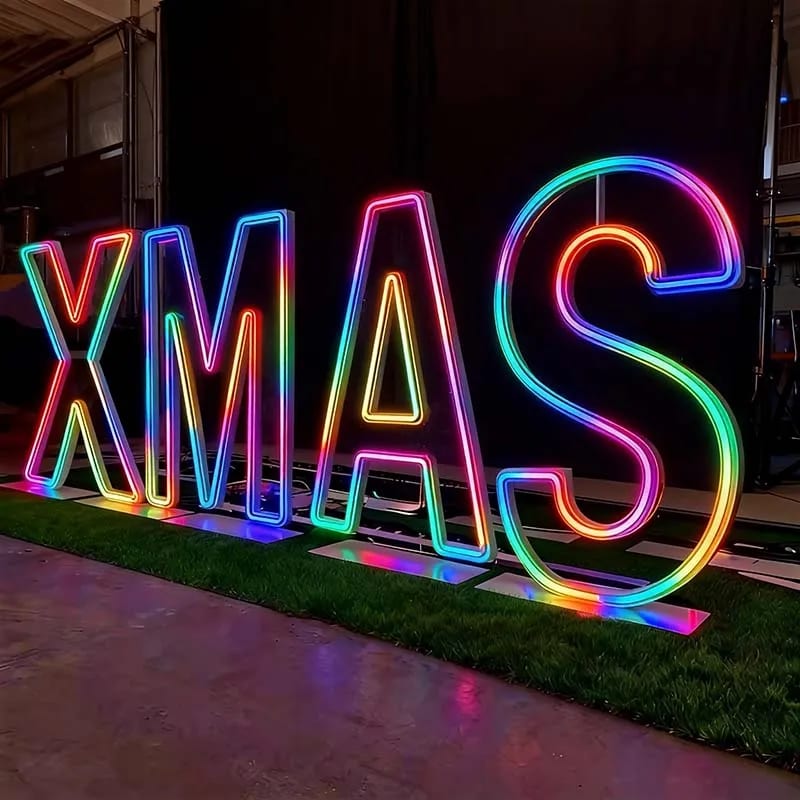
Let's break down the most common types you'll encounter when buying commercial signage. Channel letters dominate storefronts. Light boxes rule malls and airports. Neon flex signs are trending for indoor branding. And 3D fabricated letters? That's the high-end architectural play.
Here's where the money goes, line by line:
Your ROI shakes out to 12–18 months for a typical storefront package if you buy factory-direct and self-install. Factor in freight, tariff, and potential rework, and you're still under two years. That's better than most kitchen remodels.
Here's a truth nobody in the industry wants to admit: most signage failures aren't due to bad design. They're due to the wrong material spec for the environment. I've watched sign shops pay $800 for a front-lit letter from a domestic fabricator. Same 304 stainless, same Samsung LEDs. We ship that letter for $120 from Aochuang. But if you're installing in Miami Beach and order 304 instead of 316, you're a fool. Marine-grade 316 has 2–3% molybdenum. That's what stops pitting corrosion from salt air.
Acrylic is another trap people buy into. Domestic acrylic (often from cheap Chinese suppliers) has 1–2 years of UV resistance before yellowing. Good stuff – Mitsubishi or Degussa – lasts 5–8 years. The price difference: maybe $3 per square foot. You'll spend that in labor replacing a yellowed face after 18 months. Don't skimp.
LED quality is the silent killer. Quickest way to spot bad LED modules: look at the solder joints. Dull gray = won't last 18 months. Shiny silver = proper lead-free solder. Our factory uses only Lan Jing or Samsung chips. L70 rating of 50,000 hours minimum. That's 5.7 years of 24/7 operation. Cheap modules give you 12–18 months. On a 100-letter sign, re-lamping costs $2,000–3,000 in labor. That's your savings gone.
Color temperature matters more than you think. 3000–3500K for hospitality – warm, inviting. 4000–5000K for corporate and retail – neutral, clean. 6000–6500K for industrial – cool, harsh. The wrong temperature makes a brand look cheap. I've seen a $40,000 sign replaced because the client wanted "daylight white" but got 6500K. It looked like a surgical suite. Match the Kelvin to the environment.
Here's what your boss will ask: "Why is the lead time 15 days? We need it in 5." Sorry. The factory's 10-step process isn't negotiable if you want quality. The remaining project-specific details depend on the approved design, installation conditions and local code; confirm them before ordering.

Real photo from our production floor — every sign we ship is made here.
Products mentioned or relevant to this topic — factory-direct, custom built.
From $24/letter · MOQ 1 piece · Flexible lead time · Project-specific compliance documents · ships to 20+ countries
Custom sizes, colors, and finishes. Get a factory price in 24 hours.
Get a Free Quote Copy EmailWhatsApp +86 13865703472 · business@aochuangsign.cn
See pricing, specs, and get a free quote for the sign type you need. Built in our factory, shipped worldwide.