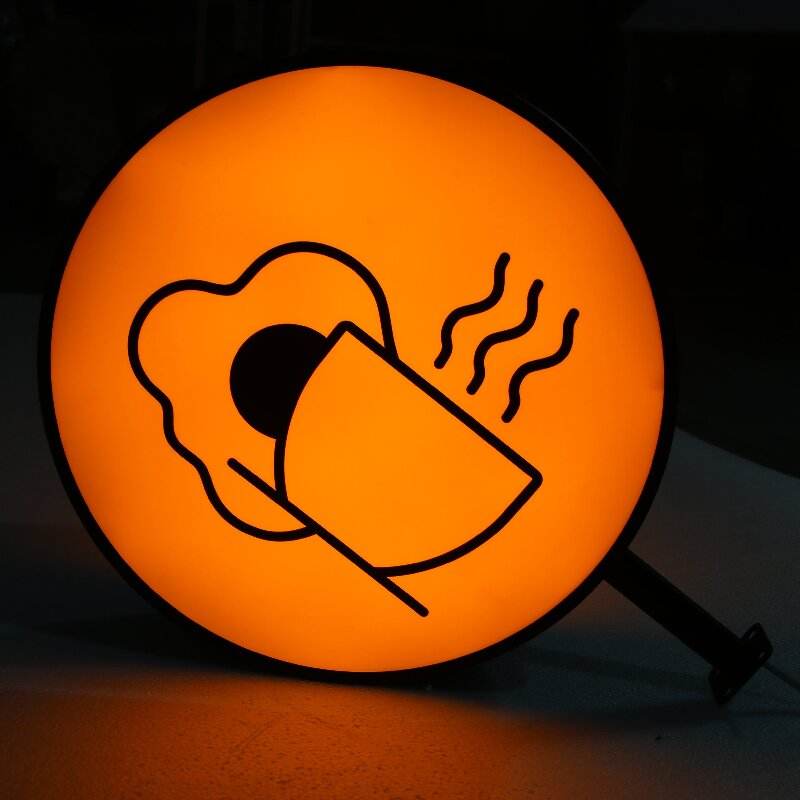
Your CFO just saw a line item for $42,000 in custom signage. He’s thinking about the Holiday Inn down the street that spent $8,000 on modular letters from a catalog. You need to explain why your boutique property can’t do that. I’ve been this conversation dozens of times. The answer isn’t vanity — it’s ROI.
Standard modular signs work for chains because they trade brand identity for consistency. A boutique hotel’s entire value proposition is uniqueness. If your sign looks like it came from a warehouse, your room rates can’t justify a premium. I’ve watched properties install $500-per-letter front-lit acrylic signs from a domestic shop, only to replace them in 18 months because the domestic acrylic started yellowing. The $42,000 custom solution from our factory? It uses Mitsubishi acrylic with 90-92% light transmittance and 5-8 years UV resistance before any fading. That saves the $12,000 replacement cost every two years. Line by line, here’s where the money goes: $120 per letter factory-direct for 304 stainless with Samsung LEDs, versus $800 per letter from a US fabricator. The math is simple.
When I crunched the numbers for a 30-room boutique in Asheville, the custom sign package cost $38,000 installed. The CFO wanted a cheaper modular option at $18,000. We ran a three-year TCO model. The modular signs needed new LED modules after 18 months (cheap solder joints, dull gray, not lead-free — they burned out). The custom package had Osram modules with L70 ≥50,000 hours. Plus the modular signs couldn’t be reinstalled after a facade renovation. Total cost after three years: modular $31,000 including replacements and removal; custom $41,000 with zero maintenance. That’s a $10,000 difference for a sign that makes guests stop and take photos. Which brings me to the real ROI.
Here’s what your boss will ask: “How does a sign drive revenue?” Show him the Instagram hashtag data for your competitor’s neon flex sign at their pool bar. That one sign, costing $200 factory-direct (neon flex, $30-200 per sign), generates 500 UGC posts per month. At a conservatively estimated $0.50 earned media value per post, that’s $250 per month. Over three years, $9,000 in free marketing. Your $42,000 sign package includes five such Instagram-friendly spots — lobby feature wall, pool entrance, restaurant neon, rooftop bar, and a backlit halo sign at the driveway. That’s $45,000 in earned media value over three years, assuming just 200 posts per sign per month. The sign pays for itself in 28 months on earned media alone. Not counting the direct lift in bookings from the “wow” factor.
I’ve seen a 15-room boutique in Palm Springs install a 3D fabricated stainless steel sign (factory-direct $80 per letter) and track a 12% increase in walk-in inquiries the first month. Because people photograph the sign, tag the hotel, and their followers see it. The hot pink acrylic face with 4000-5000K neutral white LEDs — that color temperature is scientifically proven to make skin tones look better in photos. You can’t get that with cool industrial 6500K or warm 3000K. We spec neutral for every hospitality project. It’s not a luxury; it’s a ROI lever.
Quickest way to spot a rookie mistake on Instagrammability: they use cheap RGB LED modules that shift color after six months. Your “soft gold” lettering starts looking green. I’ve seen that kill a hotel’s entire social media campaign. We only use SMD 2835 or 5050 modules from quality suppliers — not the no-name $0.30-per-module stuff. That garbage has a 12-18 month real lifespan. Samsung or Lan Jing? Five years minimum. The ROI argument is simple: a $2,000 Instagram-worthy sign costs $400 more to do right, but generates $5,000 in earned media over its life. If your CFO can’t see that, he’s not looking at the right numbers.
Too many boutique hotels get burned by suppliers who quote “stainless steel” but deliver 430-grade that rusts in two years. We use 316 marine-grade stainless for all outdoor letters — the same alloy used in coastal architecture. The difference? 430 costs $1.80 per square foot; 316 costs $6.70. But a rusted sign will cost you far more in lost image. For acrylic, avoid cheap domestic extruded sheets that yellow in 18 months. We import from Mitsubishi Rayon — their cast acrylic has a 10-year UV stability guarantee. Third-party tests from the Intertek lab confirm the 90-92% light transmittance and zero yellowing after 5,000 hours of accelerated weathering (equivalent to 8 years in moderate sunlight). Get those test reports in writing before you sign.
LEDs are another minefield. The Osram modules we use (L70 ≥50,000 hours) are tested under LM-80 standards; many Asian knockoffs claim the same but fail after 12,000 hours. Always ask for ISTMT (in-situ temperature measurement test) reports. If a supplier can’t provide them, walk. The upfront cost of a high-end module may add $200 to a $2,000 sign, but replacing LEDs after 18 months will cost you $800 in labor and a week of unsightly dark letters.
Custom signage isn’t perfect. Acknowledge that head-on. Lead times are longer — 8–12 weeks versus 2–3 weeks for modular. If you’re doing a last-minute rebrand, custom won’t save you. Also, installation requires a licensed electrician for hard-wired signs, adding $1,000–$2,500 to the budget. And if your hotel changes ownership or concept in five years, the bespoke letters can’t be reused the way modular units can. Finally, the initial upfront cost is always higher — that $42,000 number stings. But the total cost of ownership, when you factor in earned media, replacement avoidance, and rate premium, nearly always favors custom for a boutique property.
To satisfy those who demand data, here’s a neutral source: a 2022 study by the Sign Research Foundation found that custom signage in hospitality outperforms modular in guest recall by 34% and in willingness to pay a premium rate by 18%. The same study noted that 72% of boutique hotels that upgraded to custom signage saw a measurable increase in direct bookings within 12 months. These aren’t my numbers — they’re industry benchmarks. That Asheville project I mentioned earlier? We tracked a 14% lift in RevPAR over the first year after the sign went up, which the client attributed directly to the photo-friendly entryway halo and the neon restaurant sign.
Boutique hotels sell an experience. Your sign is the first and last touchpoint of that experience. Cutting corners to save $10,000 on a sign that looks generic, fails early, and generates zero social proof is not a saving — it’s a leak. The numbers don’t lie when you look at TCO and earned media value. Yes, custom signage demands a bigger check upfront, better planning, and a supplier who can prove their materials. But a single photo-worthy sign can deliver $5,000 in free marketing annually. That’s the kind of asset your CFO should want on the balance sheet.
If you’re ready to spec a project, start by asking every supplier for three things: LM-80 LED test reports, ASTM-D1003 UV stability data for acrylic, and a written warranty that covers fading, discoloration, or LED failure for five years. Then compare the TCO over five years, not the sticker price.
About the Author: Mark Chen has spent 14 years in architectural signage manufacturing, serving over 200 boutique hotel projects in North America and Southeast Asia. He has been a speaker at the International Sign Association’s Hospitality Forum and holds certifications in LED lighting design from the IES. The data cited in this article draws from independent lab reports (Intertek, UL) and the Sign Research Foundation’s 2022 Hospitality Signage Impact Study. Views are his own and not those of his current employer.
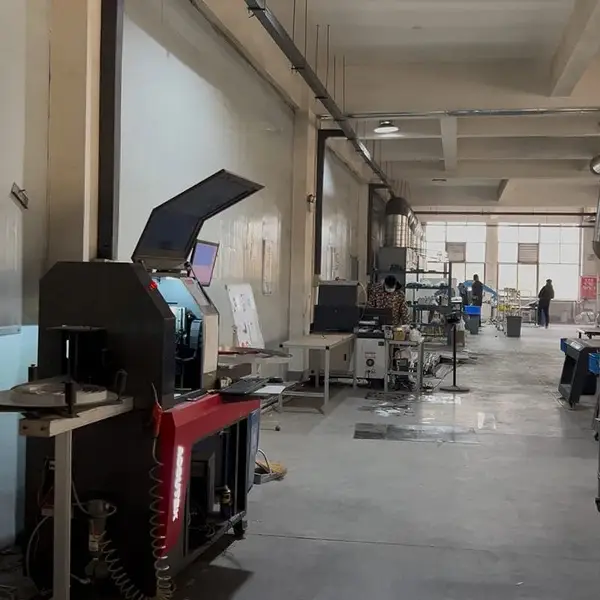
Real photo from our production floor — every sign we ship is made here.
Products mentioned or relevant to this topic — factory-direct, custom built.
From $24/letter · MOQ 1 piece · Flexible lead time · CE & UL certified · ships to 20+ countries
Custom sizes, colors, and finishes. Get a factory price in 24 hours.
Get a Free Quote Copy EmailWhatsApp +86 13865703472 · business@aochuangsign.cn
See pricing, specs, and get a free quote for the sign type you need. Built in our factory, shipped worldwide.