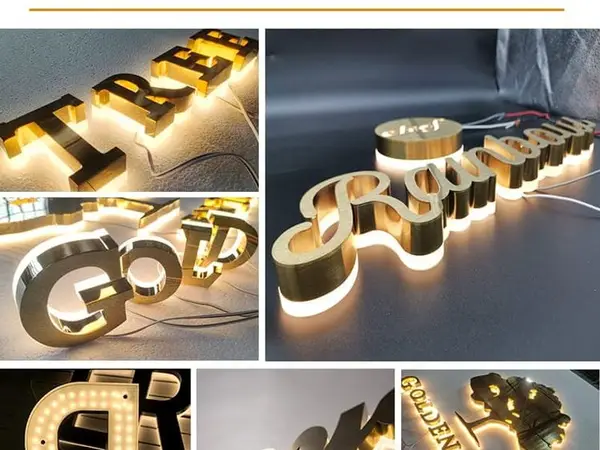
Hard fact: in most U.S. jurisdictions, if you mount a monument sign face at 48–60 inches (ADA tactile height), inspectors call it a permanent structure. Not a temporary sign. That means a concrete base, stamped drawings, and no shortcuts.
You don't pour a footing for every 24-inch yard sign.
But once you get past that 48-inch line with any real weight behind it, you're in foundation territory. I've shipped 304 stainless steel monument faces from our Lu'an factory to contractors in Texas, Ohio, and Florida. The face isn't the problem. Keeping it upright for 10 years is the problem. Concrete usually solves that.
A monument sign base isn't just a chunk of concrete somebody ordered to keep the permit office happy.
The base does three jobs. It keeps the sign from tipping over in wind, stops frost heave from shoving the whole structure up and sideways every winter, and gives the inspector something to measure, photograph, and sign off on before you hang the face. A monument sign without a proper base is just a kite with a business name on it.
Nobody tells you this: the base is the only part of the job that's site-built, and it's the part most likely to get cheaped out on until it fails. You can factory-direct the sign structure, but you can't factory-direct the dirt.
Look, if your monument sign stands over 48 inches tall, runs wider than tall, or sits in a hurricane zone, stop hunting for alternatives. No exceptions.
I've seen this go wrong: a strip mall in Ohio skipped the footer because the ground was 'solid clay.' Two winters later the sign leaned 7 degrees. They spent $4,200 fixing what a $1,500 concrete base would have prevented. Frost heave doesn't care about your soil report from July.
The ugly truth is most sign companies don't tell clients that wind load controls the base size, not the sign weight. You can have a 20-pound aluminum face on a 6-foot monument and it's still a 30-square-foot sail in a 90 mph gust. The concrete isn't holding the weight. It's holding the overturning moment.
If you're anywhere near salt water, spend the extra on 316 stainless anchor bolts and tie-downs, not just 304. 316 runs 20–30% more, but it's got 2–3% molybdenum. In Miami Beach, 304 will pit in three years. I've replaced enough rusted anchors to know.
Not every monument sign needs a full poured footer.
If you're installing a small aluminum sign under 48 inches tall with an aluminum face—aluminum weighs a third of steel at 0.040–0.063 inch thickness—you might get away with direct-burying a steel post in compacted gravel. I've done it. It works in low wind zones with sandy, well-drained soil and no frost. But you'd better know your local frost depth before you call it done.
Helical piers and ground screws are real options, especially when you're working on a property where you can't tear up concrete or landscaping. They're not magic. They need torque specs and soil bearing data, same as concrete. But they go in with a hand-held drive head and they don't need a 28-day cure.
Precast ballast blocks are another option for temporary or relocatable monument signs. You drop the sign frame onto a stacked block base. It sits there. It doesn't look great, but it passes inspection in some jurisdictions. Rookie mistake: using precast blocks in a wind zone and calling it permanent. The first derecho will relocate your monument sign into the parking lot.
You've got four main ways to do it, and none of them involve a bag of Quikrete and a prayer.
Monolithic slab: a single pour that includes the slab and a thickened edge or turned-down beam. Cheap and fast, but it only works for signs under maybe 6 feet wide with low wind exposure. I like it for small shopping center monument signs with no internal lighting. Our standard sign faces are 1.2–1.5mm 304 stainless or 1.0–1.6mm aluminum. That's not much dead load, but wind load will still fold a thin slab if you skip the rebar.
Poured footer with a steel cage: rebar tied to meet the engineer's schedule, anchor bolts set with a template, and concrete poured to below frost depth. That's the standard for any sign with electrical components. When our front-lit channel letters go into a monument face, they pull power, and inspectors want that base done right before they'll even glance at the UL listing.
Sonotube piers: round cardboard forms filled with concrete, typically 12 to 18 inches in diameter and dug 30 to 42 inches deep, depending on frost line. You set two or three piers and mount the sign frame on top. Less invasive than a full slab, but you need to be dead-on with your bolt spacing. I've seen a crew off by half an inch and then spend an afternoon with a torch reaming holes.
Precast ballast blocks: factory-poured concrete blocks with embedded anchors. You set them on grade or slightly below. They're heavy, but they're also removable. Good for leased properties and temporary installations.
They want a stamped drawing from a licensed engineer.
Not a sketch on a napkin. The permit office will ask for wind load calculations, soil bearing capacity, frost depth, and sometimes a letter from the sign manufacturer stating the sign's weight and dimensions. If the sign has internal lighting, they'll also want to see UL 48 listed components. That test runs $4,000–15,000 and takes 4–9 months, so don't buy electrical monument signs from a factory that can't show you a current certificate.
For outdoor monuments, the minimum LED rating is IP65—dust-tight and keeps out water jets from any direction. IP65 is not hurricane-proof, though. If your monument sign sits within a mile of salt water, upgrade to IP66 and use 316 stainless fasteners. I learned that the hard way on a hotel sign in Galveston.
CE marking costs 20,000–50,000 RMB in China. Most factories will say they have it. Ask to see the certificate with today's date on it. Watch them sweat.
ADA mount height is 48–60 inches for tactile characters. Inspectors measure from the finished grade to the baseline of the tactile text. If your concrete base adds 6 inches of height and you didn't account for it, you fail ADA before you even flip the switch.
Concrete is the cheapest part, but it's the easiest to get screwed on.
Nobody tells you this: many sign companies mark up the concrete sub by 200–300% and call it 'project management.' If you're a contractor, get the footing bid directly from a local concrete guy. You'll save enough to buy better LEDs—Bluesky or Rishang modules that last 5+ years instead of cheap ones that die in 12–18 months.
The sign structure is where the real money sits. A stainless steel monument face with acrylic LED letters might run you more than the concrete and the installation combined. For reference, factory pricing for stainless backlit letters runs $1.50–$1.80 per centimeter of letter height. A monument sign with 60cm-tall stainless letters will have a face that costs more than the concrete below it. That's fine. The cast aluminum or 304 stainless shell is built to last 10+ years outdoors. The concrete base will probably outlast the landlord.
Installation usually includes renting a boom or forklift, setting the sign, wiring, and caulking. Don't forget the neutral silicone. If a crew seals a monument sign with cheap hardware-store caulk, water gets in and kills the LEDs before the warranty expires. We use neutral silicone, run an 8–12 hour aging test, and check every unit before it ships.
We've been building monument sign faces and frames since 2010 out of a 3,000-square-meter facility with 50+ workers.
When you order from Aochuang Sign, we give you the base specs—embedment depth, bolt spacing, rebar schedule, and concrete strength—at no extra charge. You take that to your local concrete crew. They pour. You set the sign. No need to pay a middleman to redraw what our engineer already stamped.
Sample lead time runs about 5 days. Bulk production runs around 15 days, depending on size and quantity. Minimum order? One piece. So you can order a single monument sign face and see the quality before you commit. We ship worldwide, express 7–10 days, standard sea around 65 days.
Now the FAQs I still get asked after 15 years:
Q: Can I just set a monument sign on a gravel pad?
If it's under 48 inches and in a low-wind area, maybe. Anything bigger and you're asking for a leaning sign and a failed inspection. No.
Q: Do I need a concrete base if the sign is on an existing concrete sidewalk?
No. Sidewalks are 4 inches thick and designed for pedestrians, not for overturning wind loads. You need a footer that goes below frost depth. Stop trying to bolt a monument sign to a sidewalk.
Q: What's the cheapest compliant base option?
Direct burial for small aluminum signs. But if your jurisdiction requires stamped drawings, direct burial won't pass. Ask the permit office before you dig, not after.
Q: Can your factory pour the concrete base for me?
No. We're in Lu'an, Anhui, China. We ship the sign structure. The concrete is local because shipping a slab across the ocean is the dumbest idea you've had all week.
Products mentioned or relevant to this topic — factory-direct, custom built.
From $24/letter · MOQ 1 piece · Flexible lead time · CE & UL certified · ships to 20+ countries
Custom sizes, colors, and finishes. Get a factory price in 24 hours.
Get a Free QuoteWhatsApp +86 13865703472 · cairuisheng@aochuangsign.cn