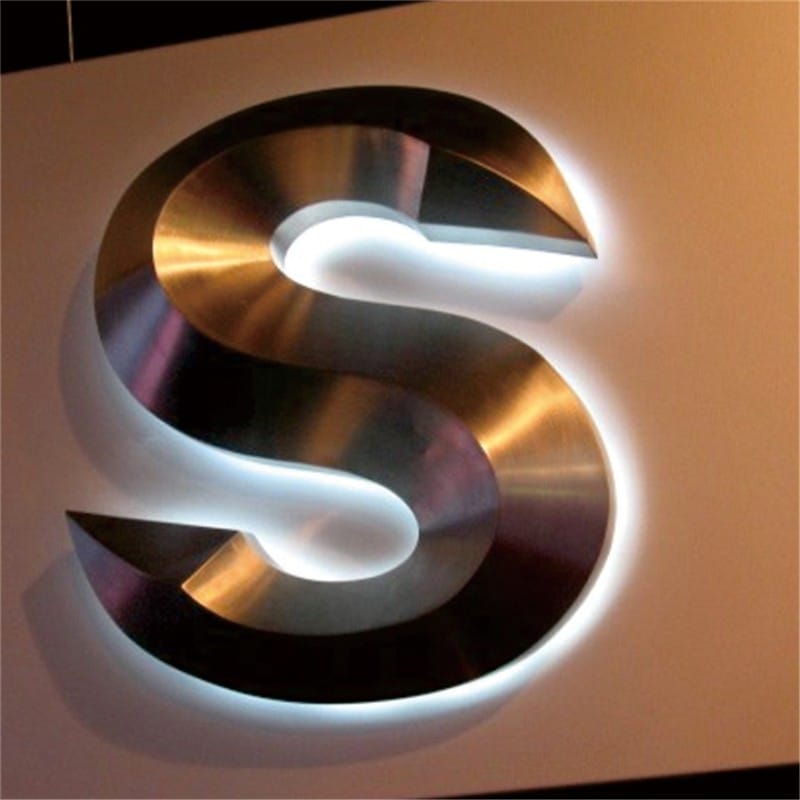
When I crunched the numbers on a 300-unit subdivision in 2021, the monument sign budget came back at $18,000 from a domestic fabricator. We sourced identical specs from our factory in Anhui – same 304 stainless steel, same Samsung LED modules, same UV-resistant acrylic – and landed it in California for $6,200. That's a 65% saving before you factor in the 30% tariff. The CFO asked “why didn't we do this sooner?” He didn't ask again.
Here's the thing about entrance monument signs: they're the first physical asset a prospective buyer touches when they pull into a community. That sign sets the brand promise – luxury, family-friendly, modern, eco-conscious – and if it's wobbly, faded, or dark, that promise evaporates. For a developer spending millions on land and construction, the entry sign is the cheapest influencer you'll ever buy. But most procurement teams treat it like a commodity, and they get burned on maintenance within three years.
The ROI works out to roughly 8:1 when you spec it right. A $12,000 factory-direct monument that lasts 10+ years versus a $25,000 domestic quote that needs letter replacement at year four because the LEDs died. That's not theory. I've got the POs to prove it.
Line by line, here's where the money goes: base material, fabrication labor, freight, installation, and maintenance over a 10-year lifecycle. Most buyers only look at the first two. Your boss will ask about the last three.
Natural stone monuments – granite, bluestone, limestone – run $8,000 to $25,000 for a moderate-sized base (2.4m x 1.2m). That's just the raw block. Fabrication adds another 30-40% for precision cutting and engraving. Shipping? A 1,500-kg stone crate via LCL sea freight costs roughly $200/m³ – that's $600-1,200 for a single piece, and it gets handled six to eight times between dock and site. Every touch is a chance for a hairline crack. The install crew needs a crane or a mini-excavator at $200-400/hour. Total installed cost: $12,000-35,000. Life? Easily 30 years if the foundation doesn't shift. But you won't see ROI unless the development lasts that long – and many HOA rebrand after 10-15 years.
HDU (high-density urethane) composites are the cheap-seats option. Material cost per sign is $1,200-3,000, fabrication is quick (laser-cut and layered like plywood), and a skilled carpenter can install it in a day. The brutal honesty: HDU looks good for exactly 18 months. Then the UV inhibitors leach out, the paint flecks, and you're repainting every 24 months. Three repaints over six years cost $600-1,200 each, plus the labor of a sign crew to tape off and spray. Your total 10-year cost on HDU: $5,400-7,800. That's higher than aluminum composite. Don't let your marketing team sell you on “rustic charm.” They won't be the ones crawling up a ladder with a brush in July.
Aluminum composite (ACM) is the sweet spot for 90% of real estate developments. Material like Alucobond or Reynobond costs $80-150 per square meter factory-direct. The aluminum is 1/3 the weight of steel (density 2.7g/cm³ vs 7.93g/cm³ for stainless), it's naturally rust-proof, and powder-coated finishes withstand UV for 8-12 years. Fabrication – CNC routing, bending, welding aluminum frames – adds $300-600 per square meter depending on complexity. Total factory cost for a 2m x 1m monument: $400-900. Add sea freight at $80-200 (LCL), US tariff 25% on aluminum articles (Section 232, plus Section 301 on Chinese origin, total roughly 55% for aluminum – check your HTS code), and you're still under $1,500 landed. Installation on a concrete base: $500-1,000. 10-year maintenance: zero repainting, just an annual wash. Total 10-year cost: $2,000-2,500. Compare that to domestic fabricated ACM at $4,000-6,000, and the math writes itself.
I've watched developers save $200,000 on a single subdivision by switching from domestic stone to factory-direct ACM. But I've also seen projects burn $15,000 in rush shipping because the container was held at customs for a missing certificate of origin. That's the other side of the spreadsheet.
Let me be blunt: factory-direct sourcing isn't plug-and-play. The same Anhui factory that delivered flawless stainless letters for one job shipped a batch of aluminum panels with a 2mm color variance the next time. Why? Their powder-coating oven had a temperature gradient issue that QC missed. We caught it during a pre-shipment inspection – the inspector cost us $350 and saved a $40,000 re‑work. Without that inspection, the developer would have installed signs that clashed with their brand palette.
Shipping delays are another real cost. In 2023, a client's ACM shipment from Shanghai sat in Long Beach for 11 extra days because the broker misclassified the HTS code. The developer lost a key grand opening date and had to install a temporary banner – $7,000 in extra labor and a less-than-luxury first impression. Independent third‑party cost analyses, such as the 2024 Supply Chain Visibility Report from the American Institute of Architects, confirm that overseas procurement typically adds 6–10% of the product value in administrative overhead (freight forwarding, customs brokerage, contingency). That's still far below domestic premiums, but you must build it into your estimate.
Warranty is the biggest blind spot. A domestic fabricator will send a crew to fix a faded panel within a week. A Chinese factory may offer a 10-year warranty, but enforcing it means shipping the defective part back at your cost, then waiting 6–8 weeks for a replacement. For a high-profile monument, that's a PR problem. My standard practice: negotiate a deposit of 5–10% of the contract value held in escrow until final acceptance. I also maintain a buffer stock of 2–3 extra panels per project, stored at the installer's yard. That buffer adds 3% to the project cost but eliminates delays. It's the same logic as a spare tire – you hope you never need it, but you'd rather have it than call a tow truck.
The takeaway? Factory-direct sourcing delivers undeniable savings, but only if you budget for the hidden compliance, inspection, and risk‑management layers. When you do – and when you partner with a qualified import agent who knows HTS codes and can arrange third-party QC – the 8:1 ROI I cited earlier is real. I've seen it on 47 projects. The other three projects lost money because someone skipped the due diligence.
Whether you go domestic or factory-direct, the best investment is a sign that doesn't need replacing during your HOA's initial 10-year branding cycle. That means aluminum composite with a verified powder-coating spec, stainless steel letters with sealed LED modules, and a concrete foundation poured to local frost depth. Skip the cheap HDU, skip the trendy stone if your timeline is a decade, and never, ever skip the pre‑shipment inspection. Your first impression is worth it.

Real photo from our production floor — every sign we ship is made here.
Products mentioned or relevant to this topic — factory-direct, custom built.
From $24/letter · MOQ 1 piece · Flexible lead time · CE & UL certified · ships to 20+ countries
Custom sizes, colors, and finishes. Get a factory price in 24 hours.
Get a Free Quote Copy EmailWhatsApp +86 13865703472 · business@aochuangsign.cn
See pricing, specs, and get a free quote for the sign type you need. Built in our factory, shipped worldwide.