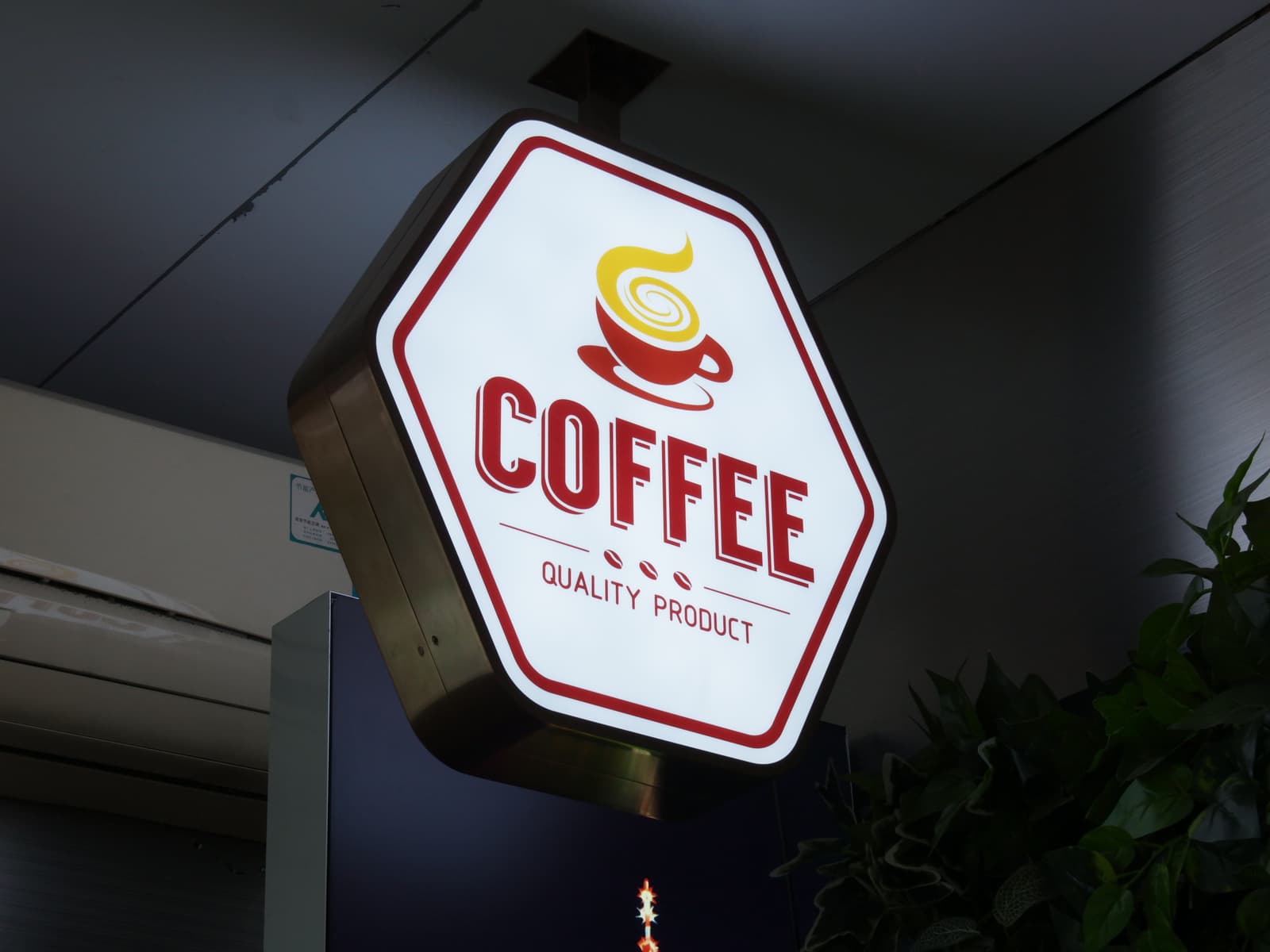
Monument signs are the first thing a customer sees, and they're usually the last thing on the contractor's budget. That low box at the entrance is a structure, an electrical assembly, and a permitting battle rolled into one.
I've spent fifteen years on a 3,000 m² factory floor in Lu'an, China, with 50+ welders and CNC operators, building these signs for shops in the US, Canada, Australia, and Europe.
Same story every time: a developer frames a beautiful rendering, finds a cheap quote, then learns the stamped drawings cost a grand and the city takes two months to approve it.
Look, fabrication is the fast part. Our standard is 7 to 15 days from design lock to export packaging, and that includes laser cutting, TIG welding, LED wiring, and an 8-to-12-hour aging test on every sign.
The approval process around it eats your schedule. Start from the permit, not the install date. If you're comparing bids without an engineering spec and a site survey in hand, you're not comparing the same sign — you're comparing guesses. A cheap guess is still a guess. Plan backwards.
A metal monument sign sits at ground level as a freestanding structure — a wide, low profile that reads like solid mass, not a stick in the sky. Subdivisions, medical campuses, office parks, hotels, and retail centers use them because they look permanent, like the building grew them out of the dirt.
On multi-building sites, that main monument usually anchors a wayfinding and directional system, so every post and directional sign has to match its material and finish. Change the finish after the first order and you've got mismatched signage across the whole property.
The cabinet itself is usually bent aluminum sheet — 1.0 to 1.6mm is plenty if you form it right — and the letters are where the real money goes.
Here's the part that gets salespeople in trouble: I've watched sign shops pay $800 for a single front-lit letter from a domestic fabricator. Same 304 stainless. Same Samsung LEDs. We ship that letter for $120. Multiply that by twelve letters and a 2-meter cabinet, and you'll understand why half my customers are American sign shops reselling our work under their own brand.
Aluminum is the workhorse, and here's the hard number: it weighs one-third as much as steel and won't rust. Ever. A properly powder-coated aluminum cabinet survives 8 to 12 years outdoors, and you can anodize it, brush it, or paint it any RAL color you want.
Stainless steel is the upgrade. Standard 304 — 18% chromium, 8% nickel — gives you 10+ years outside when you fabricate it in 1.0 to 3.0mm thickness, and the finish options run from brushed #4 to mirror #8 to PVD or powder coat.
The ugly truth? Most monument signs don't need stainless at all. But when a customer wants that solid, machined look at eye level — and they're willing to pay for stainless steel letters that won't pit or streak — it's the right call.
Then there's 316 marine grade, which adds 2-3% molybdenum and pushes lifespan to 15+ years in coastal or industrial air. You'll pay a 20-30% premium over 304. A strip mall in Ohio? Skip it. Miami Beach or anywhere within a mile of salt spray? Pay the premium or plan on replacing letters in three years.
Corten is the architect's trick — the steel that's supposed to rust beautifully. I've seen this go wrong: the rust doesn't stay on the sign. It stains the concrete, streaks the landscaping, and drips orange all over the parking lot. If you insist on corten, design for the runoff like you design for the wind load, not like it's a Pinterest board.
Whatever metal you pick, consider a cast aluminum emblem or medallion for the center detail. A cast piece gives the face a dimensional anchor that flat-cut letters can't match, and it costs less than you'd think.
Letter quality matters more on a monument than on a storefront, because the sign sits at eye level and everybody touches it.
If you're putting front-lit channel letters on a monument face, spec the acrylic properly. UV-grade acrylic from Mitsubishi or Degussa holds its clarity 5 to 8 years; cheap domestic sheet starts yellowing in 1 to 2. Light transmission runs 90-92%, and anything over 2.5 meters needs 5mm face material, not the flimsy 3mm that flexes in the sun and pops its own trim caps.
Here's what nobody tells you: you can spot bad LED modules before you plug them in. Look at the solder joints. Dull gray means poor-quality solder and a module that won't live 18 months. Shiny silver means proper lead-free joints.
Quality modules — Samsung, Osram, Blueview — carry an L70 rating of 50,000 hours and deliver 5+ real years of service. Cheap modules die in 12 to 18 months no matter how bright they look on day one.
The fabrication details are boring but critical: TIG-welded corners ground smooth, neutral silicone seals, drain pathways so condensation escapes instead of pooling inside the cabinet, and a full aging test before we crate the sign. Skip any of those steps and you'll be back on a lift replacing a face within two winters.
Forget color. Ask what wind zone you're in. Even a compact monument sign is a sail, and the building department wants stamped calculations under IBC/ASCE 7 before they issue a permit.
If you sell an illuminated sign into the US market, you're shipping an electrical assembly. That means NEC Article 600 on the field wiring side and UL 48 or ETL listing on the product side. UL 48 costs $4,000 to $15,000 and takes 4 to 9 months, with quarterly factory audits — that's why so few Chinese factories have it. ETL is 10-30% cheaper and most US inspectors accept it as equivalent.
CE marking isn't the same thing. CE costs 20,000 to 50,000 RMB and takes 2 to 8 weeks, but that's a European conformity mark. It doesn't make a Chicago electrical inspector happy, and it doesn't prove a thing about wind load.
Most factories will tell you they have CE. Ask to see the certificate with today's date and their factory name on it. Watch them sweat. That's not cynicism; that's fifteen years of watching importers get burned.
For outdoor exposure, IP65 is the absolute minimum — it means dust-tight and protected from water jets, but it does NOT mean your sign survives a Florida hurricane. Coastal installations need IP66 or better, and if the sign is in a flood zone, that's a different conversation entirely.
Let's talk real numbers. Factory prices on letters run $20-80 for front-lit, $35-120 for backlit halo, $15-40 for non-illuminated stainless, and $10-25 for aluminum. Light boxes run $80-250 per square meter. US retail installed pricing runs $200-700 per letter for front-lit and $400-1,000 for halo.
Run that math on a 12-letter monument sign and the factory-direct savings land between 50 and 65% on the product itself.
Nobody gives you the freight breakdown upfront, so here it is: express shipping runs $30-100 for small samples and takes about 5-15 days. Air freight runs $4-12 per kilo and takes about 10 days. Sea freight — LCL — runs $80-200 per cubic meter and takes about 65 days. A full container runs $1,200-3,000. And US customs hits most Chinese-made signs with a Section 301 tariff around 30%.
LCL freight is where signs get damaged. Freight crews handle your crate 6 to 8 times between our dock and yours, and every touch is a chance for a forklift to punch through the plywood. That's not in the brochure. We crate with foam plus carton plus plywood, and you should still inspect the crate before you sign the delivery receipt.
I've seen this go wrong more times than I can count: a shop buys the cheapest factory quote, ignores the fine print on lead times, then pays air freight to cover a delay that was never the factory's fault. The sign that costs $120 from us costs $400 by the time it lands, and that's still half of what the local fabricator quotes.
A monument sign is only as good as its footing. Concrete piers need to go below the frost line, conduit needs to stub up dead-center of the cabinet, and the anchor bolts need to match the engineering drawings — not the installer's guess.
Color temperature is the most underrated decision on an illuminated monument. Choose 3000-3500K for hospitality, 4000-5000K for corporate or retail, and 6000-6500K if it's industrial or right next to a highway. Pick warm white for a law office and it'll look like a coffee shop. Pick cool white for a restaurant and it'll look like a gas station.
Once installed, the LED modules with L70 50,000-hour ratings will run roughly five and a half years if powered 24/7 — double that if your photocell switches them off during daylight. That's real longevity, but it assumes you bought quality modules in the first place.
Maintenance is simple but people skip it: wash the acrylic faces with mild soap and water a couple times a year, never use abrasive cleaners, and check the silicone seals every spring. A tiny gap lets moisture in, and moisture is what kills LED modules and corrodes cheap steel.
Fix a loose seam when you see it. Fix a dead module when you notice it. Let a monument sign run neglected for three years and you'll be replacing the face, the letters, or the whole cabinet.
Depends on size, metal, illumination, and whether you need an engineer's stamp. Factory-direct, a solid aluminum monument with stainless letters and internal illumination runs in the low thousands. US retail installed? Start at $5,000 and go up. If someone quotes you $2,000 installed, they're going to hand you a plywood box with vinyl stickers and disappear.
If you're in the US and the sign is illuminated: yes. Your local inspector will want to see listing on the sign or its electrical components. UL 48 costs $4,000-15,000 and takes months, which is why many Chinese factories skip it. ETL is cheaper and faster. CE is irrelevant in the US — don't let a salesperson tell you otherwise.
For inland, 304 is fine and will outlive the building. For coastal or industrial sites, 316 with its 2-3% molybdenum is worth the 20-30% premium. Every year someone saves $200 on 304 for a beachfront sign and ends up explaining rust spots to their client in year three.
You can, but corten is a maintenance decision disguised as an aesthetic one. The rust stains concrete, drips down the face, and never stops. If your architect insists, make sure the drainage is designed and the surrounding pavement is sealed. Then add a line to your maintenance contract for rust-streak cleanup that you'll never actually do.
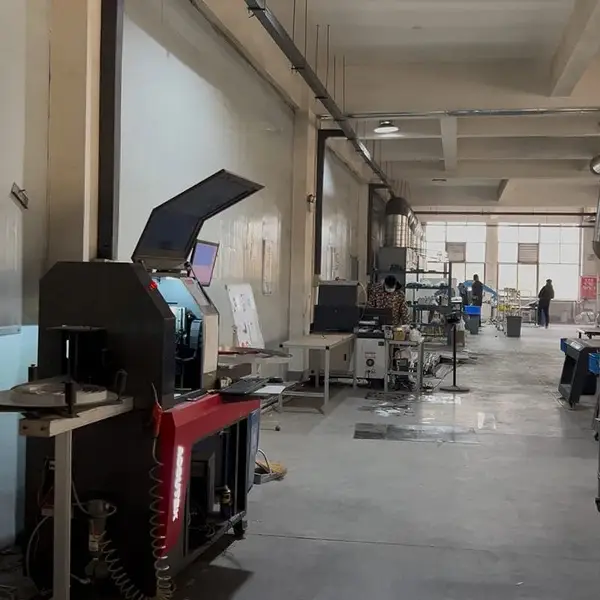
Real photo from our production floor — every sign we ship is made here.
Products mentioned or relevant to this topic — factory-direct, custom built.
From $24/letter · MOQ 1 piece · Flexible lead time · CE & UL certified · ships to 20+ countries
Custom sizes, colors, and finishes. Get a factory price in 24 hours.
Get a Free Quote Copy EmailWhatsApp +86 13865703472 · business@aochuangsign.cn