I've walked into a hundred libraries and community centers. The signs that look great on opening day? By year three the acrylic's going yellow, the LEDs are flickering, and the Braille's peeling off. That's not a design problem. That's a material problem.
Here's what nobody tells you: the sign industry loves selling you "commercial grade" that's really just residential junk with a markup. For a public facility that runs 12 hours a day, seven days a week, you need stuff that's built for that duty cycle. I've watched sign shops charge a library $800 for a single front-lit channel letter from a domestic fabricator. Same 304 stainless, same Samsung LEDs. We ship that letter from our factory for $120.
But let's talk about what actually holds up in a public building. Because wayfinding isn't about looking pretty. It's about getting a kid to the children's section and a senior to the restroom without them cussing under their breath.
The ugly truth is that cheap acrylic will turn your crisp white signs into a sad nicotine-stained mess inside 18 months. That's not my opinion. Domestic (Chinese) acrylic lasts 1-2 years before yellowing. Mitsubishi or Degussa acrylic gets you 5-8 years with UV resistance at 90-92% light transmittance.
For library directional signs with faces over 2.5 meters, you'd better spec 5mm minimum or you'll see the letters flex in the air conditioning drafts. Most community centers think 3mm is fine. It is, until the building's HVAC kicks on and the acrylic starts breathing like it's playing the accordion.
And here's the rookie mistake I see every month: somebody orders a 2mm face to save 20 cents per sign. The light output drops from 92% to 90%—your customer won't notice that 2% difference. What they will notice is the glare from the thinner material and the buzz of LEDs running too close to the surface. Don't do it.
I've seen this go wrong: a community center in coastal Florida ordered 304 stainless for their exterior directory. Three years later the corners were pitting like acne scars. 304 has 18% chromium and 8% nickel—good for 10+ years in normal conditions. But near salt air? You need 316 with 2-3% molybdenum for marine-grade. Costs 20-30% more, but you won't be replacing the whole sign set after the third hurricane season.
For indoor library signs, 304 brushed #4 finish is fine. But if that sign is anywhere near a kitchen or a pool area at the community center, pay for 316. And never accept mirror #8 in a public area unless you want every fingerprint and smudge visible at noon. Brushed or PVD-coated is your friend.
Weight matters too. Aluminum is one-third the weight of steel and lasts 8-12 years outdoors. For suspended ceiling signs or wall-mounted directs, 1.0-1.6mm aluminum anodized is plenty. But for ground-mounted monuments that need to survive the snowplow, go 3mm stainless.
Every LED module seller will tell you their product lasts 50,000 hours. That's L70 rating at ideal conditions—25°C, never dimmed, perfect power. In a real library lobby with afternoon sun beating through the glass? Cut that to 30,000 hours if you're lucky. Cheap modules, the ones with dull gray solder joints, will start failing at 12-18 months. I've pulled them out of community centers where half the letters were dark and the building manager was ready to sue.
Quickest way to spot bad modules: look at the solder joints. Dull gray = won't last 18 months. Shiny silver = proper lead-free solder. If you're buying from a factory, ask for Samsung or Osram chips with the blue-jin LED driver. That combo gets you five years real world. Pay the premium. Your client will thank you when the sign still works at year four.
Color temperature matters too. Libraries love 4000-5000K neutral white—feels clean without being a hospital. Community centers with cafes? 3000-3500K warm makes the space inviting. Don't let anyone sell you 6000K cool white for a reading room. It's fine for highway signs, not for grandma looking at the bestseller list.
Look, I'm not a lawyer, but I've seen signs fail inspection because the Braille dots were too shallow or the mounting height was off by two inches. NEC Article 600 covers electrical, but the real pain is Americans with Disabilities Act requirements. Tactile signs must be mounted 48 to 60 inches above the floor. Non-glare surfaces. Grade 2 Braille—that means contracted Braille, not just the alphabet.
Here's what nobody tells you: a lot of factories that say they do ADA signs are just laser-etching a pattern that looks like Braille. Real Grade 2 Braille requires spherical domes, minimum 0.019 inches high, spaced exactly 0.090 inches apart center to center. If your sign vendor can't show you a Braille cert, run.
For library wayfinding, every permanent room sign needs tactile text and Braille. Men's restroom, Women's restroom, Children's Section, Reference Desk. Temporary signs like "Story Time Today" can be printed vinyl. But permanent directories? Must be tactile. Don't skip this or you'll be paying an ADA consultant more than the sign cost to fix a punch list.
We get a lot of library procurement people asking if about 5-15 days is real. Yes. Our factory in Lu'an, Anhui runs a ten-step process: design confirmation morning one, laser cutting that afternoon (±0.1mm accuracy), bending and TIG welding day three, grinding and polishing day four, acrylic CNC day five, LED assembly days six and seven, silicone sealing day eight, then an 8-12 hour aging test in a heated room to catch failures. Day nine is 100% QC inspection—every module lit, every joint checked. Days ten through fifteen go to packaging: foam, carton, plywood crate.
But shipping is where it gets real. LCL sea freight: your crate gets handled six to eight times between our dock and yours. Every touch is a chance for damage. That's not in the brochure. I've seen $1,200 worth of acrylic letters arrive in New York with a forklift hole through three boxes. That's why we quadruple wrap with foam and use 3/8 inch plywood. Express air for small orders—7-10 days door to door, $30-100. For a full library sign package, sea freight is about 65 days, $80-200 per cubic meter.
And yeah, Section 301 tariffs add about 30%. You still come out ahead of domestic fabrication by 50-65% on product cost alone. Just factor the lead time into your grant writing.
Q: Can I just buy IP65 rated LED modules and call it done?
A: IP65 means water jets from any direction. It does NOT mean your sign survives a Florida hurricane or a monsoon rain blowing sideways. For outdoor library monuments, spec IP68. It's submersible. Costs more, but you won't be swapping modules every spring.
Q: Do I really need UL certification for indoor signs?
A: If you're in the US and the sign is within 30 feet of a public entrance, local code inspectors often ask for UL or ETL listing. Full UL 48 can cost $4,000-15,000 and take nine months. ETL is 10-30% cheaper and accepted everywhere. But if a factory says they have CE and that's enough—CE costs 20,000-50,000 RMB, two weeks to get. Ask to see the certificate with today's date. Watch them sweat. CE means nothing for US electrical safety.
Q: Can I save money by using domestic acrylic instead of imported?
A: Yes. You'll save maybe 10-15% on material. Then your signs yellow in two years and you get a nasty phone call from the library board. Mitsubishi or Degussa acrylic holds up 5-8 years. The 2% light output difference between 2mm and 3mm doesn't matter. The 40% cost bump for thicker material is worth it when the sign doesn't warp. Don't be cheap on acrylic. Your reputation isn't worth the $80 you save per sign.
One more thing—if your community center is building new, get me the architectural drawings before you order. We can match the wall mounts to the stud spacing. I've seen too many signs installed with drywall anchors that pull out after a year of kids hanging their coats on them. Do it right, and your signs outlast the carpet.
—A guy who's been on the floor since 1997.

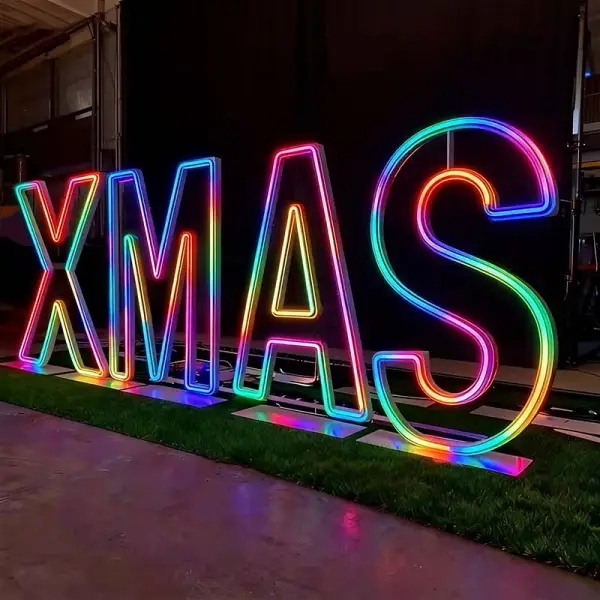
Real photo from our production floor — every sign we ship is made here.
Products mentioned or relevant to this topic — factory-direct, custom built.
Factory-direct since 2010. Free quote within 24 hours — no obligation.
Get a Free Quote → Copy EmailMOQ: 1 piece · Flexible lead time · 2-year warranty · Worldwide shipping
See pricing, specs, and get a free quote for the sign type you need. Built in our factory, shipped worldwide.