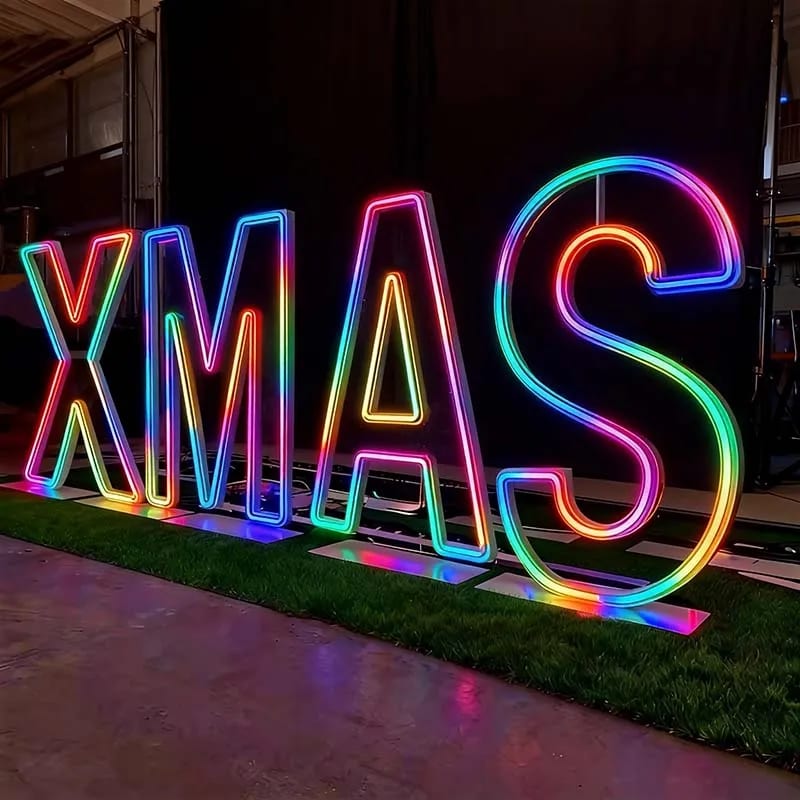
I've seen more bad community center signage than hot dinners. You know the kind: a 4x8 foot aluminum panel with vinyl letters that started peeling after one winter. Or those halo-lit letters that look great in the render but half the LEDs are dead by the time the paint dries on the new building.
Here's what nobody tells you: wayfinding in a public facility isn't about making it pretty. It's about making it work when the lights go out, when a kid vomits near the directory, when the janitor pressure-washes the wall at 6am. I've been on the factory floor 16 years, and I've shipped signs worldwide. Let me save you the scars.
The ugly truth is that most sign companies will sell you what's easy for them, not what's right for your building. So if you're specifying signage for a library or community center, you need to know which shortcuts will cost you, and which ones actually save money without embarrassing you in front of the board.
Every sign starts with a substrate. For indoor wayfinding in a library, you've got three real choices: acrylic, aluminum, or stainless steel. I don't care what the salesman says about "premium composite" — that's just aluminum with a fancy name.
Acrylic is your friend for lightbox signs and directory panels. Mitsubishi or Degussa acrylic hits 90–92% light transmittance. That 2% difference between 2mm and 3mm faces? Your client won't see it, but your budget will feel it. A 2mm sheet costs maybe 60% of a 3mm. But here's the catch: if your panel is wider than 2.5 meters, you go 5mm or you get flex. I've seen 3mm acrylic bow like a cheap guitar neck in a 4-foot wide directory. Don't be that guy.
For exterior monument signs or directional posts, go with 304 stainless steel. It's got 18% chromium and 8% nickel. That gives you a solid 10+ years outdoors. If your library is within a mile of the coast, you pay the premium for 316 stainless — that extra 2–3% molybdenum means you won't be replacing rusted letters in three years. It's 20–30% more expensive, but replacing a whole sign system costs ten times that.
Aluminum is the budget workhorse. Weight is one-third of steel, naturally rust-proof. But it dents. A kid leans on it, a cart hits it, and you've got a permanent crease. I always spec 0.063-inch (1.6mm) minimum for outdoor. Thinner than that and you're basically printing on foil.
Look, the LED industry is full of lies. SMD 2835 modules push 100–150 lumens per watt, which is solid. SMD 5730 can hit 40–60 lumens per chip — that's your bright stuff. But the real divider is the solder joints. Dull gray joints? Those modules won't last 18 months. Shiny silver means proper lead-free solder, and you'll get 50,000 hours L70, which is about 5 years of real use, maybe more with quality chips like Samsung or Osram.
For a library, you want 4000–5000K neutral white in the corridors. It's not too warm (that's for hospitality) and not too cool (that's for highway signs). People reading under it should see true colors, not greenish sick light. If you're doing directory lightboxes, 3000–3500K makes the room feel welcoming — but don't mix color temps in the same sightline. I've walked into community centers where one sign is 2700K and the next is 5000K. Looks like a disco.
Here's brutal honesty: most Chinese factories will claim they use Samsung chips. Ask to see the manufacturer's datasheet with lot numbers. If they can't produce it, they're selling you rebranded junk. Our shop uses Lan Jing or Seoul Semiconductor — those hold up. And if someone tells you their modules are "IP68" but they're not potted in silicone, walk away.
I've watched sign shops pay $800 for a front-lit letter from a domestic fabricator. Same 304 stainless, same Samsung LEDs. We ship that letter for $120. That's not a typo. Factory-direct pricing is 50–65% less than US retail installed. Your board members need to hear this: a full set of halo-lit channel letters for a library name — say, "OAKVILLE PUBLIC LIBRARY — 15 letters — runs $400 to $1,000 per letter installed in the US. From our dock, each letter is $35 to $120. That's a $10,000 savings on a simple sign.
But you can't just order cheap and hope. Freight costs matter. Express (7-10 days) runs $30–100 for small packages. Air freight is $4–12 per kilo. Sea freight takes about 65 days and runs $80–200 per cubic meter for LCL. The ugly truth is LCL cargo gets handled 6 to 8 times between our dock and your job site. Every touch is a chance for a dent. So if you order $3,000 worth of signs, spend the extra $200 on plywood crating. Skipping it costs you a replacement order.
Section 301 tariff adds about 30% on top of your invoice. That's your problem, not ours. Calculate that into your budget before you call me crying.
Here's what a proper factory does for your wayfinding system. First, design confirmation takes one day. Then we laser cut the backing — tolerance is ±0.1mm. That's not a robot bragging, that's the difference between a letter that fits and one that's crooked. Bending and TIG welding takes another day or two. Grinding and polishing after that. CNC routing of the acrylic faces — one day. LED assembly and wiring — one to two days. Then we seal with neutral silicone, not the cheap acid-cure stuff that eats seals. We run an 8–12 hour aging test. Then 100% QC inspection. Then packaging: foam, carton, plywood crate.
That whole process is 7 to 15 days. Any factory that says they can do it in three days is lying. Unless they're skipping the aging test — which means you get dead LEDs in six months.
Certifications matter too. UL 48 costs $4,000–15,000 and takes 4–9 months. Most library specs will accept ETL as a cheaper alternative (10–30% less). CE marking is 20,000–50,000 RMB. I've seen factories claim CE who don't have a current cert. Ask to see the certificate with today's date. Watch them sweat.
For outdoor signs, you need at least IP65. That means dust-tight and water jets from any direction. It does NOT mean your sign survives a Florida hurricane. For that, you need IP66 or even IP68 if you're mounting it where water pools. And never trust a Chinese IP rating without the lab report.
Libraries are public buildings. That means ADA compliance is non-negotiable. Tactile signs must be mounted 48 to 60 inches above the floor. Braille needs Grade 2. The surface has to be non-glare. I've seen gorgeous machined aluminum signs with no contrast that blind people can't use. Your sign shop should already know the requirements — if they ask "what's ADA?" during the bid, hang up.
I always spec a matte finish for anything readers touch. Brushed #4 stainless works. Mirror #8 is a fingerprint magnet. Powder-coated aluminum is fine, but ask for a polyurethane clear coat over it — that stuff holds up to hand sanitizer and bleach wipes.
One piece. I don't care if it's a single letter. MOQ is one. That's because we're not a sweatshop. But don't waste our time with a single $15 letter when you could order the whole system and save on freight. Use your head.
With 304 stainless and proper LEDs, expect 10+ years before you need to replace the LED modules. The stainless frame will outlive you. The acrylic faces — if you used UV-resistant Mitsubishi — last 5 to 8 years before yellowing. If you bought cheap domestic acrylic, expect yellowing in 1 to 2 years. That's not a guess, it's chemistry.
If your building inspector knows what they're looking at, yes. If they don't, you might get away with CE. But your insurance company will find out when the sign catches fire. Pay for the listing. It's cheaper than the lawsuit.
You can install a flat aluminum panel with mechanical fasteners. But wired channel letters with transformers? Call an electrician. I've seen a librarian electrocute herself drilling into a live circuit. Don't be that headline.
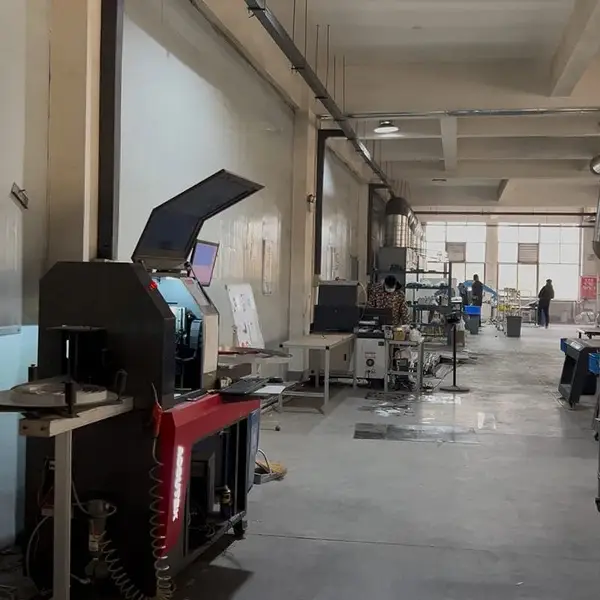
Real photo from our production floor — every sign we ship is made here.
Products mentioned or relevant to this topic — factory-direct, custom built.
From $24/letter · MOQ 1 piece · Flexible lead time · CE & UL certified · ships to 20+ countries
Custom sizes, colors, and finishes. Get a factory price in 24 hours.
Get a Free Quote Copy EmailWhatsApp +86 13865703472 · business@aochuangsign.cn
See pricing, specs, and get a free quote for the sign type you need. Built in our factory, shipped worldwide.