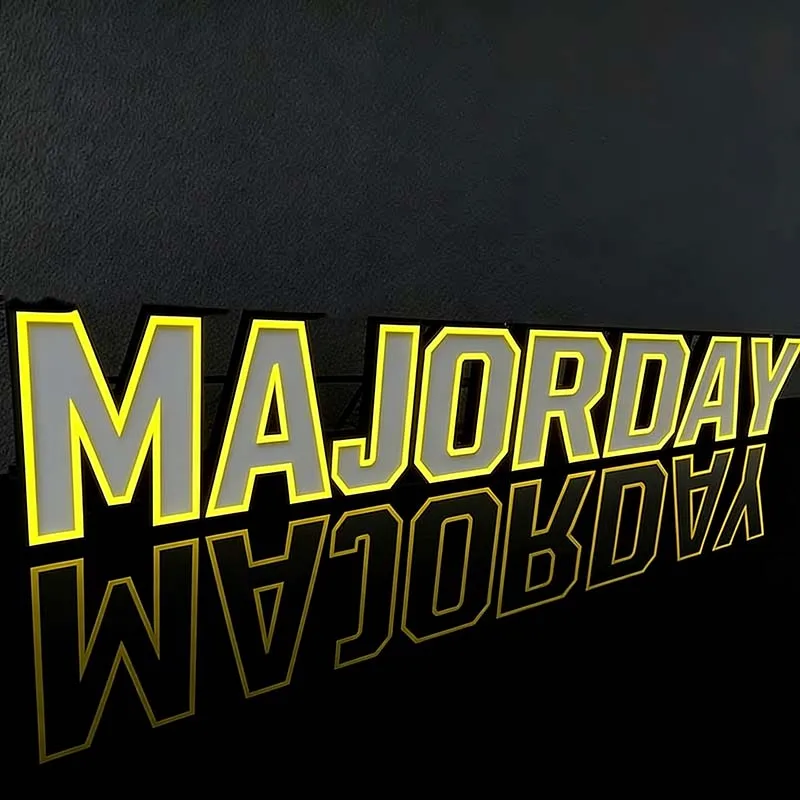
I've been building signs since 2010, and I've replaced more outdoor power supplies than LEDs. That should tell you something. Your LEDs are fine, but the $8 black brick feeding them is cooking itself to death inside a sealed channel letter.
This job has burned my hands on hot acrylic and taught me one ugly truth: nobody pays attention to the power supply until it's the reason a sign is dark. Then they call us, angry, because the LEDs didn't last the five years they were promised.
Look, you can put the best Samsung or Osram LED modules in a sign and still have it fail in 14 months. Why? The power supply died first. The cheap unbranded units use electrolytic capacitors rated for maybe 85°C, and inside a sealed outdoor letter enclosure, you're easily pushing 60°C on a sunny afternoon. Every 10°C rise cuts capacitor life roughly in half. That's not in the brochure.
Here's what nobody tells you: quality LED modules have a real lifespan of 5+ years. Cheap modules, 12 to 18 months. But a power supply operates under thermal stress every single hour the sign is on. Even a good LED module can't compensate for a power supply that's slowly boiling its own capacitors.
I've seen this go wrong more times than I can count. A shop owner buys a nice set of front-lit channel letters, pays extra for UV-resistant acrylic, and then lets the fabricator put a no-name $12 power supply inside because "it's fine, it's waterproof." It isn't. Eleven months later, the letters are dead. The LEDs are fine. The supply has a swollen cap and a scorch mark on the PCB.
The quickest way to spot bad electronics? Look at the solder joints. Dull gray solder means poor lead-free processing and likely early failure. Shiny silver joints mean proper solder. I open every sample supply that lands on my desk. If I can't read the capacitor brand, it goes back.
You can't just multiply the module wattage by the number of modules and buy a supply that matches. That's a rookie mistake. Inrush current alone can kill an under-spec'd supply on the first power-up.
SMD 2835 modules are the industry standard, pulling 100 to 150 lumens per watt. SMD 5730 chips put out 40 to 60 lumens per chip and draw more current. If you're building back-lit halo letters with dense LED arrays, calculate total wattage and then add at least 25% headroom. Run a 100W load on a 120W supply, not a 100W supply.
Most sign shops ignore voltage drop. On 12V systems, a run longer than a few meters loses voltage at the end. The last letters get dim, and the power supply compensates by pushing more current, which makes more heat. For outdoor letter sets with long wire runs, I spec 24V every time. The wire is thinner, the current is lower, and the supply doesn't work as hard.
If you're ordering front-lit channel letters for a strip mall, the internal layout matters. One big supply mounted in a center raceway or two smaller supplies at each end? I'd rather have two smaller supplies. If one fails, half the sign stays lit while you get the replacement. That's field serviceability, and it's free.
IP65 sounds impressive. That rating means dust-tight and protected against water jets from any direction. It doesn't mean your sign survives a Florida hurricane. That's the first lie I have to untangle with clients.
For most outdoor signage, IP65 is the minimum. IP66 handles more powerful jets, which you'll want if the sign gets pressure-washed or faces coastal spray. IP68 means submersible, which is overkill unless you're mounting signs in a flood zone or underwater. Paying for IP68 on a normal storefront is burning money.
Here's what nobody tells you about condensation: a sealed IP67 enclosure can actually trap moisture. Warm day, cool night, interior air hits dew point, water forms on the inside walls. No drain hole, no airflow, and now your "waterproof" supply is sitting in a puddle. I've pulled open embedded lightbox signs where the only thing that got wet was the connector, but it was enough to short the DC output.
Ask if the power supply has conformal coating on the PCB. That thin silicone layer keeps moisture off the components when condensation forms. If the supplier can't answer that question, they don't know their own product.
Outdoor signs take hits from lightning, grid switching, and even nearby HVAC compressors kicking on. A power supply without input surge protection is a time bomb. I've replaced two this year alone after thunderstorm season in south Florida.
Look for metal oxide varistors (MOVs) on the input side and a TVS diode on the output. That's bare minimum for outdoor. If the datasheet doesn't mention surge immunity, assume there isn't any.
Most cheap power supplies have "surge protection" printed on the label and nothing on the board. Open one up. If you see one little blue component and a lot of empty solder pads, that's not protection. That's theater.
Manufacturers write every power supply datasheet at 25°C ambient. Your outdoor sign won't ever see 25°C inside the enclosure. In full sun, the interior of a black channel letter can hit 60°C or more. At that temperature, a supply rated for 350W might only safely deliver 200W. That's derating, and if you ignore it, you'll be back in a year.
Mount the supply away from direct sunlight, on a metal surface, with an air gap. If you're using 304 stainless steel letters, the metal body helps conduct heat, but only if the supply is actually bolted to it. Don't wrap it in foam and call it insulated.
At our factory, we run every sign through an 8 to 12 hour aging test at full load before it ships. Supplies that overheat in that test get rejected. If your supplier doesn't burn-in their signs, you're their QC department.
Warranty tells you everything. We give a 2-year warranty on LEDs and only 1 year on power supplies. Why? The supply is the weakest link. If a factory offers 5 years on the power supply, they're either lying or they're building the entire sign with giant derating margins. Nobody builds with giant margins at these prices.
UL 48 certification costs $4,000 to $15,000 and takes 4 to 9 months, with quarterly audits. ETL is a cheaper alternative, usually 10 to 30% less. CE marking costs 20,000 to 50,000 RMB and takes 2 to 8 weeks. Most factories will say they have it. Ask to see the certificate with today's date. Watch them sweat.
For US installations, the sign must meet NEC Article 600. That's non-negotiable. Your power supply should be listed by a Nationally Recognized Testing Laboratory. If your supplier says "CE is enough for the US," run.
Energy efficiency matters because wasted energy becomes heat. A 90% efficient supply wastes 10% as heat. An 85% efficient supply wastes 15%. That extra heat goes directly into your sealed enclosure and shortens the life of every component. Pay for the higher efficiency. It's cheaper than service calls.
If you're importing signs directly, ask for photos of the power supply opened before shipping. Not a brochure. Not a spec sheet. Actual photos of the board, the heatsink, the capacitors. If they won't send it, they didn't build it.
LCL sea freight matters. Your crate gets handled 6 to 8 times between our dock and yours. Every touch is a chance for damage. A power supply with loose internal screws will arrive rattled to death. That's not in the brochure. Pack the supply inside the sign raceway, not loose in the crate.
Factory-direct pricing saves 50 to 65% over US retail installed. But saving money on a sign that fails in 18 months is not a saving. A $120 front-lit letter with a proper Mean Well HLG supply will outlast a $400 letter with a generic brick. I've watched sign shops pay $800 for a front-lit letter from a domestic fabricator. Same 304 stainless, same Samsung LEDs. We ship that letter for $120. The difference? We don't skip on the power supply.
The power supply is 10 to 15% of the total sign cost, but it causes 80% of the early failures. Don't cheap out on the cheapest part.
Can I use an indoor power supply outdoors if I put it in a waterproof box?
No. That waterproof box becomes an oven in the sun and a sweat lodge at night. Indoor supplies aren't conformal coated, don't have surge protection, and can't handle the thermal swings. You'll replace it every summer.
What IP rating do I need for a sign near the ocean?
You need IP66 minimum, and 316 stainless steel hardware. 316 costs 20 to 30% more than 304, but for Miami Beach, pay the premium. For a strip mall in Ohio, 304 is fine. If you use 304 near salt water, you're replacing letters in 3 years.
Can I run my UL-listed power supply at 100% load?
Only if the ambient temp is 25°C and the enclosure is open. That never happens outdoors. Derate to 70% at 60°C. If you don't, the warranty is meaningless because you misapplied the product.
How do I spot a counterfeit Mean Well supply?
Check the UL file number against the official database. Compare weight to a known genuine unit. Look for blurry silkscreen and dull solder joints. If the price is 40% below distribution, it's fake. I don't care what the supplier says.
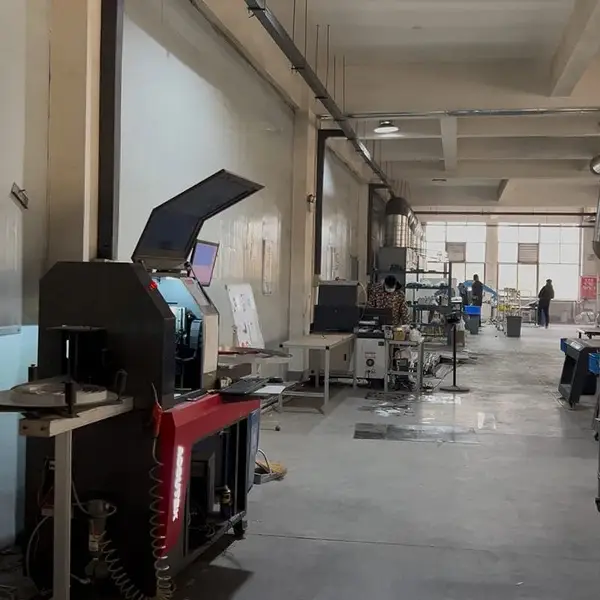
Real photo from our production floor — every sign we ship is made here.
Products mentioned or relevant to this topic — factory-direct, custom built.
From $24/letter · MOQ 1 piece · Flexible lead time · CE & UL certified · ships to 20+ countries
Custom sizes, colors, and finishes. Get a factory price in 24 hours.
Get a Free Quote Copy EmailWhatsApp +86 13865703472 · business@aochuangsign.cn