Birds only need a 1-inch hole to enter a channel letter, and they'll build a nest in under 48 hours.
The fix isn't a plastic owl, ultrasonic noise, or caulking every seam. Close every opening bigger than 3/8 inch with 304 stainless mesh, and leave the weep holes covered—not plugged. That's the whole article. If you're a sign shop owner or contractor dealing with a starling that just shorted a customer's sign, the rest is detail.
Look, a standard front-lit channel letter is a metal box with an acrylic face, a power supply, and LED modules inside. That's a heated studio apartment for a sparrow. The return—the metal side wall—has gaps at the corners and a weep hole at the bottom to drain condensation. A bird doesn't need much.
SMD 2835 LEDs run 100-150 lumens per watt, and they're rated L70 at 50,000 hours. But that rating assumes the heat can escape. Tuck a dry grass nest around the module and the junction temperature climbs. I've pulled a nest out of a 40-inch letter that had three eggs and a dead LED board. The module wasn't cheap. They installed it wrong—nest first, then sign.
Here's something nobody tells you: birds enter from underneath. They don't land on the face. They fly up under the raceway, grab the return lip, and slip into the bottom gap. From underneath. So any solution that involves spikes on top of the letter is aimed at the wrong end.
A single service call with a bucket truck runs $250-500. The LED module inside a 40cm letter costs about $35 at wholesale. The math is ugly before you even factor in the customer standing on the sidewalk staring at a dark sign at 9pm. I've seen a pigeon nest short a UL-listed power supply and take out an entire storefront. The owner lost a full night of lit signage. That's real money.
Nobody mentions this: bird nests hold moisture against the solder joints. Dull gray solder joints mean cheap lead-free solder that won't last 18 months. Shiny silver joints on Bluesky or Rishang modules last 5+ years in the field. But add nesting material and even good modules die early. Our warranty? 2 years on LEDs, 1 year on the power supply. A bird nest isn't a manufacturing defect, and any factory that replaces a module out of pity is doing you a favor, not following policy.
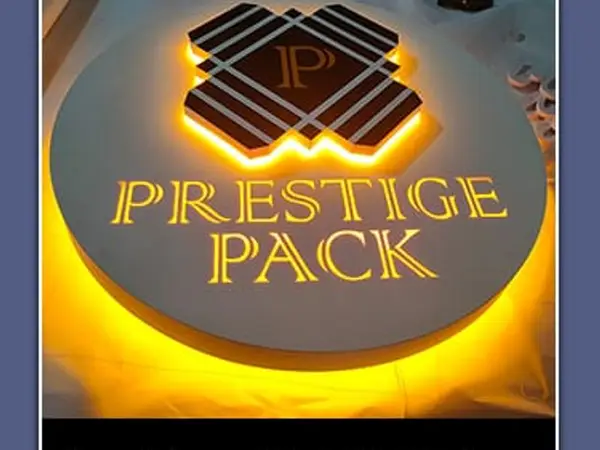
Back-lit halo letters are even worse. Back-lit halo letters have an open rear gap to cast light onto the wall. That gap makes a perfect cavity. I've watched a sign shop quote a customer $3,000 for a set of halo letters and then silently install a bird net behind the whole sign because they didn't think about the rear opening. It looked like a garage sale.
If you're ordering front-lit channel letters, specify factory-installed 304 stainless mesh over the return openings. Don't accept aluminum window screen. It tears. 304 stainless mesh with a 1/4-inch grid, welded or clipped to the inside of the return, stops sparrows and starlings cold. 304 stainless has 18% chromium and 8% nickel, good for 10+ years outdoors. If your sign is going to Miami Beach, pay the 20-30% premium for 316 stainless mesh. It has 2-3% molybdenum and shrugs off salt air.
Don't seal the weep holes. That's a rookie mistake I have to fix every spring. Channel letters need one drain hole at the lowest point. Cover it with a stainless screen. Don't plug it with silicone. Plugged weep holes trap condensation, push humidity into the LED module, and void the UL 48 listing. The inspector will fail it, and the birds will still find another gap.
When you're spec'ing an acrylic face for acrylic LED letters, a 3mm face transmits 90-92% light, a 2mm face transmits 90%. Your customer won't notice the 2% difference, but they'll notice the 40% cost bump. The same logic applies to bird-proofing: specifying 1.2mm stainless returns instead of 0.8mm galvanized adds maybe $10 per letter, but it closes gaps that cheap returns leave open. If you're already paying for stainless steel letters, pay for the 304 or 316, not the 201. 201 rusts in 2 years near salt.
Our Lu'an, Anhui shop runs 3,000m² with 50+ workers. We weld bird mesh into returns every week. You want it as a line item on the production drawing, not as an afterthought on the install truck.
If the sign is already on the wall, you need a lift, a headlamp, and a roll of 1/4-inch 304 stainless mesh. Kill the power first. Pull any nest material out, vacuum the cavity, and then install the mesh from inside the return. Use stainless clips or outdoor-rated adhesive—not screws drilled through the letter body. Every new drill hole is a new entry point and a new water path.
Aluminum mesh weighs one-third what steel does and is naturally rust-proof. It has an 8-12 year outdoor life. But in high-wind zones or if the sign flexes, 304 stainless mesh is stronger. Don't use steel wool. It rusts, breaks apart, and the little fibers land on the LED board. I've seen a service tech stuff a return with steel wool and call it a day. Two months later the sign had a short and a pile of rust flakes.
One more thing: adding mesh to a listed sign is fine if you attach it outside the electrical enclosure. But if you drill into the letter body, caulk the hole with neutral silicone, not hardware store silicone that off-gasses acetic acid and fogs the acrylic face. Don't block the bottom drain. Did I mention the drain hole? I'll say it again because someone will read this and still caulk it shut.
The ugly truth? Ultrasonic bird repellers don't work on sparrows or starlings. They nest in airport hangars with 120-decibel jet noise. A little speaker under the raceway won't do anything except annoy your installer. I've thrown two of those units in the scrap bin after customers insisted. Save the $60.
Bird gel works on ledges, not cavities. Birds don't need to land on a ledge to enter a channel letter—they fly straight into the return gap. Gel also melts above 38°C, drips down the face, and looks like snot on a $2,000 sign. I've seen it happen. Flashing lights inside the letter? The sign is off in the morning when birds are active. They don't care about your RGB chase.
Need a temporary fix while you schedule a proper mesh retrofit? Install bird spikes on the top raceway, not the letter face. But understand it's a band-aid. The real entry is underneath. And never spray bird repellent inside a letter. Most contain polybutene, which is flammable and attracts dust. Dust insulates the LED driver, temperatures climb, and now you have a fire risk and a warranty void.
In the U.S., once a bird lays eggs, the nest is protected under the Migratory Bird Treaty Act. You can't remove it until the chicks fledge. That's the law, not a suggestion. House sparrows and European starlings are invasive and not federally protected, but some states still require a permit. Check before you pull it. An empty nest? Pull it now and clean the cavity.
Wear a respirator. Bird droppings carry histoplasmosis and cryptococcosis. Don't blow the nest out with compressed air—you'll aerosolize the spores all over the sign and yourself. Vacuum with a HEPA filter, wipe with disinfectant, let it dry, then install mesh.
CE marking and IP ratings don't mean a sign is bird-proof. IP65 means dust-tight and protected against water jets. It doesn't mean a starling can't enter. I've seen IP66-rated signs full of twigs. The rating covers water, not wildlife.
When you order direct from our factory in Lu'an, Anhui, adding 304 stainless bird mesh to a set of channel letters costs less than one preventative service call. We're a 3,000m² facility with 50+ workers, CE and UL certifications, and a minimum order of one piece. Sample lead time is about 5 days, production around 15 days. You can spec the mesh on the drawing and it's done.
Here's the thing: any factory can say they're UL listed. Ask for the certificate with today's date and the quarterly audit report. UL 48 certification runs $4,000-15,000 and takes 4-9 months. If a supplier can't produce the certificate in five minutes, they're lying. Same with CE. CE marking costs 20,000-50,000 RMB. Ask to see it. Watch them sweat.
Our LED warranty is 2 years, power supply 1 year. That's the baseline. But a bird nest isn't a warranty issue. It's a design failure. If you buy from us, we'll weld the mesh, leave the drain holes open, and ship the sign in a crate that's been handled 6-8 times between our dock and yours. The mesh will survive the freight. The plastic owl won't.
Q: Do fake owls work? No. A plastic owl works for about 72 hours until a pigeon lands on its head. I can't believe I still have to explain this.
Q: Can I just seal the drain holes? No. You'll trap condensation, humidity kills the LED module, and you'll void the UL listing. Weep holes are there for a reason. Cover them with mesh, don't plug them.
Q: What about bird spikes on the letter? They keep birds off the top, not out of the inside. Birds enter from the bottom return or the rear gap. Spikes on top are decorative.
Q: Will bird mesh void my UL listing? Not if it's factory-installed on the exterior return and doesn't block ventilation or drainage. If you drill through the letter body and shove steel wool inside, yes, you just voided it. And you're a hack.
Products mentioned or relevant to this topic — factory-direct, custom built.
From $24/letter · MOQ 1 piece · Flexible lead time · CE & UL certified · ships to 20+ countries
Custom sizes, colors, and finishes. Get a factory price in 24 hours.
Get a Free QuoteWhatsApp +86 13865703472 · cairuisheng@aochuangsign.cn