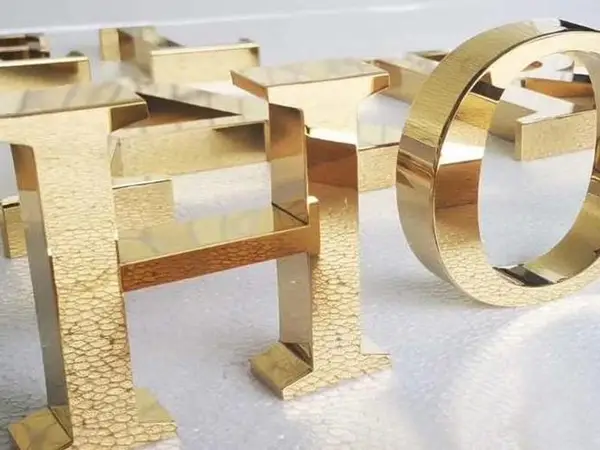
A stainless steel letter bolted to an aluminum backing panel. Three years later, that backing looks like Swiss cheese. I've seen this exact failure in strip malls from Dallas to Dubai. Nobody planned it, nobody wanted it, but the chemistry didn't care.
Galvanic corrosion is the silent killer of mixed metal signs. It doesn't show up during the 8-hour aging test in our factory. It shows up after 18 months of rain, road salt, and humidity. By then, you're paying for a crane, a replacement panel, and a customer who thinks you're an idiot.
Here's what nobody tells you: the metal supplier, the sign installer, and even some manufacturers will happily sell you incompatible metals because it's easier than explaining the galvanic series.
Take two different metals, put them in contact, add water – that's your battery. One metal becomes the anode and gives up its electrons. The other becomes the cathode and stays pretty. The anode corrodes. It's that simple.
Every metal has a position on the galvanic series. Aluminum sits near the bottom. Stainless steel sits near the top. Put them together in salt water, and aluminum is the sacrificial lamb. It doesn't matter how expensive your stainless steel letters are – the hidden aluminum mounting frame is what's doing the dying.
Take away any one of those three and the corrosion stops. That's your entire prevention strategy.
The ugly truth is that most sign shops only think about the first ingredient. They pick "stainless" because it's shiny and forget that the aluminum frame behind it is a different metal. Then they bolt them together with a carbon steel screw, put it up in a humid coastal town, and expect a ten-year life.
Aluminum + Stainless Steel. This is the most common combination in modern signmaking. Aluminum frames, stainless faces, aluminum letters on stainless panels. The voltage gap is moderate, but the area ratio makes it deadly.
Here's the rule: the anode (aluminum) should always have a much larger surface area than the cathode (stainless). If you put a stainless bolt on an aluminum panel, the bolt is tiny and the panel is huge – the corrosion spreads slowly. But flip it around: a big stainless face panel mounted on small aluminum clips. Now the cathode is massive and the anode is tiny. The clips corrode through in months.
I've seen this go wrong on an backlit halo letter installation. Someone used stainless standoffs directly against an aluminum returns without any isolation. The aluminum around each standoff became white powder within two winters.
Brass + Steel. Brass is more noble than steel. So steel bolts on a brass letter tray will sacrifice themselves. A customer once complained that his bronze-looking letters were "bleeding rust." It wasn't the letters – it was the steel screws underneath.
Copper + Aluminum. Never, ever do this. The galvanic difference is huge. Copper gutters, copper tops, aluminum base – you're building a very expensive battery. If you want a copper accent on your brass letters, keep it separated with a non-conductive gasket.
1. Isolate the metals. Use nylon washers, rubber gaskets, and insulating bushings between dissimilar metals. In our factory, we use a 0.5mm plastic isolation film on every stainless-to-aluminum mounting surface. It costs pennies per sign.
2. Seal out the electrolyte. Water is the catalyst. Use neutral silicone sealant on every fastener head and seam. Drainage holes in any horizontal channel so water doesn't pool. If there's no water, there's no battery.
3. Match your fasteners to the least noble metal. Using stainless fasteners on aluminum is safer than using zinc-plated steel. The rule we follow: the fastener should be the same metal as, or more noble than, the smaller component. When in doubt, use 316 stainless – but isolate it from the aluminum rather than letting it touch directly.
In our shop, we keep three fastener grades in stock. 304 stainless for most outdoor work. 316 stainless for coastal jobs. And isolation kits with nylon sleeves and washers that come standard with every front-lit channel letter we export.
What we avoid is zinc-plated steel. Zinc is anodic to both steel and aluminum. It protects them by corroding first – which sounds great until the zinc coating is gone. Then the bare steel starts rusting. I've watched "galvanized" fasteners turn to rust dust in under two years.
Look, it's not about buying more expensive screws. It's about buying the right screw and installing it the right way. A 316 stainless screw costs thirty cents. Replacing a sign face costs three hundred dollars. The math isn't hard.
There's a common belief that powder coating over two metals will protect the contact point. That's true only if the coating covers the entire surface without a single pinhole. In practice, drill holes, cut edges, and field adjustments always expose raw metal.
If you're relying on powder coat to prevent galvanic corrosion, you're also betting that the installer won't scratch the finish during mounting. They will. The first scratch becomes the corrosion starting point. The ugly truth is that proper isolation materials are cheaper and more reliable than any coating.
Anodized aluminum is slightly more corrosion-resistant than bare aluminum, but anodizing is not an electrical insulator. It's porous. You still need gaskets.
We've been making signs since 2010, exporting worldwide. We've seen what comes back and what survives. Here's what we do on every mixed metal project:
Here's what nobody tells you about factory inspections: most QC checks are about looking good in photos. Our QC team has instructions to ignore the shiny face and go straight to the hidden mounting brackets. That's where the years happen.
We can also manufacture your dual-lit channel letters with pre-installed isolation film and supplied mounting hardware kits. That way, the corrosion prevention is baked into the product, not left to whoever picks up a screwdriver on site.
We can control the materials that leave our factory. We can't control what the installer does on a roof in a thunderstorm. We can't see if someone swaps our nylon washers for a random washer from the truck bed.
If you order a sign from us, the corrosion prevention is built in. But if your installation crew bolts stainless letters directly to an aluminum substrate with carbon steel screws, the sign will fail. And that's not our fault – it's physics.
What we can do is provide clear installation instructions, send you the right isolation kits, and answer questions before you order. We won't pretend that our signs are immune to bad installation. I've been burned by that lie before, and I won't repeat it.
When you're comparing quotes from factories, ask them directly: "How do you isolate dissimilar metals in your sign construction?" If the answer is "we use stainless screws," that's a red flag. Stainless screws alone don't solve the problem.
Ask if they provide mounting hardware. Ask what sealant they use. Ask whether they've ever tested their signs in a salt spray chamber. Then listen to how long they pause before answering.
The honest answer from our side is that we haven't run a full ASTM B117 salt spray test on every letter combo. But we've been building for 14 years and we know what fails in the field. We've replaced our own test signs that failed, and we've changed our methods because of it. That experience is worth more than a certificate.
First, the sign you buy has to be built with corrosion prevention in the design, not the finishing. Second, the person installing it has to follow the isolation rules. You control both if you order from a factory that gives you the full picture.
We sell rimless channel letters with integrated isolation layers and specified mounting hardware. We also sell acrylic light boxes where the metal frame is fully enclosed and protected. But for any mixed metal exterior job, don't let your supplier skip the isolation details.
Look, you're reading this because you've seen corroded signage. You've scraped off white powder from an aluminum frame. You've paid to reinstall a sign with stainless letters that somehow rusted. That doesn't have to happen again.
The cost difference between a properly isolated sign and a cheap one is often less than 5%. The cost difference in replacement, labor, and lost business is huge. I'd rather you think about that now than call me in three years blaming the factory.
Do your homework. Ask for the isolation kit. And if a factory tells you galvanic corrosion isn't real, hang up the phone.
We'll be here when you're ready to order the right way.

Real photo from our production floor — every sign we ship is made here.
From $24/letter · MOQ 1 piece · Flexible lead time · CE & UL certified · ships to 20+ countries
Custom sizes, colors, and finishes. Get a factory price in 24 hours.
Get a Free Quote Copy EmailWhatsApp +86 13865703472 · business@aochuangsign.cn
See pricing, specs, and get a free quote for the sign type you need. Built in our factory, shipped worldwide.