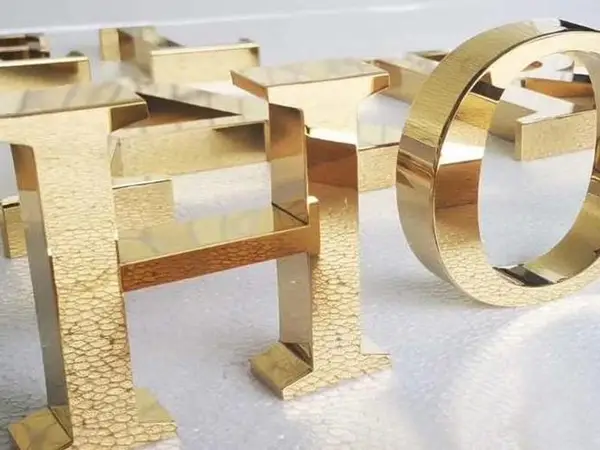
Factory-direct acrylic letters run $10 to $120 a letter. Non-lit dimensional letters sit at $10–$25. Lit channel letters? $20–$80 for front-lit, $35–$120 for halo. That's the real number before shipping, tariffs, and local installation.
I've been building these on the factory floor since 2010. I've burned my hands on hot acrylic, argued with suppliers about LED quality, and watched sign shops overpay for years without knowing it.
Most buyers think price scales in a straight line. It doesn't. A 6-inch acrylic letter and an 18-inch letter use wildly different amounts of material and LEDs, so per-letter cost jumps in steps, not a smooth curve.
In the factory, non-lit acrylic dimensional letters start around $10 for small 6–8 inch pieces and climb to $25 for larger 12–18 inch. Add LEDs and you're in acrylic LED letters territory at $20–$80 per letter for front-lit. Halo-lit? That's $35–$120 per letter because the light bounces off the wall, and you pay for better diffusion and mounting hardware.
Thickness drives cost more than most people think. 2mm acrylic is the cheap default. 3mm costs about 40% more and only gives you 2% more light transmission—so it's rarely worth it for small indoor signs. Push past 2.5 meters tall and you don't have a choice. Use 5mm, or the face will bow and crack when someone sneezes on it.
Most buyers never ask whether the acrylic is cast or extruded. That's exactly how they get burned on an exterior sign.
Extruded domestic acrylic is cheap and fine for indoor retail décor. Outdoors, it'll yellow in 1–2 years. Cast acrylic from Mitsubishi or Degussa is UV-resistant and lasts 5–8 years before yellowing. That material difference can add 30–50% to your exterior sign cost. Worth every penny if the sign faces south or sits in direct sun all day.
Finish matters too. A polished edge on tiny acrylic letters is labor-intensive. Brushed or frosted faces hide scratches. Clear acrylic with polished edges shows every fingerprint and weld mark underneath, so inspection time goes up, and so does the price.
Look, I don't install signs in your city. But I've shipped enough crates to know one thing: mounting is where local shops make their nut.
Factory product for a front-lit acrylic letter costs $20–$80. A US retail shop installs that same letter for $200–$700. That gap isn't all profit—labor, permits, a bucket truck, liability insurance—but it's still the single biggest line item on a client's invoice.
Mounting on drywall? Studs cost less than $2 a letter. Brick? Expect drilling, anchors, and sealing. A raceway? You're paying for a fabricated aluminum channel—and that's a whole separate conversation. Your back-lit halo letters often need a raceway for wiring and pattern alignment.
I've seen this go wrong plenty of times. A client orders indoor acrylic letters for an exterior wall because they saved $15 a letter. Six months later, the letters are yellowed, the LEDs are flickering, and the sign looks like it came from a thrift store.
Outdoor acrylic letters need UV-resistant cast acrylic, sealed LED modules rated IP65 minimum, and neutral-cure silicone that won't eat the acrylic. Those three upgrades push outdoor pricing about 30–50% above indoor. Near salt water? You're also upgrading fasteners and maybe the LED potting. IP65 doesn't mean corrosion-proof.
Color temperature matters more than you'd think. 3000–3500K looks warm and expensive in restaurants. 4000–5000K is neutral for corporate lobbies. 6000–6500K is what you use on a highway sign. The LED price is the same. The wrong color makes a $40 acrylic letter look like a $6 piece of junk.
Most US sign shops order from factories like ours, then mark it up 200–300% before it hits your quote. That's not illegal. It's how they pay rent.
I watched a shop pay $650 for a 24-inch acrylic halo letter from a local fabricator. Same Samsung LEDs, same Mitsubishi acrylic, same 304 stainless trim. We ship that letter for $95. The difference? The shop's overhead, the project manager's salary, and the three rounds of client revisions you didn't have to sit through.
Factory-direct savings on product usually run between 50% and 65%. That's not a promo number. That's the gap between our FOB price and a typical US retail quote. You still pay shipping, the 30% Section 301 tariff on Chinese imports, and local installation—but you're starting from a much lower base.
One more thing: if a factory claims CE or UL certification, ask to see the actual certificate with today's date. CE marking costs 20,000–50,000 RMB. UL 48 runs $4,000–$15,000 and takes 4–9 months. Most factories claim they have it. Watch them sweat when you ask for the file.
Start with letter count and height. Pick lit or non-lit. Decide front-lit, halo, or RGB. Then factor shipping, tariff, and installation.
For a 10-letter storefront with 18-inch front-lit acrylic letters, factory product runs $20–$80 a letter, so $200–$800. Express shipping on a small crate is $30–$100 if you're in a hurry. Air freight runs $4–$12 per kg and takes 10–20 days. Sea freight LCL is $80–$200 per cubic meter and takes 50–70 days—but your crate gets handled 6–8 times between our dock and yours. Pack it like it's going to be dropped. Because it will be.
Add 30% for the Section 301 tariff if you're importing into the US. On that $200–$800 order, that's $60–$240. Total landed cost before local installation runs roughly $340–$1,140. A local shop quoted you $6,000 for the same thing? Now you know why I drink coffee at 11pm.
Look, I'm not going to tell you to buy the cheapest acrylic and cross your fingers. That's how you get a callback six months later with a customer screaming about yellow letters.
But I will tell you this: skip 3mm acrylic when 2mm does the job on an indoor sign under 2.5 meters. You're paying 40% more for a 2% light transmission difference nobody can see. Use standard SMD 2835 LED modules at 100–150 lumens per watt—they'll last 5+ years with quality drivers. You don't need SMD 5730 chips unless you're lighting a billboard from 50 feet.
Choose front-lit over halo if you're on a budget. Front-lit channel letters run $20–$80 a letter; halo runs $35–$120. Halo looks premium, but a clean front-lit sign with decent color temperature still beats 80% of what's on Main Street.
IP65 sells brochures, but it won't survive a Florida hurricane. Don't overpay for IP68 potted modules unless you're mounting the sign underwater. A properly sealed IP65 module and a well-built aluminum raceway will handle rain, snow, and idiots with pressure washers.
Because you're comparing non-lit dimensional letters to backlit halo letters with Samsung LEDs and 316 stainless trim. That's like asking why a Honda costs less than a Mercedes. Size, thickness, LED count, finish, and whether it's outdoor-rated all move the needle.
You can. You'll be replacing them in 18 months when the domestic acrylic yellows and the cheap LEDs start flickering. Pay for cast UV-resistant acrylic and IP65 modules, or don't ask me why your sign looks like cheese.
Yes, usually by 50–65% on product. Add 30% tariff and freight, and you're still under local retail. But if you need the sign in 5 days and you don't know how to file customs paperwork, a local shop hurts less.
I can't believe I still have to explain this. MOQ is 1 piece. Lead time is 7–15 days in our factory. Sea freight adds 50–70 days. Need it yesterday? That's a local emergency, not an import.

Real photo from our production floor — every sign we ship is made here.
Products mentioned or relevant to this topic — factory-direct, custom built.
From $24/letter · MOQ 1 piece · Flexible lead time · Project-specific compliance documents · ships to 20+ countries
Custom sizes, colors, and finishes. Get a factory price in 24 hours.
Get a Free Quote Copy EmailWhatsApp +86 13865703472 · business@aochuangsign.cn