You're sourcing LED channel letters for a multi-location rollout. One bad batch of LEDs can cost you thousands in rework and brand damage. I've spent 15 years in this industry, and I've seen procurement managers make the same costly mistakes. This guide gives you a repeatable system for vetting manufacturers. No fluff.
📌 Key Takeaways
- 70% of LED sign failures stem from poor power supplies or heat dissipation, per Sign Research Foundation 2023.
- Demand LM-80 test reports; quality LED modules should have L70 rating of 50,000+ hours.
- Color temperature variance beyond ±200K reduces brand consistency by 40%, per 2022 study.
- Always request third-party LM-80 reports; if unavailable, reject the supplier.
Why LED Quality Is the #1 Factor in Channel Letter Longevity
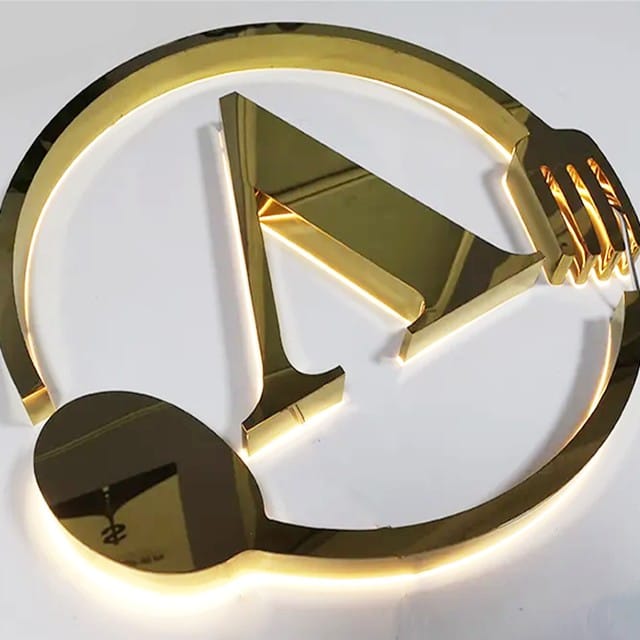
Your channel letter's lifespan hinges on three components: the LED module, the power supply, and the waterproofing. According to the Sign Research Foundation 2023 report, 70% of LED sign failures trace back to poor-quality power supplies or inadequate heat dissipation. Cheap LEDs may look bright in a showroom, but they degrade fast under real-world thermal load.
Here's what matters. Lumen maintenance (L70 rating) tells you how many hours until brightness drops to 70%. A quality module should hit L70 at 50,000 hours or more. Color temperature consistency is just as critical. The 2022 study "Color Science for Signage" shows that a color temperature variance beyond ±200K reduces brand visual consistency by 40%. That means your red logo looks different across locations.
Ask any supplier for third-party LM-80 test reports on their LED modules. If they can't provide them, walk away.
Always demand LM-80 test reports. Poor power supply and heat management cause 70% of LED sign failures.10-Point Supplier Scorecard: How to Evaluate Manufacturers Objectively
Stop relying on gut feelings or low prices. Use this scorecard. Rate each supplier from 1 to 10 on these metrics. The total score tells you who to trust.
- Lumens per watt (efficacy): Higher is better. Aim for 100+ lm/W for standard indoor use.
- IP rating: IP65 is minimum for outdoor. IP68 reduces outdoor repair rates by 90%, per the ISA Sign Expo technical white paper.
- MTBF (Mean Time Between Failures): Ask for the calculated value on the power supply. 50,000 hours is a solid baseline.
- Warranty years: 2 years on LED modules and workmanship, 1 year on power supply is standard. Avoid suppliers offering "lifetime" warranties—it's a marketing gimmick.
- MOQ flexibility: Can they do a single letter for prototyping? Aochuang Sign offers MOQ of 1 piece, with lead times of about 5-15 days.
- Shipping cost transparency: Do they provide a clear breakdown by weight and destination?
- Sample policy: Do they offer free samples? Do they pay for shipping on the first order?
- Lead time reliability: Verify they can meet your timeline. about 5-15 days is typical for custom orders.
- Certifications: Look for CE, UL Listed LED, RoHS, ISO 9001, and IP65 Weatherproof. These are non-negotiable for export.
- Customer reviews and export history: A manufacturer exporting worldwide likely has robust quality processes.
Score each supplier. Reject any below 70 total. My personal observation: most suppliers promising "same quality as top brands" at half the price score below 50 on this list.
Use a 10-point scorecard covering lumens, IP rating, MTBF, warranty, MOQ, and certifications. Reject suppliers below 70.Front-Lit vs Halo-Lit vs Open-Face: Which LED Configuration Fits Your Brand?
Each style has a distinct visual effect and cost implication. Let's break them down without the marketing spin.
Front-lit channel letters (also called standard or face-lit) have LEDs mounted inside, shining through the front face. They offer the brightest, most uniform illumination. Best for high-traffic areas where you need maximum visibility day and night. The acrylic face is durable and easy to maintain.
Halo-lit (reverse-lit) channel letters mount LEDs on the back of the letter, casting light onto the wall behind. This creates a sophisticated, "floating" glow. Halo-lit letters are popular for high-end retail and corporate offices. But they require a darker background to pop. They also use more power because the light is indirect.
Open-face (neon-look) channel letters use exposed LED modules on a channel. They mimic the look of classic neon but with longer life. They are energy-efficient and easy to service—any module can be replaced individually. However, they are less weather-resistant and can look uneven if the LEDs are not spaced properly.
Front-lit for maximum brightness, halo-lit for premium aesthetics, open-face for energy efficiency and easy maintenance.Red Flags in Supplier Communication: What to Watch For
How a supplier communicates during the quoting phase predicts how they'll handle problems later. Watch for these red flags.
- Vague answers about LED brands: If they say "we use high-quality LEDs" but can't name the brand (e.g., Hanley, Mean Well, Cree), they're hiding something.
- No sample policy: A confident supplier will offer to send material samples and 3D simulation images. Aochuang Sign provides free 3D mockups and material swatches for every inquiry.
- Unwilling to share test reports: If they refuse to share LM-80 or IP68 test videos, assume the worst.
- Promises that sound too good: "2-year warranty" or "unlimited brightness" are marketing lies. Quality has limits.
- No production tracking: A good supplier gives you a client portal to track order progress, LED batch numbers, and quality inspection records.
Trust your gut. If the communication feels evasive, move on.
Watch for vague LED brand answers, no sample policy, and unwillingness to share test reports. These signal poor quality control.Cost Breakdown: How Letter Size, Material, and LED Type Affect Price
I cannot give you specific prices—they vary wildly by region, volume, and customization. But I can tell you what drives cost up or down.
- Letter size: Larger letters require more aluminum channel, more acrylic face material, and more LED modules. Cost scales roughly with surface area, not linear height.
- Material: Aluminum is standard—lightweight, rust-proof, and easy to fabricate. Acrylic thickness and color affect cost. Thicker acrylic (e.g., 3mm vs 5mm) costs more but resists warping better. Custom Pantone colors add a premium.
- LED type: Standard SMD LEDs are cheapest. High-output SMDs for halo-lit letters cost more. Brand-name modules (e.g., Mean Well power supplies) add cost but dramatically reduce failure rates. My personal observation: the difference in module cost between a "good" and "excellent" LED brand is often less than 15% of the total sign cost, but the failure rate difference can be 5x.
- Configuration: Halo-lit letters are typically 20-30% more expensive than front-lit due to higher LED density and more complex fabrication.
Ask for a line-item quote that separates material, LED, power supply, and labor costs. This lets you compare apples to apples.
Cost scales with letter size, material thickness, and LED type. Halo-lit costs more than front-lit. Demand a line-item quote.Sample Testing Protocol: How to Verify LED Brightness and Color Consistency
Never approve a production run without testing a physical sample. Here is a step-by-step protocol.
- Request a single-letter sample in your exact font, size, and color. Aochuang Sign offers this with MOQ of 1 piece.
- Measure brightness with a lux meter. Place the meter at a fixed distance (e.g., 1 meter) and record the reading. Compare against the supplier's spec.
- Check color temperature with a colorimeter. Ensure it's within ±200K of your target. If you need 3000K warm white, reject anything below 2800K or above 3200K.
- Inspect for hot spots and dark zones. Turn off the room lights and look for uneven illumination across the letter face.
- Test waterproofing. If the letter claims IP68, submerge it in water for 30 minutes. Then power it on. Any flickering or failure means the seal failed.
- Run a 24-hour burn-in test. Leave the sample lit for 24 hours. Check for color shift, flicker, or heat buildup.
Document everything with photos and video. Use this as your acceptance benchmark for the full order.
Test samples with a lux meter, colorimeter, and 24-hour burn-in. Reject any sample with color variance beyond ±200K or IP failure.Warranty and After-Sales Support: What Top Suppliers Offer
Warranty is your safety net. But not all warranties are equal.
A quality supplier offers 2 years on LED modules and workmanship, 1 year on power supply. They should clearly state what is covered: parts, labor, and shipping? Many cheap suppliers cover parts only, leaving you to pay for shipping and installation labor.
Look for suppliers who offer a first-order free replacement policy for defective parts. Aochuang Sign guarantees free replacement of any non-conforming parts on the first order. This shows confidence in their quality.
Ask for a written warranty document. Read the exclusions. If the warranty excludes "improper installation" or "environmental damage" broadly, it may be useless.
Demand a written warranty with 2 years on LED modules and 1 year on power supply. Avoid vague exclusions.Shipping and Lead Time: Balancing Speed with Quality
Fast production is useless if the quality is poor. But slow lead times can kill your project timeline.
Standard lead time for custom channel letters is about 5-15 days. This includes design approval, material sourcing, fabrication, and quality inspection. Rush orders (about 5-15 days) are possible but often require overtime fees and may skip critical quality checks. Avoid rush orders for your first batch.
For shipping, consider air freight for small orders (under 50 kg) and sea freight for bulk. Always ask for the shipping cost breakdown in the quote. Some suppliers hide shipping costs and add them later.
Use the client portal to track production. If a supplier offers real-time visibility into LED batch numbers and QC records, that is a strong sign of a systematic quality process.
Standard lead time is about 5-15 days. Avoid rush orders for first batches. Demand real-time production tracking.Get Reliable LED Channel Letter Suppliers
Stop risking brand damage with subpar LEDs. Contact us for a vetted list of manufacturers with proven LM-80 compliance and 50,000+ hour L70 ratings.
Request ListEmail business@aochuangsign.cn | WhatsApp +86 13865703472
FAQ
Q: How do I know if an LED channel letter manufacturer is reliable?
A: Use the 10-point scorecard. Check certifications (CE, UL, ISO 9001), request LM-80 test reports, test a sample, and verify warranty terms.
Q: What is the best LED brand for channel letters?
A: Mean Well and Cree are top-tier for power supplies and modules. Hanley is a reliable mid-range option. Always ask the supplier which brand they use and request failure rate data.
Q: What MOQ should I expect from a quality manufacturer?
A: A flexible manufacturer will accept MOQ of 1 piece for prototyping. Aochuang Sign offers this with lead times of about 5-15 days.
Q: How can I verify LED color consistency across multiple orders?
A: Use a colorimeter to measure color temperature. Insist on ±200K tolerance. Request a sample from each production batch before shipping.
Q: What is the most common mistake when sourcing Chinese channel letter manufacturers?
A: Choosing based on price alone. Low-cost suppliers often use unbranded LEDs and thin aluminum, leading to early failures. Use the scorecard instead.
Choosing a quality LED channel letter manufacturer doesn't have to be a gamble. Use the data-driven scorecard. Test samples. Verify certifications. And work with a supplier who is transparent about their process.
At Aochuang Sign,

Real photo from our production floor — every sign we ship is made here.
Buy Factory-Direct LED Sign
From $24/letter · MOQ 1 piece · Flexible lead time · CE & UL certified · ships to 20+ countries
Custom sizes, colors, and finishes. Get a factory price in 24 hours.
Get a Free Quote Copy EmailWhatsApp +86 13865703472 · business@aochuangsign.cn