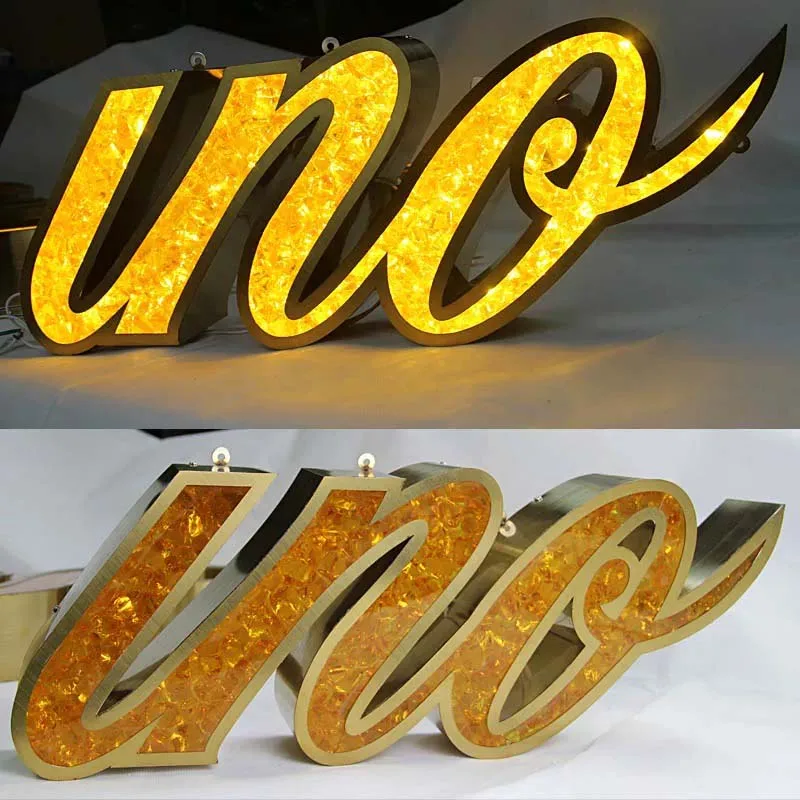
Look, I've got 16 years in this trade, and I've watched Chinese factories sell garbage to Americans who didn't ask the right questions. This guide is the phone call I have with every serious buyer before they wire a deposit. It's not a pitch. It's a checklist to keep you from getting burned.
The ugly truth is that the difference between a sign that fails in 18 months and one that survives a decade isn't luck. It's the material spec, the LED module, and the guy doing the TIG welds. You can't verify any of that from a stock photo, but you can ask the right questions and get the right data.
The "Certification" Scam (And What's Actually Worth the Paper)
"CE marking? Sure, we have it." You'll hear that from 90% of the factories you email.
Here's what nobody tells you: A real CE mark costs 20,000-50,000 RMB to maintain and takes 2-8 weeks to get. It's a compliance mark, not a quality badge. But if a factory can't produce a valid certificate with today's date, they're lying to cover the basics. That's a red flag.
UL 48 is the big one for the US market. That test costs $4,000-$15,000, takes 4-9 months, and requires quarterly audits. Most Chinese factories don't do it because they don't want to open their books to an inspector. If you need UL, I'll tell you straight up: we build to UL spec, but we're not a UL-listed facility. Pay a third-party testing lab to certify the final assembly.
Here are the verifiable numbers you should ask for:
- CE: Ask for the certificate number and the issuing body. Verify it online. Most factories have a laminated photocopy from 2015.
- UL/ETL: Ask if they are UL-listed or just "built to UL standards." ETL is 10-30% cheaper than UL but means the same thing.
- ISO 9001: We have it. It means our welding shop has a process. It doesn't mean the welder didn't have a bad day.
Materials: The Actual Physics of Your Sign
You want a 3mm acrylic face. I get it. But if you're using domestic Chinese acrylic, it'll start yellowing in 1-2 years. Mitsubishi or Degussa acrylic will hold that 90-92% light transmittance for 5-8 years. The price difference is maybe 15%. Ask which one is in the quote. If they don't know, that's a problem.
I've seen this go wrong: A contractor in Miami ordered stainless steel letters for a beachfront store. The factory quoted 304 stainless. The contractor didn't specify the grade. 18 months later, the salt air is eating the letters alive. For a coastal job, you pay the 20-30% premium for 316 with the Molybdenum. Use it for Miami Beach, skip it for Ohio. The same physics applies to our
stainless steel letters.
Aluminum gets ignored because it's not shiny. But it weighs a third of steel, won't rust naturally, and lasts 8-12 years outdoors when powder coated. For a storefront with gravity concerns,
aluminum letters are the smart sell.
LEDs: The Heartbeat (and the Headache)
Look, the LED module is where factories make their money on downgrades. A quality Samsung or Osram SMD 2835 module will give you 100-150 lumens per watt and survive 5+ years real-world. A cheap module gives you 12-18 months. The price difference is pennies. The difference in callback headaches is massive.
The spec says "L70 at 50,000 hours." That's the time it takes for the LED to degrade to 70% of its initial output. That's a lab number. In a hot, sealed
front-lit channel letter, that lifespan drops dramatically if the heat sink is garbage. Ask about the heat management, not just the LED model.
The ugly truth is that IP65 is the minimum for outdoor. It means dust-tight and safe from water jets. It does *not* mean your sign survives a typhoon or a Florida hurricane. For coastal, you need IP66 or IP68. We seal our channel letters with neutral silicone, but if you install it upside down, don't blame the factory.
You also need to match the color temperature to the job. Don't let a factory upsell you on RGB when you need white. 3000-3500K for hospitality. 4000-5000K for corporate and retail. 6000-6500K for industrial or highway. We'll tell you when you're wrong—before we cut the metal.
The 10-Step Verification Process (Or, How to Spy on Us)
Here's what nobody tells you: You can verify a Chinese factory's quality by asking for their production timeline. Not a promise. A timeline. Ours is: Design confirmation (1 day) → Laser cutting ±0.1mm (1-2 days) → TIG welding (1-2 days) → Grinding/polishing (1-2 days) → CNC acrylic (1 day) → LED assembly (1-2 days) → Sealing (1 day) → Burn-in test (8-12 hours) → QC > Packaging.
Ask them how they do the burn-in test. We let every single sign run for 8-12 hours at full power. We're looking for dead modules. If a factory tells you they spot-check, walk away. We've got 50+ skilled workers in a 3,000m² shop. We don't spot-check; we inspect 100%.
The MOQ is one piece. The lead time is about 5-15 days. We export worldwide. If a factory needs a 500-piece MOQ for a standard channel letter, they're not a manufacturer; they're a broker. Cut them out.
The Real Math on Pricing (Stop Paying $800 for a $120 Letter)
I've watched sign shops pay $800 for a front-lit letter. Same 304 stainless, same Samsung LEDs. We sell that letter direct for $120. The US retail installed price is $200-$700. The factory price is $20-$80 for front-lit, $35-$120 for
back-lit halo letters. The difference is your margin.
Factor in the shipping. Express (DHL/FedEx) is $30-$100 for small packages, about 5-15 days. Air freight is $4-$12/kg, about 10 days. Sea freight is $80-$200 per cubic meter for LCL, about 65 days. And don't forget the Section 301 tariff: roughly 30% on imports.
So do the math. $120 + $50 sea freight + tariffs = $206. You sell it for $800. The margin is still there. Stop trying to save $3 on the power supply. Use a Meanwell or equivalent. We give a 2-year warranty on LEDs and a 1-year warranty on power supplies because we know the parts we're using.
What We Can't Do (Straight Talk)
We can't make a 3mm acrylic face a structural member. If your architect wants interior illumination with no visible frame, you need the
rimless channel letters, and that has limitations on size.
We can't fix a lighting design that's fundamentally wrong. If you want 6000K cool white for a high-end steakhouse, don't order it. We'll tell you to use 3000-3500K for hospitality. We definitely won't upsell you on RGB if you just need a white sign. We'll give you the 4000-5000K neutral white or 6000-6500K industrial.
We can't claim UL 48 compliance without the audits. But we can guarantee our 304 stainless is 18% chromium and 8% nickel. We can guarantee our acrylic is UV-resistant. We can guarantee our welds are TIG'd and ground smooth. We rely on our
dual-lit channel letters and metal letters holding up for 10+ years outdoors.
Final advice: when you get a quote, ask for the exact model numbers of the LEDs, the exact grade of stainless, and the brand of acrylic. If they can't answer, they aren't the manufacturer. We are.