A standard storefront sign permit costs $150 to $2,000 and takes two to eight weeks—assuming you're not in a historic district and your landlord's design review doesn't hate exposed raceways. Nobody gives you that number up front. Plan ahead.
I've pulled permits in three states, and the process is never as clean as the city's website makes it look. You'll get rejected at least once if you don't classify the sign correctly. The good news? Most rejections happen before you spend a dime on fabrication.
Here's what nobody tells you: the sign permit isn't one permit. It's a zoning clearance, a building permit, and often an electrical permit stacked in a trench coat.
Your first call is the city planning or zoning department, not the building department. The sign code lives inside the zoning ordinance, and zoning is where 70% of sign permits die. You need to know your maximum sign area, height, and whether your storefront sits in an overlay district that restricts illumination. Skip this step and start buying materials, and you deserve every rejection stamp you get.
I've seen this go wrong: a strip mall tenant in Ohio ordered 42-inch channel letters because the business two doors down had them. The city had grandfathered that neighbor's sign. The city capped the new tenant at 30 inches, and he had to eat $4,000 in fabricated letters.
Channel letters, lightboxes, monument signs, and window graphics each sit in a different part of the code. A wall sign might be limited to a percentage of the tenant frontage, while a projecting sign gets an entirely different formula. Don't assume one sign type automatically transfers to another.
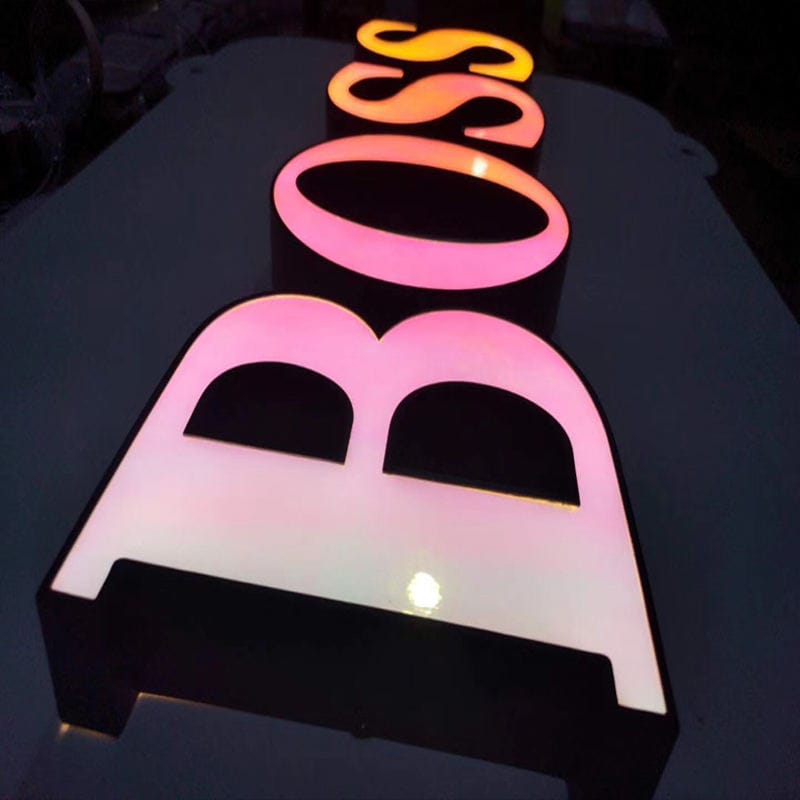
If you're ordering front-lit channel letters, read the illumination section before you draw anything. Some cities ban exposed neon, limit LED color temperature, or force you to shut the sign off at 11 p.m. A 304 stainless letter with 18% chromium and 8% nickel will outlast the lease, but it won't save you from a zoning violation if you exceed maximum sign area. The code doesn't care how pretty your 304 stainless letters are.
Look, the biggest cost in a permit isn't the fee—it's the delay. Every week your sign isn't up, you're losing walk-in traffic. I've had a restaurant owner lose $8,000 in a month because he waited to file until after the landlord painted the facade.
Once you know the zoning limits, classify the sign. Non-illuminated dimensional letters usually only need a sign permit and zoning clearance. Illuminated channel letters add an electrical permit. A lightbox or cabinet adds a UL listing requirement and sometimes a separate fire review. Monument signs with footings need a site plan and engineering stamp.
The ugly truth? Most applicants lie about the sign type to dodge the electrical permit. The inspector catches it the second he sees the power supply hanging off the back.
For a lightbox, your city will ask for a UL 48 listing. That listing costs $4,000 to $15,000 and takes 4 to 9 months to get, so the manufacturer better already have it. If you're ordering a flush-mount lightbox from a factory, make them send the actual UL certificate—with the file number—before you pay. Not a photo of a sticker.
Halo-lit channel letters follow NEC Article 600 for electric signs. The inspector wants the power supply's IP rating shown on the drawings. IP65 is the minimum for outdoor; it doesn't mean your sign survives a Category 4 hurricane. If you're set on back-lit halo letters, make sure the electrical submittal includes the LED driver's IP65 spec sheet.
Cheap LED modules fail in 12 to 18 months. Quality modules from Samsung, Osram, or Blueview last 5+ years. The permit doesn't care which one you buy, but your customer will three years later when the letters go dim.
You'll need a site plan, an elevation drawing with dimensions, a sign schedule, and electrical details. The elevation has to show the sign mounted on the exact facade, with the bottom of the sign at least 8 feet above any sidewalk if it projects. If your sign weighs more than 100 pounds, add a structural calculation signed by a licensed engineer in that state. A 3mm acrylic face blocks 8% of the LED output. A 2mm face blocks 10%. Your engineer needs that thickness on the calcs.
I've had a permit rejected because the drawing said 8 feet 6 inches clearance and the city measured 8 feet 4 inches. That half-inch cost two weeks of resubmission.
For channel letters, the drawing needs the acrylic thickness and the LED module spec. If you're using stainless steel, list the grade—304 has 18% chromium and 8% nickel, and that's good for 10+ years outdoors. 316 adds 2 to 3% molybdenum and lasts 15+ years in coastal salt air, but costs 20 to 30% more.
Don't just hand the plan reviewer a pretty PDF. Include the manufacturer's spec sheet for every LED module and power supply. The more data you give them, the fewer dumb comments you get.
File through the city's online portal, pay the fee, and upload PDFs at 300 dpi. Some jurisdictions want wet-signed engineering stamps, so don't upload a scan with a digital signature unless they say it's okay. The clock doesn't start until the city accepts your application as complete.
Here's what nobody tells you: "10 business days" in city time means 3 to 6 weeks unless you call.
Most cities do zoning review first, then building and electrical, then fire if it's illuminated. If your sign sits in a historic district, add a design review board that meets once a month. Miss the submittal deadline by one day, and you'll sit 30 days for the next agenda. I've watched a storefront sit dark for four months because nobody told the owner about the monthly meeting.
Track every review comment in writing. When the reviewer asks for a change, make the exact change and resubmit. Don't argue about the code unless you have a local sign attorney on retainer.
I've seen this go wrong: a contractor filed the application as non-illuminated to avoid the electrical permit. The plan reviewer caught the LED power supply spec in the drawings, kicked it back, and the project lost two weeks.
After approval, install the sign, then call for rough-in inspection before the raceway cover goes on. The inspector wants to see the LED modules, the wiring, and the power supply before it's all hidden. Then you need the final inspection after the face is on and the sign glows. Cover the wiring without the rough-in, and you'll tear the sign apart.
The inspector checks the IP65 rating on the power supply. If it says IP44, you fail.
Keep every document: the approved permit, the stamped drawings, the UL certificate, and the landlord's written approval. Three years later, when the city does a sign audit, you don't want to be the guy digging through old emails. I've seen a city slap a business with a stop-work order because the sign installer never filed the final electrical inspection.
For illuminated signs, NEC Article 600 requires the disconnect to be within sight of the sign or lockable. That's a common final inspection failure. Put a lockable switch next to the sign and save yourself a reinspection fee.
Order the sign after the permit, not before. Production at a good factory runs 7 to 15 days. Permit review in most cities runs 2 to 8 weeks. The math isn't hard.
The ugly truth? Half the sign permits I see are for signs already fabricated.
Check the landlord, property manager, and design review committee before you order. A strip mall in Texas made a tenant rip out brand-new channel letters because the sign criteria said black returns only and the fabricator used white returns. The tenant ate the rework.
Don't skip the electrical permit on an illuminated sign. If the sign causes a fire and you didn't pull the electrical permit, your insurance company walks away. NEC Article 600 isn't a suggestion.
Another one: if you're adding a secondary entrance sign with Braille, it needs to be mounted 48 to 60 inches from the floor, non-glare, with Grade 2 Braille. That's ADA, not the building code, and it'll fail a lawsuit-happy tenant's audit in 30 seconds.
Do I need a permit for a window graphic? If it's non-illuminated and covers less than 25% of the window area, most cities say no. Historic districts and some landlords say otherwise. Call before you cut vinyl.
How long does a sign permit last? Usually 180 days from issue. If you don't install and pass final inspection in that window, it expires and you pay again. Don't let your sign sit in a crate because the electrician can't schedule.
Can I use the previous tenant's sign permit? No. You may own the cabinet, but the permit is tied to the occupancy and sign face. Change the face without a new permit, and the city will tape a code enforcement letter to your door.
Do LED channel letters need a separate electrical permit? Yes. Illuminated signs are electrical appliances under NEC Article 600. If your sign shop doesn't pull the electrical permit, you're not legal, and your insurance won't cover the fire.
Products mentioned or relevant to this topic — factory-direct, custom built.
From $16/letter · MOQ 1 piece · 7–15 day production · CE & UL certified · ships to 20+ countries
Custom sizes, colors, and finishes. Get a factory price in 24 hours.
Get a Free QuoteWhatsApp +86 13865703472 · cairuisheng@aochuangsign.cn