You want to know the real cost of an outdoor sign? The number on the invoice ain't it.
The replacement letter 18 months later when the cheap LEDs burn out. The re-permit when the wind load calc was wrong. The service call when water got past a seal rated for a car wash, not a coastal nor'easter.
I've been building these things since 2010. I've done front-lit channel letters for strip malls in Ohio and 316 stainless halo letters for restaurants in Miami Beach. The rules don't change. The buyers sure do.
If you're ordering front-lit channel letters for a storefront, you're buying the workhorse. Factory price runs $20-80 per letter. US retail installed runs $200-700 per letter. Same 304 stainless, same Samsung LEDs. Distribution markup creates that gap, not craftsmanship.
Back-lit halo letters are the premium architectural look. Factory price $35-120 per letter. Retail installed $400-1,000. They sit off the wall, leaving a gap, so the light bleeds soft against the facade. That's what makes them look expensive.
Back-lit halo letters fail faster when installers skip standoff spacing. The face needs room to breathe. Stick it too tight and you create a heat pocket behind the LED. That's not in the spec sheet.
Rimless and domed channel letters exist for modern looks. Dual-lit letters give you front and halo in one can. But match the type to viewing distance. A 12-inch rimless letter looks sharp up close. At 50 feet, your client can't read it.
Look, 304 stainless steel letters are the default for a reason. 18% chromium, 8% nickel. Density 7.93 g/cm³. You're getting 10-plus years outdoors. Common thickness runs 1.0 to 3.0 mm. For most of the country, that's all you need.
316 stainless costs 20-30% more. Add 2-3% molybdenum, and you get 15-plus years in marine or industrial air. For a strip mall in Ohio, 304 is fine. For Miami Beach, pay for 316 or you're replacing letters in 3 years.
Aluminum weighs one-third of steel and lasts 8-12 years outdoors. It naturally resists rust. But it's softer, so a hail storm can leave dings. I'd use it for large cabinets and lightboxes, not small dimensional letters that people touch.
For an acrylic LED letter face, you have a light transmittance decision. 3mm acrylic cuts 92% light output. 2mm cuts 90%. Your customer won't notice the 2% difference but they'll notice the 40% cost bump. For anything over 2.5 meters, use 5mm or thicker. No exceptions.
Here's what nobody tells you: the difference between a sign that looks sharp for 8 years and one that yellows in 18 months is the acrylic sheet. UV-resistant sheet from Mitsubishi or Degussa lasts 5-8 years. Domestic sheet? 1-2 years before yellowing starts. The price difference isn't huge. The call-back is.
For stainless, brushed #4 finish hides scratches and fingerprints. Mirror #8 looks incredible for a week until the first rain leaves water spots. Powder coated and PVD finishes add color and an extra barrier, but they cost more. If the client wants a specific RAL color, baked paint is the route.
Most cheap offshore signs use domestic acrylic and thin powder coat. They look fine in the showroom photo. Then the UV hits and the face turns like a nicotine-stained ceiling tile. I've watched it happen inside a year.
When I quote a sign, I spell out the face material on the drawing. If the client wants to downgrade to domestic acrylic, I make them sign a note. Most won't after they hear the replacement cost.
Look, if you don't have a PE stamp on a pylon sign or a large set of channel letters, you don't have a permit. No county inspector cares that the factory welded it beautifully. They want load calculations and a certified drawing.
I've seen this go wrong: a client ordered a 12-foot pylon sign without an engineering stamp. County rejected the permit. We had to re-fabricate the mounting plate and wait another two weeks. That's not a delay you want in a strip mall opening.
NEC Article 600 governs US electrical signage. UL 48 listing costs $4,000 to $15,000 and takes 4 to 9 months, plus quarterly audits. ETL is an accepted alternative and runs 10-30% cheaper. If a supplier says they're UL listed, ask for the certificate with today's date. Watch them sweat.
IP ratings are another trap. IP65 means dust-tight and protected from water jets from any direction. That doesn't mean your sign survives a Florida hurricane. For coastal or extreme weather, you need IP66 or IP68-rated enclosures. And you still need a maintenance plan.
ADA tactile signs add another layer. Mounting height 48 to 60 inches, non-glare finish, Grade 2 Braille. If you forget ADA on a public building, the architect will catch it. Or worse, the lawsuit will.
Look, LED modules are not all the same. SMD 2835 chips run 100-150 lumens per watt and are the industry standard. SMD 5730 pushes 40-60 lumens per chip for the brightest output. SMD 5050 is for RGB. Quality modules from Samsung, Osram, or Blueview last 5-plus years real-world. Cheap no-name modules die in 12-18 months.
Quickest way to spot bad LED modules: look at the solder joints. Dull gray means the solder joint won't last 18 months. Shiny silver means proper lead-free solder. I've rejected entire shipments over dull joints. That's the difference between a 2-year warranty and a 2-month service call.
Energy use follows lumens per watt. A 100-150 lm/W module gives you more light with less heat and lower power draw. Cool white 6000-6500K reads industrial and highway. Neutral 4000-5000K fits corporate and retail. Warm 3000-3500K is hospitality. Pick the color temp before you pick the brand.
Here's the total cost of ownership people ignore. The LED has L70 of at least 50,000 hours. The power supply only carries a 1-year warranty. LEDs carry 2 years. Your maintenance contract will be mostly power supply swaps and water intrusion reseals. Budget for that.
Factory-direct savings run 50-65% on product versus US retail installed. But add permits, engineering stamps, a lift truck, and a licensed electrician. Unit price isn't project cost.
Most US sign distributors import from the same Chinese factories and mark it up 4x. I've watched sign shops pay $800 for a front-lit letter from a domestic fabricator. Same 304 stainless, same Samsung LEDs. We ship that letter for $120 from our facility.
Our factory is Aochuang Sign in Lu'an, Anhui. 3,000 m² production floor, 50-plus skilled workers, ISO 9001, CE, RoHS. Minimum order: one piece. Lead time about 5-15 days. Warranty: 2 years on LED, 1 year on the power supply.
Ten-step process: design confirmation, laser cutting at ±0.1mm, bending and TIG welding, grinding and polishing, CNC acrylic face, LED assembly, neutral silicone sealing, 8-12 hour aging test, 100% QC, export packaging with foam, carton, and plywood crate. That's why the lead time is two weeks, not two months.
Shipping changes the math. Express takes about 5-15 days and costs $30-100 for small orders. Air freight about 10 days at $4-12/kg. Sea freight about 65 days at $80-200 per cubic meter LCL or $1,200-3,000 for a full container. US Section 301 tariff adds roughly 30%. Order sea freight for large projects, express for samples.
LCL sea freight gets handled 6-8 times between our dock and yours. Every touch is a chance for damage. Crate it like it's going to be dropped. It will.
If you're still sourcing outdoor signs from a local shop, you're paying for their rent and their markup. I'm not saying don't use installers. Use them. Just buy the letters factory-direct and hand them a crate.
Do I need a permit for outdoor signs? Yes. Always. Don't ask me what your city requires, call the building department. If it's lit, you need an electrician. If it's over a certain size, you need a PE stamp. That's not me being difficult. That's code.
What's your minimum order? One piece. I don't have a warehouse full of stock letters. We fabricate to your artwork. If a supplier says there's a 10-piece minimum, they're padding the invoice.
Can I install it myself? If you have a lift, a license, and insurance. If not, hire a sign contractor. The letters will survive a bad install until the first windstorm. Then they won't.
How long will it last before it fails? If you buy cheap LEDs, 12-18 months. Quality modules, 5-plus years. The face might yellow in 1-2 years with domestic acrylic or 5-8 with UV-resistant. You get exactly what you pay for.
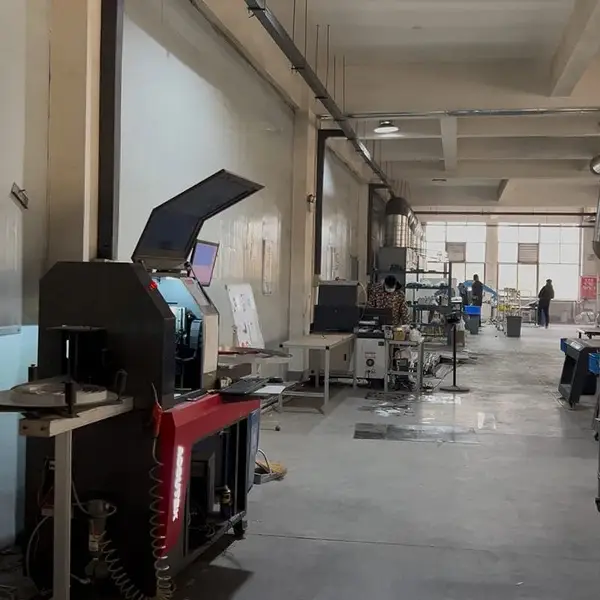
Real photo from our production floor — every sign we ship is made here.
Products mentioned or relevant to this topic — factory-direct, custom built.
From $24/letter · MOQ 1 piece · Flexible lead time · CE & UL certified · ships to 20+ countries
Custom sizes, colors, and finishes. Get a factory price in 24 hours.
Get a Free Quote Copy EmailWhatsApp +86 13865703472 · business@aochuangsign.cn