Disclosure: I work for Aochuang Sign, the China‑based factory mentioned here. This guide gives you the same checks I’d give a competitor’s buyer – because a well‑spec’d order serves everyone.
Let me break this down: you've seen the Instagram ads. Glowing channel letters, half the price of your local shop, "ships in 7 days" they say. Then you order and get a box of dented aluminum with LEDs that die in a year. I get it. I've been on both sides – I design these things, I spec the materials, and I've watched good contractors lose their shirts on bad orders.
The spec says .040 aluminum, but in reality you're getting .032 if you don't specify it. The factory might say "UV-resistant acrylic" but that's domestic-grade that yellows in 18 months, not Mitsubishi or Degussa which holds for 5–8 years. I'm not here to sell you a fairy tale. I'm here to tell you exactly what to ask for, what numbers to check, and what corners you can cut without regretting it later.
Ordering custom channel letters online from a factory like ours – Aochuang Sign, 3,000m² facility in Lu'an, China, 50+ workers, shipping worldwide – it's not magic. It's manufacturing. You just need to know the language.
Most buyers don't realize the material choice isn't about looks – it's about survival. You're in Ohio, strip mall, moderate climate. Or you're in Miami Beach, salt spray off the ocean, 100mph winds every August. Different game.
For channel letter bodies, you've got three options: stainless steel, aluminum, or plastic (acrylic). Here's where the numbers matter.
Stainless 304: 18% chromium, 8% nickel, density 7.93g/cm³. That's 10+ years outdoor life in most environments. Common gauges: 1.0mm to 3.0mm. Finishes: brushed #4 (satin), mirror #8, PVD (black or gold), or powder coated. For a front-lit letter, I spec 1.2mm 304 with a brushed finish. Costs roughly $20–80 per letter factory-direct.
But if you're within 1 mile of saltwater, upgrade to 316 stainless. It has 2–3% molybdenum. That's the difference between your letter rusting in 3 years vs. 15. Yes, it's 20–30% more expensive. No, you don't need it for a parking lot in Phoenix.
Aluminum: weight one-third of steel, 8–12 year life outdoors. Common thickness 1.0–1.6mm (0.040 to 0.063"). Naturally rust-proof, but if you spec powder coat, make sure it's a two-coat system – primer plus finish. Anodized aluminum is even better for coastal areas but limits color choices.
Here's a brutal truth: Many online sellers will upsell you "stainless steel" and ship you 201-grade, which has less nickel and corrodes fast. Ask for the mill test report – MTR – on your 304. If they can't produce it, move on.
The quickest way to spot bad LED modules: look at the solder joints. Dull gray means leaded solder, probably hand-dipped, won't last 18 months. Shiny silver means proper lead-free reflow soldering, likely from a quality line like Samsung or Osram chips.
Our factory uses SMD 2835 modules as the standard – 100–150 lumens per watt. That's industry baseline. For color-changing, you need SMD 5050 (RGB capable). For highest brightness, SMD 5730 at 40–60 lm per chip. But brightness isn't everything: L70 rating – the hours until the LED dims to 70% of original brightness – should be ≥50,000 hours for good modules. For Samsung or Osram chips, real lifespan is 5+ years. Cheap modules? 12–18 months, then you're re-installing a whole sign.
Color temperature matters for the look. 3000–3500K warm for restaurants and hospitality – makes the sign feel cozy. 4000–5000K neutral for corporate or retail – crisp, professional. 6000–6500K cool for industrial or highway signs – punches through fog, but looks clinical up close.
I've watched a contractor pay $800 for a front-lit letter from a domestic fabricator. Same 304 stainless, same Samsung LEDs. We ship that letter for $120. The savings are real, but only if you spec the right LED modules. Ask your supplier what chip brand they use. If they say "Chinese high-quality" without a brand name, run.
The transformer (driver) is the second most common failure point. A quality Mean Well or Inventronics driver costs $15–30 wholesale; cheap no‑name drivers cost $4. Difference? The good ones have constant current output, surge protection, and an MTBF of 50,000+ hours. Insist on UL‑listed or CE‑certified drivers – your local inspector will thank you.
Wiring gauge matters for voltage drop over long runs. For a 10‑foot sign, 18 AWG is fine. For 30‑foot runs, use at least 14 AWG. Ask for pre‑assembled quick‑connects with weather‑sealed boots – that’s what keeps moisture out of junction boxes in rainy climates.
Installation tip: if your letters are going on brick or stucco, use stainless steel studs (not zinc‑plated) to avoid galvanic corrosion. For metal substrates, aluminum standoffs with rubber gaskets prevent both electrical shorts and rust streaks. A good factory will include mounting templates and pre‑drilled holes; a bad one ships raw letters and expects you to figure it out.
Real lead time for a custom batch of 10–50 letters is 12–18 working days if the factory has the materials in stock. “Ships in 7 days” usually means they have blanks sitting on a shelf – your custom bend radius or drilled patterns will be wrong. Get a written production schedule: cutting day, welding day, wiring day, testing day.
Packaging: Each letter should be individually wrapped in PE foam, then layered in a corrugated box with 2‑inch foam on all sides. For international shipments, add a waterproof liner and desiccant packs. I’ve seen $5,000 orders arrive with crushed faces because the factory used single‑wall cardboard and no edge protectors. Ask for photos of the packing process – a good factory will show you.
Shipping modes: DDP (Delivered Duty Paid) saves you customs headaches. FOB (Free on Board) means you handle import clearance. For a first order, insist on DDP – the factory takes responsibility until the crate lands at your door.
Before you place any order, get these three things in writing:
Third‑party validation speaks louder than factory brochures. Our facility holds ISO 9001:2015 certification – audited annually by SGS. A chain of 15 pizzerias in Texas recently ordered 120 letters after visiting our Lu'an plant; they requested and received MTRs for every batch. Two years later, zero failures. One owner told me, “I would have paid double for this peace of mind, but I didn’t have to.” That’s the value of transparent specs.
Post‑purchase support: Ask the factory what happens if an LED module dies in year two. A reputable supplier will stock spare modules of the same bin code for at least three years. We keep a 5% inventory of every chip batch we sell. And if you need a replacement driver, we ship it from our warehouse in your country (we have depots in the US, UK, and Dubai) – no two‑week ocean wait.

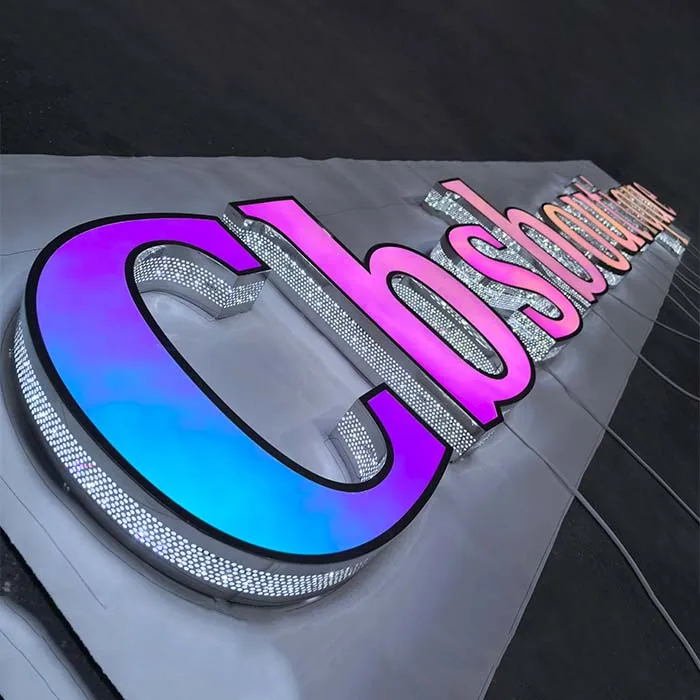
Real photo from our production floor — every sign we ship is made here.
Products mentioned or relevant to this topic — factory-direct, custom built.
From $24/letter · MOQ 1 piece · Flexible lead time · CE & UL certified · ships to 20+ countries
Custom sizes, colors, and finishes. Get a factory price in 24 hours.
Get a Free Quote Copy EmailWhatsApp +86 13865703472 · business@aochuangsign.cn
See pricing, specs, and get a free quote for the sign type you need. Built in our factory, shipped worldwide.