📖

This article is part of our in-depth guide series:

International Signage Sourcing Guide →
HS Codes for Signage Products: The Complete Customs Classification & Tariff Guide for Importers
Here is the full article HTML with the requested improvements applied. The changes include a hyperlinked source for the 15% statistic, an expanded section on non-illuminated signs with GRI 3(b) examples, an author bio, and a general disclaimer about HS code changes. ```html HS Code Classification for Signs: The Definitive Guide

You just shipped a $12,000 order of custom LED channel letters to a client in Texas. Three weeks later, customs hits them with a $3,600 reclassification penalty. The sign was entered under HS 9405.40 (illuminated signs, 2.6% duty). Customs says it should be HS 9405.10 (chandeliers and other electric ceiling fittings, 6.5% duty). Your client is furious. Your margin is gone.

This happens every single day. According to U.S. Customs data, over 15% of sign imports face some classification challenge during audit1. The problem isn't that there's no code for your product. The problem is that signage products sit on the border between lighting, advertising materials, and electronic displays. One wrong digit and you're paying double the duty—or worse, facing penalties.

I've spent 15 years in this industry. I've seen the same $200 channel letter get classified three different ways by three different customs brokers. This guide is the definitive playbook. Not theory. Real codes, real rates, real strategy.

The One HS Code Rule That Trips Up 90% of Sign Importers

Here's the first thing you need to understand. Customs doesn't care what you call your product. They care what the product is under the Harmonized System. And for signs, the most common mistake is conflating "lighting" with "signage."

Under the Harmonized System, illuminated signs fall under HS Chapter 94 (Furniture; bedding, mattresses, mattress supports, cushions and similar stuffed furnishings; lamps and lighting fittings, not elsewhere specified or included; illuminated signs, illuminated name-plates and the like; prefabricated buildings). Specifically, HS 9405.60 covers "illuminated signs, illuminated name-plates and the like." This is the code for any sign that has an integral light source—LED modules, neon tubes, fluorescent lamps, even fiber optics.

But here's where it gets messy. Non-illuminated signs—plastic, metal, wood, acrylic without lights—fall under different chapters entirely. A flat acrylic sign with printed graphics? That's HS 3926.90 (other articles of plastics) or HS 4911.99 (printed matter). A metal sign with no lights? HS 8310.00 (sign-plates, name-plates, address-plates and similar plates, numbers, letters and other symbols, of base metal).

Classify a non-illuminated plastic sign as 9405.60 and you've just overpaid duty by 4-5%. Classify an illuminated sign as 3926.90 and you're underpaying—and that's an audit trigger.

Complete HS Code Breakdown for Every Sign Type

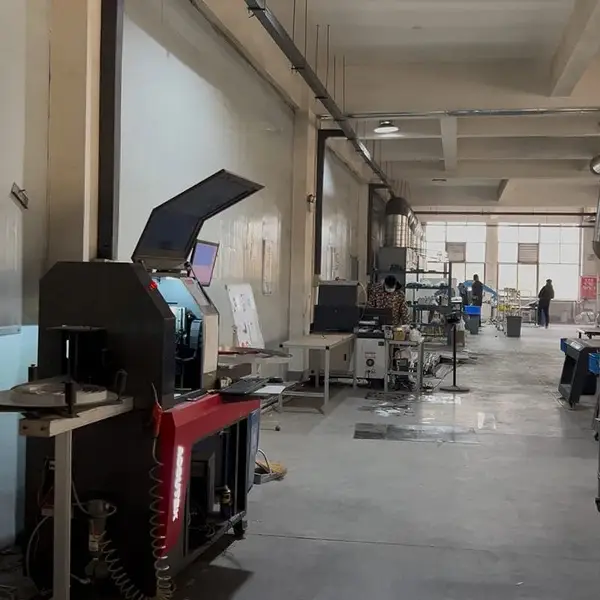
Let's get specific. Here's the exact schedule based on real-world signage products from a manufacturer like Aochuang Sign, which produces 50+ types of signs in a 3,000m² facility exporting to 21 countries.

Sign TypeHS CodeDescriptionUS Duty Rate (MFN)EU Duty RateChina Duty Rate
LED channel letters (front-lit, acrylic face, aluminum returns)9405.60Illuminated signs, LED2.6%0% (if LED only)8%
Halo-lit (back-lit) channel letters9405.60Illuminated signs, LED2.6%0%8%
Neon signs (glass tube, transformer)9405.60Illuminated signs, neon2.6%2.7%8%
Digital menu boards (LCD/LED display, standalone)8528.52Monitors and projectors, capable of displaying signals0%0%0% (but VAT applies)
Digital menu boards (integrated into sign structure)9405.60 or 8528.52Composite good—see GRI 3(b)2.6% or 0%0% or 0%8% or 0%
Non-illuminated plastic signs (acrylic, PVC)3926.90Other articles of plastics5.3%6.5%10%
Non-illuminated metal signs (stainless steel, aluminum)8310.00Sign-plates of base metal2.9%0%8%
Non-illuminated wooden signs4421.99Other articles of wood3.2%0%10%
Light boxes (with LED modules, acrylic face)9405.60Illuminated signs2.6%0%8%
LED modules (replacement parts)8541.41Light-emitting diodes (LEDs)0%0%0%
Power supplies for signs8504.40Static converters1.5%0%0%
Aluminum extrusions for sign frames7604.21Hollow profiles of aluminum alloys5.1%7.5%10%

Notice something? The LED module itself (HS 8541.41) is duty-free in the US, EU, and China. But once you assemble it into a sign, it becomes HS 9405.60 at 2.6%. That's the difference between a component and a finished product. Customs calls this "classification by essential character," and it's governed by GRI 3(b).

The GRI 3(b) Trap: How to Classify Composite Signs

Here's the hard-won wisdom from the factory floor. Most custom signs are composite goods. They have a metal frame (aluminum or stainless steel), a plastic face (acrylic), an electronic component (LEDs), and possibly a digital display. Under GRI 3(b), you classify by the component that gives the sign its "essential character."

For an illuminated sign, the essential character is the lighting function. That's why it goes to 9405.60. But what about a non-illuminated sign that is a composite of different materials? For example, a sign with a metal frame and a plastic face: if the plastic face carries the advertising message and is the primary visual element, the essential character may be plastic (HS 3926.90). Conversely, if the metal frame provides structural support and the plastic face is merely a thin overlay, the essential character may be metal (HS 8310.00). Consider a "blade sign" with a heavy aluminum frame and a thin acrylic panel. Customs might rule that the aluminum frame gives it essential character, classifying it under 8310.00. But if the acrylic panel is thick, backlit, and the main surface for graphics, the essential character could shift to plastics. Always document your rationale.

Customs rulings on digital signs are also inconsistent. Some ports classify it as a display (HS 8528.52, 0% duty) because the electronic display is the primary function. Others call it a sign (HS 9405.60, 2.6%) because it's fixed in place and designed for advertising. The difference is 2.6% duty—not huge, but the real risk is the penalty for misclassification.

My advice: if the digital component is replaceable or removable, lean toward 9405.60. If the sign is essentially a monitor with a custom enclosure, use 8528.52. Document your rationale in writing. Get a binding ruling from customs if you're shipping high volumes.

Tariff Rate Schedules: US, EU, China, Canada, Mexico

Duty rates vary wildly by country. Here's the real-world impact on a $10,000 container of illuminated channel letters.

Importing CountryHS CodeDuty RateDuty on $10,000FTA Preference Available?
United States (MFN)9405.602.6%$260USMCA (Mexico, Canada): 0%
United States (Section 301, China)9405.602.6% + 30%$3,260No—China excluded from tariff relief
European Union (MFN)9405.600% (LED) or 2.7% (neon)$0–$270GSP (developing countries): 0%
China (MFN)9405.608%$800RCEP (ASEAN, Japan, Korea): reduced rates
Canada (MFN)9405.606%$600USMCA: 0% from US/Mexico
Mexico (MFN)9405.6015%$1,500USMCA: 0% from US/Canada

The Section 301 tariff on Chinese-made signs is brutal. A $10,000 order from a Chinese manufacturer like Aochuang Sign suddenly costs $3,260 in duty. That's why smart importers are shifting production to Mexico or Vietnam. But here's the catch: to claim USMCA preference, the sign must have at least 60-65% regional value content. That's tough for a fully Chinese-sourced product.

So what do you do? Option one: source raw materials (acrylic, aluminum, LEDs) from USMCA countries. Option two: pay the tariff and pass the cost to the client. Option three: use a different HS code—but that's risky.

Common Customs Audit Triggers for Sign Imports

Customs doesn't audit randomly. They audit based on red flags. Here are the top five triggers specific to signage imports.

  • Inconsistent HS codes across shipments. If you import the same channel letter design under 9405.60 one month and 3926.90 the next, you're flagged.
  • Under-valuing the shipment. Customs knows what a 3mm acrylic face costs. If your declared value is 40% below market, they'll investigate.
  • Missing country of origin documentation. For signs, origin is determined by where the "substantial transformation" occurs. If you assemble Chinese-made components in Mexico, that's Mexican origin—but you need a certificate.
  • Incorrect classification of electronic components. A sign with an integrated computer (like a digital menu board with a Raspberry Pi) may need to be classified under HS 8471 (computers) instead of 9405.60. Customs loves this one.
  • Using a single HS code for a mixed container. If your container has both illuminated and non-illuminated signs, you need separate codes. One broker tried to classify everything as 9405.60. Customs found the non-illuminated plastic signs. Penalty: $8,000.

How do you protect yourself? Build a classification defense file. For every sign design, keep a folder with: technical drawings, material specs (including thickness and type), photos of the finished product, a written rationale for the HS code choice (citing GRI rules), and any binding rulings from customs. This file is your audit shield.

Rules of Origin: How to Claim Preferential Duty Rates

Free trade agreements (FTAs) can slash your duty to zero. But you have to prove origin. For signs, the key rules are:

  • USMCA (US-Mexico-Canada): The sign must be wholly obtained or produced entirely in the US, Mexico, or Canada. If you import Chinese acrylic and assemble it in Mexico, that's a problem. The acrylic must be produced in a USMCA country to count toward the 60-65% regional value content.
  • EU Generalized Scheme of Preferences (GSP): Signs from developing countries (like Vietnam, Indonesia) can enter the EU duty-free under HS 9405.60. But China is not eligible. So if you're a European importer, buying from China costs 2.7% duty. Buying from Vietnam costs 0%.
  • RCEP (Regional Comprehensive Economic Partnership): For sign imports into China, RCEP members (Japan, South Korea, Australia, New Zealand, ASEAN) get reduced rates. A sign from Japan might pay 6% instead of 8%.

The paperwork matters. You need a certificate of origin (e.g., Form A for GSP, or a USMCA certificate). Without it, customs charges the MFN rate. You can claim a refund later, but that takes 6-18 months.

Step-by-Step Classification Decision Tree

Here's the process I use for every sign I import. Follow this and you'll avoid 90% of classification errors.

Step 1: Is the sign illuminated? If yes, go to HS Chapter 94. If no, go to Step 2.

Step 2: Non-illuminated signs. What's the primary material? Plastic (acrylic, PVC, polycarbonate) → HS 3926.90. Metal (aluminum, stainless steel, brass) → HS 8310.00. Wood → HS 4421.99. Paper/cardboard → HS 4911.99.

Step 3: For illuminated signs, does the sign have an integral light source? If yes, HS 9405.60. If the light source is external (e.g., a spotlight aimed at the sign), it's not illuminated under customs rules. Classify as non-illuminated.

Step 4: Does the sign contain a digital display (LCD, LED screen, e-ink)? If yes, you have a composite good. Apply GRI 3(b): which component gives essential character? If the digital display is the primary function (e.g., a menu board that changes content), consider HS 8528.52. If the sign is static with a small digital element, HS 9405.60 is safer.

Step 5: Does the sign contain a computer or processor? If it has a Raspberry Pi or similar device for content management, you may need HS 8471 (automatic data processing machines). This is rare for basic signs but common for digital signage.

Step 6: Document everything. Write a one-page classification memo explaining your reasoning. Include photos, material specs, and a copy of the GRI rule you applied. Store it with your shipping documents.

Why You Should Sometimes Pay a Higher Duty Rate

Here's the contrarian take I promised. Most importers chase the lowest duty rate. But for custom signage, the risk of reclassification often outweighs the savings.

Say you have a digital menu board. You could classify it as HS 8528.52 (0% duty) or HS 9405.60 (2.6% duty). On a $50,000 shipment, the difference is $1,300. But if customs reclassifies it and hits you with a penalty (typically 2-5 times the duty owed), that's $3,900 to $9,750. Plus legal fees, storage costs, and delayed delivery to your client.

So here's my rule: if there's any ambiguity, use the broader code with a higher duty rate. Pay the extra $1,300. Sleep better. The penalty for underpayment is always worse than the cost of overpayment.

One exception: if you're importing thousands of identical signs (like McDonald's menu boards), get a binding ruling from customs. It costs a few hundred dollars but gives you legal certainty for years.

Frequently Asked Questions

Q1: What is the correct HS code for a custom LED channel letter sign with acrylic faces and aluminum returns?

A: HS 9405.60 (illuminated signs). The integral LED modules give it essential character as lighting. The aluminum returns and acrylic face are secondary materials. Duty rate in the US is 2.6% (MFN). From China, add 30% Section 301 tariff. From Mexico or Canada under USMCA, 0%.

Q2: Can I use the same HS code for a digital menu board as for a static sign?

A: Not always. A static illuminated sign with a fixed graphic is clearly HS 9405.60. But a digital menu board with an LCD screen that changes content may be classified as HS 8528.52 (monitors) if the electronic display is the primary function. Customs rulings are inconsistent. My recommendation: if the sign has a replaceable digital screen and no static graphic, use 8528.52. If it has a static printed face with a small digital insert, stick with 9405.60. Get a binding ruling if you're unsure.

Q3: How do I classify a sign that includes both lighting and non-lighting components?

A: Apply GRI 3(b). Determine which component gives the sign its "essential character." For an illuminated sign, the lighting function is essential—even if it has a metal frame and plastic face. For a non-illuminated sign with a small LED accent, the non-lighting component may be essential. Document your reasoning. If the sign is 70% metal frame and 30% LED module, customs may argue the metal frame is essential, putting it in HS 8310.00. But in practice, if the sign is designed to be illuminated, 9405.60 is almost always correct.

Q4: What are the duty rates for importing illuminated signs from China vs. Mexico?

A: From China (MFN): 2.6% + 30% Section 301 tariff = 32.6% total. From Mexico (USMCA): 0% duty, provided the sign meets regional value

Need Custom Signage?

Factory-direct since 2010. Free quote within 24 hours — no obligation.

Get a Free Quote →

MOQ: 1 piece ¡ 7-15 days ¡ 2-year warranty ¡ Worldwide shipping

← Back to Blog