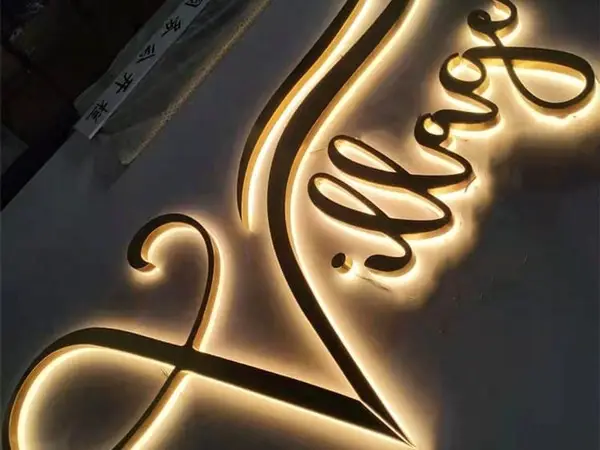
You don’t need another pricing page that hides the ugly parts. You need straight answers from someone who’s burned his hands on hot acrylic and argued with LED suppliers about chip voltage drift at 4 a.m.
I’m the guy on the floor at Aochuang Sign in Lu’an, Anhui. We’ve got 3,000 square meters of production space and 50-plus workers who’ve built signs worldwide. We do CE, RoHS, ISO 9001. Our MOQ is one piece. Yeah, one. I’ll quote a single illuminated storefront sign and still ship it on time. But if you buy from a factory direct quote online without understanding three things—real material life, shipping landmines, and certification bullshit—you’ll hemorrhage money.
So let’s walk through what a wholesale order actually looks like, from the moment you request a quote until the crate hits your dock. No fluff.
Look, I get it. You want the lowest per-letter number. I’ve taken calls from sign shop owners who scream, “Your letters are $15 more than China Factory X.” Okay, let’s break that down.
Aochuang’s factory prices for standard front-lit channel letters run $20 to $80 each. That’s for 304 stainless steel returns, CNC-routed acrylic faces, and Samsung or Osram LED modules. Factory X at $15 less? They’re probably using 201 stainless (rusts in 2-3 years), domestic acrylic that yellows in 18 months, and no-name LEDs with a real L70 around 5,000 hours. The install crew rips them out after 13 months and the building owner ghosts you.
Here’s what nobody tells you: the material cost difference between a sign that lasts 18 months and one that lasts 8 years is maybe $4 per letter. The real expense is the truck roll, the lift rental, and the phone call from a pissed-off client. You can’t reinstall cheap letters for free. Factor in 30% Section 301 tariff on import value plus freight, and that $15 “saving” becomes a $600 redo per storefront 14 months down the road.
IP65 sounds impressive. It means dust-tight and protected against water jets from any direction. It does NOT mean your sign survives a Florida hurricane, a nor’easter with salt spray, or a pressure washer held six inches away by a teenager with a summer job.
I’ve seen this go wrong: A hotel chain ordered 60 back-lit letters for a coastal property. Spec said “IP65.” We quoted 316 stainless with IP66-rated sealed modules and marine-grade silicone. They went with a cheaper shop that slapped an IP65 sticker on standard channel letters. Salt fog trashed the LEDs inside eight months. The walls behind the letters developed rust streaks that looked like the building was weeping. The replacement cost—scaffolding, electrician, new letters—ran quadruple what we originally quoted. The ugly truth is that IP ratings only work if the housing, the fasteners, the silicone, and the electrical terminations all match the environment. For Miami or Boston Harbor, you need 316 stainless, all-stainless hardware, and full potting. Otherwise your “IP65” sign is a lawsuit waiting to happen.
Here’s another thing that kills outdoor illuminated letters: thermal cycling. On a 40°F night, the acrylic face contracts. Cheap silicone cracks. Water creeps in, turns to ice, expands, and pries open the letter like a tin can. We use neutral-cure silicone that stays flexible down to -40°F. It costs pennies more per tube. Most factories skip it because you’ll never know until the proof deadline passed a year ago.
A legitimate wholesale quote for illuminated storefront signs should list: material grade and thickness, LED brand and bin, power supply specs, IP rating for the complete assembly—not just the LED—and dimensional tolerances. If you get a one-line number and a PayPal link, walk away.
At Aochuang, our online quotes break down each sign. For a 24-inch front-lit letter, you’ll see 1.2mm 304 brushed stainless returns, 3mm Mitsubishi UV-resistant acrylic face (90-92% light transmittance, won’t yellow for 5-8 years), SMD 2835 LEDs at 120 lumens per watt, Mean Well power supply, IP65 silicone sealing, and stainless fasteners. Lead time about 5-15 days. Warranty: 2 years on LED, 1 year on power supply. We ship air or sea, insured. No buried fees.
But here’s the part you need to do: add about 30% on top of the product price for Section 301 tariff if you’re in the U.S. That’s Customs’ cut, not ours. Budget $4-12/kg for air freight (about 10 days) or $80-200 per cubic meter for sea freight LCL (about 65 days). Small express orders might run $30-100 total for samples. The numbers aren’t scary if you know them upfront. They’re terrifying if you find out on the bill of lading.
Everyone says “Samsung LEDs.” Half the time, it’s relabeled garbage. We test every reel before it hits the assembly bench. Quality SMD 2835 modules push 100-150 lumens per watt and hold L70 for at least 50,000 hours. That’s five-plus years of real nighttime operation if the heat sinking is right. Cheap modules? 12-18 months before the lumen output collapses or the color temperature shifts so far you’ve got pink letters next to blue ones.
A little science: color temperature matters for brand perception. 3000-3500K warm white works for restaurants and boutique retail—feels inviting. 4000-5000K neutral is corporate clean. 6000-6500K cool white reads harsh and industrial, good for highway signs and auto shops. If you mix color temps on the same façade because someone grabbed the wrong reel, the whole storefront looks like a clearance rack. We label and batch all LED modules by bin and kelvin temp. It’s obsessive. It’s necessary.
Stainless 304 is the industry workhorse—18% chromium, 8% nickel. Density 7.93 g/cm³. You spec 1.0 to 3.0mm thickness depending on letter size. For letters over 2.5 meters, we go 5mm acrylic face minimum. Anything thinner and the face bows, catches wind, and snaps the standoffs. For coastal or chemical-plant zones, upgrade to stainless steel letters in 316 grade. That extra 2-3% molybdenum buys you 15-plus years without pitting. It costs 20-30% more. Pay it or pay later.
Aluminum letters weigh one-third of steel and won’t rust—great for indoor or protected soffits, but outdoors with road salt they’ll corrode without proper coating. We powder coat to AAMA 2604 standard when needed. And if someone tries to sell you 0.040-inch aluminum for a 4-foot wall letter, hang up. That’s siding metal. It’ll oil-can under temperature shifts and look wavy as a funhouse mirror.
Acrylic transparency isn’t marketing fluff. Our Mitsubishi or Degussa acrylic hits 90-92% light transmittance. Domestic acrylic can be 80% out of the box and drop fast as UV eats the surface. At night, the difference between 92% and 80% looks like a dimmer switch left halfway. Nobody reads a dim sign; they just walk past.
CE marking costs a factory 20,000 to 50,000 RMB. UL 48 runs $4,000 to $15,000 with quarterly audits and a 4-9 month timeline. Yet every other factory’s website sports these logos. Ask to see the certificate with today’s date—not a scan from 2016—and the associated test reports. For UL, verify the file number on UL’s database. It takes three minutes.
I’ve had competitors show our certificates to their clients. We know because the clients called us confused. When you’re comparing factory direct quotes online, ask each factory to include a copy of their valid liability insurance and the cert body’s audit report. A real factory won’t blink. A trading company posing as a factory will suddenly lose internet.
Look, this is where a 10-step process separates a durable sign from a rushed one. Design confirmation: 1 day. Laser cutting with ±0.1mm tolerance: 1-2 days. TIG welding and bending: 1-2 days. Grinding and polishing (hand-finished scarf joints): 1-2 days. Acrylic face CNC routing: 1 day. LED assembly and wiring: 1-2 days. Sealing with neutral silicone: 1 day. Then 8-12 hours of powered aging test—every single sign sits lit before packaging. Full QC inspection: dimensions, light uniformity, paint finish, electrical safety. Export packaging: foam, double-wall carton, then plywood crate. Total about 5-15 days.
Most factories skip the aging test because it burns electricity and delays shipping. We don’t. A component-level infant mortality failure shows up in the first 12 hours. Better in our aging room than on your client’s wall.
For back-lit halo letters, the process adds a critical step: after assembly we measure the halo spread against the wall plane at night to ensure soft, even glow without hotspots. Letters thinner than 1.5-inch returns can’t diffuse properly. You get a strobe effect along the edges. We’ll refuse to make them that shallow rather than ship something that looks amateur.
Express via DHL/FedEx: 7-10 days, $30-100 for small orders. Air freight: about 10 days, $4-$12 per kg. Sea freight LCL: about 65 days, $80-200 per cubic meter. A full 40-foot container runs $1,200-3,000 door to port. These are real 2024-2025 numbers with fuel surcharges built in.
Here’s what nobody tells you: customs brokerage fees, ISF filing, single-entry bond, and warehouse handling can tack on $350-750 regardless of order size. The 30% Section 301 tariff applies to the declared value of the goods. Don’t undervalue to save a few bucks—Customs can seize the shipment. I’ve had containers flagged because the importer tried to declare $50 worth of “plastic shapes” that were obviously finished illuminated signs. Two weeks of storage fines erased any tariff “savings.”
We’ll give you a landed cost estimate if you share your port and ZIP code. It won’t be exact to the penny—fuel surcharges fluctuate—but it’ll be within 5%. We don’t play hide-the-freight.
A US sign shop charges $200-700 retail installed for a single front-lit channel letter. The same letter, built with 304 stainless and Samsung LEDs, ships from our floor for $20-80. Back-lit halos that cost $400-1,000 installed run $35-120 factory direct. Even after freight and tariff, you pocket 50% or more. Those numbers are from real orders shipped to Chicago, Houston, and Seattle in the past 90 days.
But you have to know what you’re buying. I’ve watched contractors order “budget” letters for a strip mall sign program and spend the savings on service calls inside a year. The ROI on an illuminated storefront sign isn’t the purchase price—it’s how long the sign pulls customers off the road without you touching a ladder.
We don’t do same-day turnaround. You can’t rush the silicone cure or the aging test. We don’t install—we’re 7,000 miles from your job site. We don’t handle permits or ulterior electrical code variances in your city. We can provide spec sheets and wiring diagrams to help your electrician, but the local inspection is on you. We also don’t compete with our own customers. If you’re a sign shop, we’ll never sell direct to your end client. That policy has cost us deals. It’s also kept us in business with repeat buyers for 14 years.
And we can’t promise a 3-foot illuminated letter will ship for $20. Material scales with size. A 48-inch letter in 316 stainless with 5mm acrylic and dual-color LEDs will push toward $120. That’s still a fraction of what it costs locally. Just let us quote the real number.
Send us the artwork, the letter sizes, the mounting surface (brick, EIFS, metal panel), the power source location, and whether the sign faces a marine environment or gets direct afternoon sun in Phoenix. Tell us the brand colors as close as you can—RAL, PMS, or a physical sample you can mail. Include a photo of the building. I’ll walk the floor with your spec, talk to the welder and the LED tech, and return a line-by-line wholesale price within 24 hours.
And if you’re shopping around, get three quotes. But make them comparable: request the same stainless grade, the same LED brand, the same acrylic spec. The factory that offers 201 stainless and no-name LEDs will beat my price every time. I won’t match that because I refuse to attach my name to a sign that dies in 18 months. You’ll understand the difference when you’re not the one explaining it to a client on a sweltering August afternoon.
We’ve built channel letters for banks in Dallas, halo-lit logos for restaurants in London, and heavy-gauge monolith signs for auto dealerships in Sydney. The factory floor here doesn’t look like a Silicon Valley campus. It smells like metal dust and silicone and hot acrylic. That’s how it should smell.
Call, email, or use the quote form on this site. I’ll reply personally. No chatbot. No sales script. Just a guy who’s been doing this longer than some of the LED chips have existed.
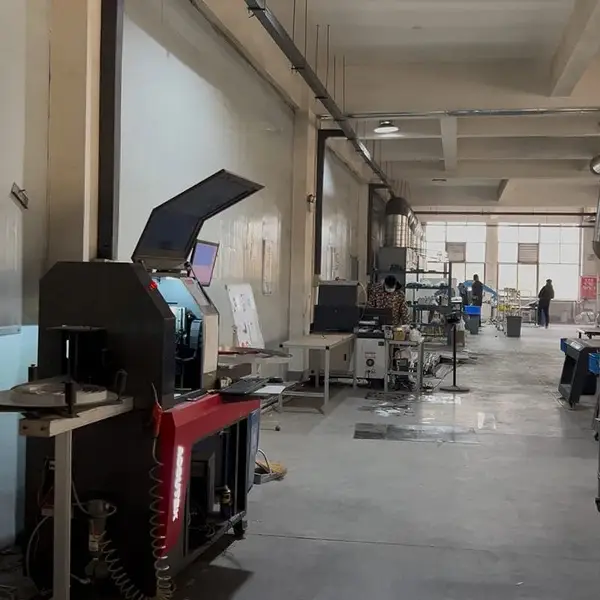
Real photo from our production floor — every sign we ship is made here.
Products mentioned or relevant to this topic — factory-direct, custom built.
From $24/letter · MOQ 1 piece · Flexible lead time · CE & UL certified · ships to 20+ countries
Custom sizes, colors, and finishes. Get a factory price in 24 hours.
Get a Free Quote Copy EmailWhatsApp +86 13865703472 · business@aochuangsign.cn
See pricing, specs, and get a free quote for the sign type you need. Built in our factory, shipped worldwide.