Look, an IP rating isn't a weather guarantee. It's a laboratory test of a specific enclosure under controlled conditions.
IP stands for Ingress Protection. First digit is dust, second digit is water. IP65 means dust-tight and protected from water jets from any direction. IP66 means the same dust protection but stronger jets. IP68 means dust-tight and submersible under pressure for a specified time.
That's it. That's the whole code.
Nobody tests a fully assembled channel letter with LEDs, power supply, and wiring harness at 3 meters underwater for 30 minutes. They test a component, a junction box, or a small module. Your sign is not a submarine.
IP54 is a joke for outdoor lit signs. It only handles splashing water. Don't accept it.
For 90% of outdoor signage in mainland US, IP65 is the right call.
It handles dust and rain-driven water jets. That's a storefront in Chicago, a strip mall in Ohio, a restaurant sign in Dallas. If you buy front-lit channel letters with quality LED modules rated IP65, you're good. Don't overpay for IP67 or IP68 on a wall-mounted sign above a dry cleaner.
Here's what nobody tells you: IP66 is for coastal and industrial areas where wind-driven salt spray or heavy pressure washing happens.
If your sign sits 200 meters from Miami Beach, or next to a car wash, or a dusty factory yard, IP66 makes sense. The water jets are stronger and the dust is constant. Our back-lit halo letters going to a hotel in Tampa? We call for IP66 on the power supply and module connections.
IP68 is for submerged or continuously wet conditions.
That's a fountain sign, a poolside installation, or a sign that lives in a flood zone. In 16 years, I've sold exactly three IP68 channel letter jobs. All three customers had engineers who specifically requested it. Fine. But it adds cost and it often traps condensation because the enclosure is too tight.
The ugly truth is: many importers quote IP68 because it sounds premium. Then they drill drainage holes in the bottom anyway. Drainage holes void the submersible rating. You just paid extra for a sticker.
An IP rating only protects what's inside the housing. If the housing itself rusts or the face yellows, the sign fails even with perfect seals.
Acrylic face: UV-resistant acrylic from Mitsubishi or Degussa keeps 90-92% light transmittance and won't yellow for 5-8 years. Domestic acrylic yellows in 1-2. I don't care if it saves $8 per face. It's a warranty claim waiting.
Stainless steel: 304 gives 10+ years outdoors. 316 gives 15+ years in marine or industrial air because of the molybdenum content. It costs 20-30% more. For a strip mall in Ohio, 304 is fine. For Miami Beach, pay for 316.
Aluminum is one-third the weight of steel and naturally rust-proof. If you order aluminum letters for a coastal site, use stainless fasteners. Otherwise the letter outlives the screw.
Power supplies: this is where most signs die. We use sealed, IP65-rated power supplies with a 1-year warranty. Cheap power supplies fail after 12-18 months. It's the same story with LED modules.
The LEDs aren't your weak point. The wiring is.
Cheap sign shops use indoor wire nuts, no gasket on the letter back, and silicone that peels after one winter. Water gets into the return, sits in the bottom, and corrodes the power supply. I've fixed signs where the LED modules looked brand new but the connections looked like a science experiment.
Here's what we do at Aochuang Sign from day one: TIG welding on all metal returns, neutral silicone on every seam, and sealed LED module connections with proper IP-rated connectors.
We don't drill drainage holes in a sign rated IP65. Instead, we angle the face slightly or design a weep channel that doesn't compromise the top seal.
That's the difference between a sign that lasts five years and one that fails in February.
CE marking costs 20,000-50,000 RMB. Most factories say they have it. Ask to see the certificate with today's date.
UL 48 costs $4,000-15,000 and takes 4-9 months with quarterly audits. It's not a piece of paper. It's a process. If a supplier claims UL but can't produce a file number for the exact sign assembly, walk away.
ETL is a legitimate UL alternative, usually 10-30% cheaper. For US electrical work, NEC Article 600 rules how signs get wired. Your local inspector cares about UL or ETL, not a Chinese factory's CE mark.
We hold CE, RoHS, and ISO 9001 at our Lu'an facility. But I'll be straight with you: I can't ship a UL-listed complete sign from China to every US city without a field inspection. Some jobs need a local sign company to do final connection. That's normal.
What I can do is build to UL component standards, use UL-listed LED modules and power supplies, and send you the component certifications. That covers most jurisdictions.
3,000 square meters of production floor. 50+ workers. We make signs worldwide, from acrylic faces to 316 stainless.
Our process is 10 steps. Laser cutting with ±0.1mm tolerance. TIG welding. Grinding and polishing. CNC acrylic face. LED assembly. Silicone sealing. Then every sign runs an 8-12 hour aging test and a 100% QC inspection before it goes in a plywood crate.
We use SMD 2835 LEDs at 100-150 lumens per watt. They carry an L70 rating of 50,000 hours. Quality modules from Samsung, Osram, or Blueview last 5+ years real world. Cheap modules die in 12-18 months. I don't use cheap modules, even when a buyer asks me to match a low price. It's not worth the call back.
For outdoor fronts, we spec Mitsubishi or Degussa UV-resistant acrylic. It holds 90-92% light transmittance and won't yellow for 5-8 years. Domestic acrylic can yellow in 1-2 years. That's a fact most factories won't tell you.
Metal? 304 stainless gives 10+ years outdoors. 316 stainless is marine grade and costs 20-30% more. We'll tell you which one to use, even if it means a smaller order.
If you're buying stainless steel letters without lighting, ignore IP ratings entirely. They don't apply. You need good stainless and a solid weld.
I won't sell you an IP68-rated acrylic light box for a strip mall facade. It's a waste of money.
I won't sell you a front-lit channel letter with domestic acrylic for outdoor use if you're in Arizona or South Florida. It'll yellow in 18 months and your brand color will look like cheese.
I won't promise a 2-year warranty on LED modules and then ship knockoff chips. The warranty says 2 years LED, 1 year power supply. That's what we honor.
I won't tell you IP65 means your sign survives a hurricane. It doesn't. It means water jets from a nozzle. A Category 3 wind load is a structural problem, not an IP problem.
And I won't fake a test report. If a buyer demands IP66 certification on a specific custom sign, I'll tell them the truth: we can build to IP66 standards, but third-party testing on that exact assembly takes time and money. Most buyers don't need it.
You can order one rimless channel letter or a full neon flex sign. We'll treat it the same.
Factory-direct pricing puts front-lit letters at $20-80 per letter, halo-lit at $35-120. US retail installed runs $200-700 per letter for front-lit, $400-1,000 for halo. That's a 50-65% savings on product. Shipping by express runs about 5-15 days, air about 10 days, sea about 65 days. Add around 30% for Section 301 tariff if you're importing to the US.
I've seen this go wrong: a contractor ordered 40 halo letters with IP68 because a consultant told him it was "best." He paid $3,000 extra. The signs sat on a shaded wall in Denver. The condensation inside killed two power supplies in six months. IP68 with no drainage became a terrarium.
Don't be that guy.
IP ratings matter. But they're one page in a bigger book.
Spec the right material, the right LED module, the right sealing method, and the

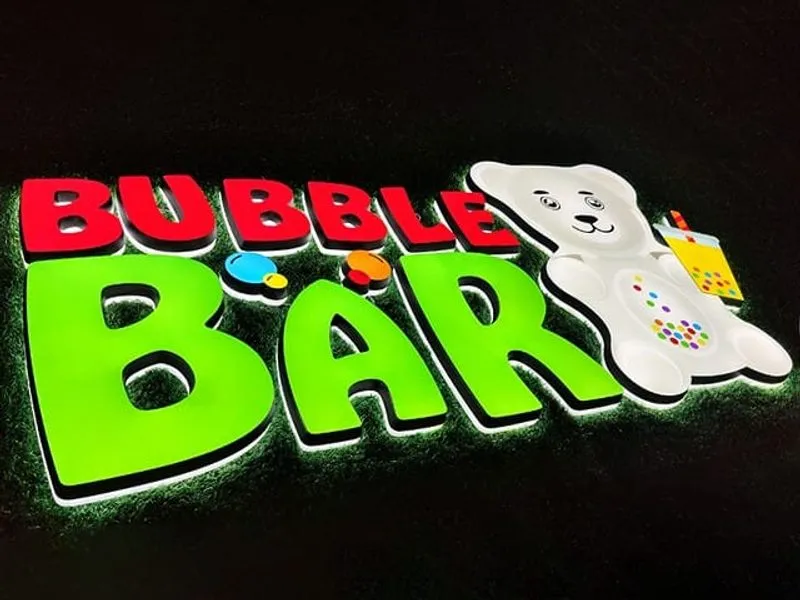
Real photo from our production floor — every sign we ship is made here.
From $24/letter · MOQ 1 piece · Flexible lead time · CE & UL certified · ships to 20+ countries
Custom sizes, colors, and finishes. Get a factory price in 24 hours.
Get a Free Quote Copy EmailWhatsApp +86 13865703472 · business@aochuangsign.cn
See pricing, specs, and get a free quote for the sign type you need. Built in our factory, shipped worldwide.