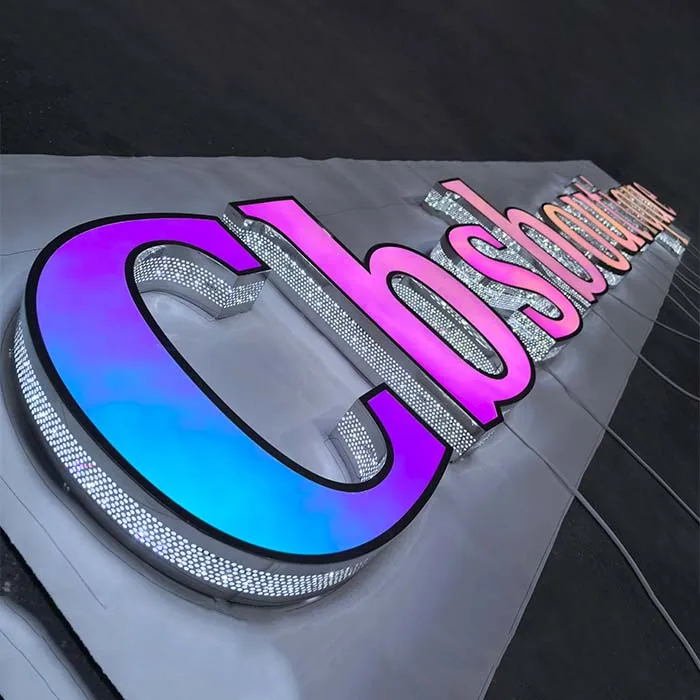
It was a hotel in Tampa. Beautiful 4-foot-tall back-lit halo letters, 316 stainless, Samsung LEDs. Installed facing the bay. The spec said IP65. The reality was water pouring out of the bottom raceway after the first tropical storm. The driver had corroded green fuzz on the terminals. The silicone around the acrylic faces peeled up like dead skin.
The owner paid a local shop to replace the whole thing. The new shop didn't change the design, didn't spec IP66, didn't seal the wire entries. Sixteen months later, same failure. And here's the part that kills me: the original factory in another province had shown a nice CE certificate and an IP65 test report that was three years old, for a completely different letter style. Nobody checked.
That's not an IP rating problem. That's a paperwork problem. And it's the reason I'm writing this. I've been on factory floors for 16 years, 14 of them right here at Aochuang Sign in Lu'an. I've burned myself on hot acrylic, argued with LED module suppliers, and packed signs into plywood crates bound for Orlando and Dubai. I don't sell waterproofing voodoo. I want you to read this once and never get burned on a multi-thousand-dollar signage project again.
IP stands for Ingress Protection. Two digits. First digit is solids (dust, fingers, tools). Second digit is water. IP65 means dust-tight and protected against water jets. IP66 means dust-tight and protected against powerful water jets. IP68 means dust-tight and submersible. Nothing more, nothing artistic, nothing about corrosion or UV. The test is done in a lab on a fresh sample with specific nozzle sizes, flow rates, and times. It does not simulate five years of Phoenix sun or a Chicago winter with freeze-thaw cycles.
Look, I’ve seen factories stamp "IP65" on a channel letter that had a return bent with a 3mm gap at the corner because the brake operator was rushing. That gap lets mist in. The IP rating on the LED module they bought from a supplier means nothing if the letter can's seams aren't welded and sealed. An IP test on a complete sign is what matters. A module test is a sales trick.
The ugly truth is that most outdoor illuminated signs fail at the wire entry, the backplate screw holes, or the seam between the acrylic face and the metal return. Not at the LED itself. An IP68-rated LED module still drowns if the water gets into the letter body and sits there. I've opened letters that were half full of water, the LEDs still glowing underwater for a few days before they shorted. Those were "IP68" modules. The letter was the problem.
IP65: protected against low-pressure water jets from any direction. The test uses a 6.3mm nozzle, 12.5 liters per minute, at 30 kPa pressure from 3 meters away for at least 3 minutes. This handles rain, hosing down a storefront, car washes nearby. For most inland retail strips in Kansas City or Dallas, a properly built IP65 front-lit letter works for years.
IP66: protected against powerful water jets. 12.5mm nozzle, 100 liters per minute, 100 kPa from 3 meters. This is for coastal zones where wind-driven salt spray hits like a pressure washer, or industrial areas with regular washdowns. If your client is on the Gulf Coast or has a building within a mile of breaking surf, IP66 is what you write in the spec. Don't ask. Just do it.
IP67: immersion up to 1 meter for 30 minutes. Rarely relevant for signage unless you expect flooding. IP68: continuous immersion beyond 1 meter, conditions agreed between manufacturer and client. You might spec this for pier signage or if you're mounting letters in a fountain wall. We can do it with fully potted assemblies and welded, seamless housings. But 99% of sign projects don't need it, and the cost jumps considerably.
Here's what nobody tells you: the difference between IP65 and IP66 on a 24-inch channel letter can be as simple as a thicker silicone bead and a compression gasket on the face. That might add $8 per letter in labor and materials. And it'll save a $2,000 service call two years later. I watch American sign shops charge $1,800 to send a bucket truck out to replace a driver. Spend the extra eight bucks.
IP tests are done at room temperature with fresh water. They don't account for UV degradation of seals, thermal expansion causing micro-cracks in acrylic, condensation from internal heaters and cool-down cycles, or salt corrosion eating the stainless from the inside out. A sign in direct sun can hit 70°C on the face. At night it drops 30 degrees. Silicone eventually loses adhesion. The IP rating says nothing about that.
Material matters just as much. 304 stainless lasts 10+ years outdoors if you keep it clean. Use 316 stainless within two miles of salt water — it's got 2-3% molybdenum and costs 20-30% more, but you'll get 15+ years. Domestic acrylic yellows in 1-2 years; UV-resistant Mitsubishi or Degussa acrylic stays clear for 5-8. An IP65 letter with cheap acrylic looks like a urine sample after 18 months. That's not a waterproofing failure, but your client doesn't care. They'll just say "the sign failed."
Look, I once had a customer in Dubai order stainless steel letters — non-illuminated, no IP rating needed. They insisted on mirror-finish 304 because it was cheaper. Two years later the surface was pitted with rust spots from windblown desert dust mixed with humidity. Was the metal defective? No. It was the wrong grade for the environment. An IP rating wouldn't have saved it. That's the kind of honesty you need from a factory.
Almost no channel letter is truly hermetically sealed. There's always a drain hole — and there should be. If you completely seal a letter, condensation builds inside from temperature cycles, and you'll have a fishbowl in six months. Weep holes at the lowest point, covered with a mesh or a small stainless screen, let water out and block insects. The trick is making the water drain before it reaches the LEDs. This is why we mount LED strips with a slight standoff and route wires above the weep level. An IP66 letter can still have a drain hole and meet the spec, because the test is about resisting water jets, not permanent immersion.
I've seen this go wrong: a competitor shipped a sign with no weep hole, full silicone seal everywhere, and an IP67 sticker on the crate. Condensation killed the driver in 10 months. The client sued. The factory's defense? "It passed the lab test." A lab test doesn't replicate a Florida afternoon thunderstorm every day for a year. Ask any sign installer who's worked on the coast for more than five years, and they'll tell you the same thing. Waterproofing isn't a certificate. It's a system.
Every factory in Guangzhou will show you a CE certificate and an IP test report. Ask for a report that matches your sign type and size. If you're ordering 36-inch backlit halo letters, the report should be for a similar halo-lit enclosure, not a 6-inch square box. The date should be within the last year. Better yet, ask for a video of the test being performed, with a piece of paper showing today's date in frame. The ones that hem and haw don't have the setup.
Real IP testing equipment costs money. Our facility uses aging test rooms where we cycle signs through electrical load tests for 8-12 hours, then examine for ingress. A true IP66 chamber with proper nozzles and flow meters is a separate investment. We're honest: we don't have an in-house IP68 submersion tank for every job. For special projects requiring immersion certification, we send samples to a third-party lab. That's not a weakness; it's what any honest mid-sized factory does. The lie factories tell is that they "self-certify" with a garden hose and a phone camera.
The ugly truth is that UL 48 certification — the American standard for electric signs — costs $4,000-15,000 and takes 4-9 months with quarterly audits. Most Chinese sign factories don't have it. We don't hold UL 48 yet. We do build to UL 48 standards when a customer requires it, and we partner with US-based field inspection services. This matters because an IP rating doesn't automatically mean a sign meets NEC Article 600 requirements for electrical connections in wet locations. You need both conversations, not just one.
Our 10-step process on a standard front-lit channel letter goes like this: laser cutting the aluminum or stainless returns within ±0.1mm (no gaps), TIG welding the corners and grinding them smooth, CNC routing the acrylic face, assembling the LED modules on a standoff rail, sealing the acrylic face into the return with neutral-cure silicone that won't corrode the metal, applying a continuous gasket behind the backplate at every screw point, and running an 8-12 hour burn-in test at full brightness. Every letter gets visually inspected for weld pinholes and silicone coverage. We use SMD 2835 LEDs with L70 ≥50,000 hours from Samsung or Osram — not no-name chips that fall to half brightness in 12 months.
We can hit IP66 on most channel letter designs. We've done IP66 for projects in Miami, Singapore, and Sydney. We do it by adding a secondary seal around wire exits, potting the connectors in silicone, and testing each letter's seam integrity. For a front-lit channel letter, that might cost $15-20 extra per letter. For a more complex dual-lit channel letter with an internal acrylic diffuser, the labor is higher but still under $30. You're buying peace of mind for less than the cost of a dinner for two.
What we can't do — and I'll say it plain — is guarantee IP68 on a large fabricated letter with an accessible acrylic face unless we completely redesign it as a welded, potted, solid block. At that point it's a different product, closer to a marine light fixture. If your client truly needs submersible letters for a fountain or a pier piling, we'll tell you early and work on a custom solution. We'd rather lose a sale than ship a sign I know will fail.
Aluminum returns, at 1.0-1.6mm thickness, are one-third the weight of steel and naturally rust-proof. We powder coat them or anodize them, and they'll last 8-12 years outdoors. Aluminum won't save you from water ingress, but it won't add corrosion to the problem. For non-lit aluminum letters, the IP conversation barely exists — they're solid, no internal cavity. That's why so many shopping centers use aluminum letters above the entrance: zero electronics, zero water headache.
Stainless steel 304 at 1.5-2.0mm thickness with a brushed #4 finish is our go-to for backlit halo letters. The LED sits behind the letter, and the metal face stands off the wall on clear acrylic standoffs. The wiring channel in the wall needs its own IP66 junction box, but the letter body itself is a tank. Pair that with neon flex signs for a modern look, and you've got a package that requires minimal waterproofing at the sign level because the line voltage connections are all behind the wall.
Here's what nobody tells you: you can spec IP68 LEDs, IP66 housings, marine-grade silicone, and STILL fail if the installer doesn't point the drain holes down. I've seen a nationally recognized chain install a set of acrylic light boxes sideways, with the weep holes on the top edge. They filled like a bathtub. So when I talk about IP ratings, I'm also talking about installation instructions that are dead simple. We tape a laminated diagram inside every crate, showing drill points, orientation, and drain hole locations. It's the cheapest insurance we can give you.
For a strip mall in Ohio, 100 miles from any large body of water, IP65 on standard front-lit channel letters is fine. Use 304 stainless returns, 3mm acrylic, and SMD 2835 LEDs. Budget about $20-80 per letter from our factory, versus $200-700 installed retail in the US. Lead time about 5-15 days. Sea shipping will add about 65 days, but the savings are 50-65% on product.
For a hotel on the Texas Gulf Coast, you move to IP66 and 316 stainless for the returns. You might choose back-lit halo letters to minimize the amount of hollow body exposed. Factory price per letter hovers $50-120 for halo-lit, and that includes the upgraded metal. Pay for air freight if you're in a rush; door-to-door is about about 10 days at $4-12/kg. The tariff situation adds about 30% under Section 301, but you're still way under US fabrication costs.
For a monument sign base in a flood-prone zone near the Mississippi, you might not need IP68, but you do need all connections, drivers, and power supplies elevated at least 12 inches above the expected water line, in an IP66-rated enclosure. We've supplied stainless steel cabinet bodies with bottom-mounted weep holes and silicone-sealed raceways that can handle periodic submersion if the install follows the drawing. I wouldn't call that IP68, and I won't stamp it as such. It's simply good engineering.
Look, the IP rating on your spec sheet is a start, not a finish. It's a promise that a sign passed a lab test under controlled conditions. It doesn't survive a hurricane. It doesn't prevent a cheap power supply from dying at -20°F. It doesn't stop a painter from drilling a hole in the top for a new tenant panel and letting water pour in. But if you buy from a factory that welds properly, seals with the right silicone, uses brand-name LEDs, and doesn't lie on the certificate, you're 95% of the way there.
At Aochuang, I'll tell you exactly what we can prove, what we've tested, and what's common sense. We're a 3,000m² shop with 50+ workers, ISO 9001, CE, and RoHS. We ship worldwide. MOQ is one piece. Warranty is two years on LEDs, one year on the power supply. If you need something unusual, like IP66 rimless letters with a custom RAL color and a 5-year warranty on the coating, we'll figure out how to do it or tell you why we can't. No fluff. Just experience.
Your signs have to work in the real world, not in a test lab. That's all an IP rating is for. Use it. Just don't worship it.
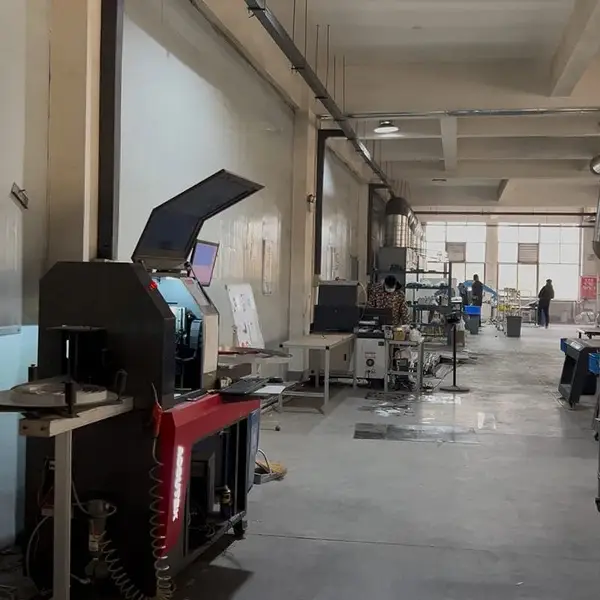
Real photo from our production floor — every sign we ship is made here.
From $24/letter · MOQ 1 piece · Flexible lead time · CE & UL certified · ships to 20+ countries
Custom sizes, colors, and finishes. Get a factory price in 24 hours.
Get a Free Quote Copy EmailWhatsApp +86 13865703472 · business@aochuangsign.cn
See pricing, specs, and get a free quote for the sign type you need. Built in our factory, shipped worldwide.