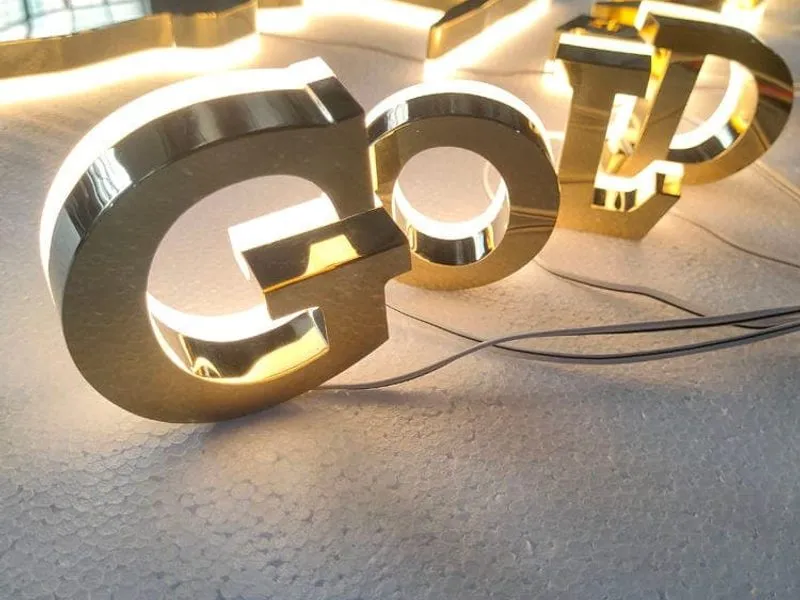
Last week, a contractor in Houston called. He wanted front-lit channel letters for a strip mall — nothing fancy, just 24-inch red acrylic. Then he said, “I need IP67 waterproofing. I want the sign to survive a hurricane underwater.”
I took a breath. Told him the ugly truth: that spec would add 18% to the cost, deliver zero real protection against what actually kills signs, and probably leak faster than a properly-built IP65 letter. He went quiet for a second. Then said, “Nobody’s ever explained it like that.”
That’s why I’m writing this. I’ve spent 16 years on factory floors, burnt my fingers on hot acrylic, cursed at LED drivers that short out after a single rain. I know where IP ratings save you — and where they just light your money on fire. Let’s break down IP65, IP66, IP67 the way a sign maker sees them, not an engineer with a textbook.
The IP code has two digits. First digit is dust protection. Second is water. For outdoor illuminated signs, you always want a 6 as the first digit — that means dust-tight. Nobody vacuums their channel letters. Dust plus moisture equals mud inside the letter, which blocks LEDs, corrodes terminals, and makes your back-lit halo letters look like they have glaucoma. So I only sell IP6X. Dust can’t get in, period.
The second digit is where the confusion lives. IPx5 means the sign can handle water jets from a 6.3mm nozzle at 12.5 litres per minute for at least three minutes. IPx6 means powerful jets — a 12.5mm nozzle blasting 100 litres per minute. IPx7 means submersion in 1 metre of water for 30 minutes. IPx8 means beyond that, defined by the manufacturer. Notice something? IPx7 and IPx6 test completely different things. One simulates a pressure washer. The other simulates a flood. They are not on a ladder. Higher number does not equal “more waterproof for a sign on a wall.”
Here’s what nobody tells you: IP65, properly built, handles 99% of real weather. Rain, sleet, snow, even a car wash brush across the face — if the seals are right, the sign stays dry inside.
The test is with a 6.3mm nozzle from 3 metres away, spraying at 12.5L/min. That’s not gentle. It’s a garden hose on full. In our test area in Lu’an, we’ll run a channel letter through eight hours of continuous spray while the LEDs are lit. Then we cut the silicone and look inside with a flashlight. If there’s a single drop of water behind the acrylic face, the letter fails QC. We do that on every custom order before it goes into the aging test.
For a standard aluminum letters build with an acrylic face and trim cap, hitting IP65 is straightforward. We CNC the acrylic to ±0.1mm so it sits flush in the aluminum return. We use neutral silicone, not the cheap acidic stuff that eats LED coatings. The back of the letter gets a full gasket against the wall. Power supply gets its own sealed compartment. That’s it. That’s the recipe for a sign that lasts 5 to 10 years in Minnesota winters or Arizona monsoons.
Look, if your sign sits near a drive-through, a loading dock, or a coastline where salty spray gets sandblasted onto the face, IP66 makes sense. The test hits the enclosure with 100 litres per minute. A big nozzle, a lot of force.
I’ve seen this go wrong: a restaurant chain in Savannah ordered rimless channel letters from a factory that claimed IP66. Letters looked beautiful for six months. Then the evening cleaning crew started pressure washing the facade at 1,200 PSI. Water blew right past the rimless edge seal, filled the letters, and shorted the LED modules in three weeks. The factory’s “IP66” certificate was for a sample they’d built once in a lab — not the production run that shipped.
When we build IP66, we do a few things differently. The acrylic face gets a double bead of silicone, and the returns get a mechanical lock in addition to double-sided VHB tape. We’ll sometimes integrate a small Gore-Tex vent to equalize pressure without letting water in, especially on larger letters over a metre tall. The LED modules get conformal coating on the circuit boards. All that adds about 12% to the per-letter cost compared to IP65. It’s not a lot, but it’s real money on a 50-letter project.
The ugly truth is, many Chinese factories will charge you for “IP66” and change nothing except the label. At Aochuang, we document every build with photos of the silicone beads, the vent placement, the gasket compression. You get that folder before the sign ships. If you don’t ask for it, they won’t give it.
IP67 submerges the entire sign in a metre of water. Unless your sign is going on a dock piling that floods at high tide, you don’t need this. I repeat: you almost certainly don’t need IP67.
The immersion test doesn’t replicate rain. It doesn’t replicate thermal expansion. A sign that passes IP67 in a 23°C lab can still leak on a 35°C afternoon in Dubai because the aluminum returns expand, the silicone softens, and the sealing faces break. We’ve tested IP67 builds that held water out for 30 minutes of submersion, then failed after 48 hours of outdoor temperature cycling. Rookie mistake: assuming a static dunk test predicts ten years of dynamic weather.
We can build IP67. It means fully potted electronics, welded returns instead of bent corners with joints, and O-ring seals on every penetration. It raises the cost by 20-30% over IP65. For a set of neon flex signs on a pontoon boat dock, sure, pay for it. For a dental office on Main Street, you’re better off spending that money on thicker acrylic or brighter LEDs.
Here’s the lie: “Higher IP number means better waterproofing for all outdoor signs.” Salespeople push IP67 because it sounds premium and they can mark it up. Then your sign sits on a wall, never submerged, but the silicone fails because the sealing design optimized for immersion and ignored spray from below. A properly built IP65 letter often outlasts a poorly built IP67 letter by three years. I’ve pulled them both out of the dumpster.
Another lie: that any factory’s IP rating is automatically certified. CE marking covers safety, yes — but it doesn’t certify IP rating unless a notified body specifically tests that product. Our CE certificate covers our general manufacturing quality. IP testing we do in-house with calibrated equipment, but if you need a third-party lab report for a government contract, that’s a separate job. I charge $800-1,200 to send a pre-production sample to an accredited lab in Shanghai and get the cert. Most buyers skip it because our in-house documentation holds up. But the offer’s always on the table. No bullshit.
Look, I’ve dissected failed return letters from Florida to Vancouver. Water ingress is problem number one, yes. But heat is number two, and it gets zero attention. A sealed IP66 letter traps heat from the LEDs. Internal temperature can hit 70°C in direct sun. That cooks the LED drivers, degrades the phosphor, and makes the acrylic brittle. We’ve started adding micro-vents with hydrophobic membranes on signs larger than 60cm to let the box breathe without letting water in. A good IP66 build balances sealing with thermal relief. A bad IP67 build is just a slow-motion oven.
This is why our 10-step production process includes an 8- to 12-hour aging test with the LEDs at full brightness and the sign under a spray bar. We measure internal temperature inside the letter, check for condensation on the acrylic, and verify that the power supply isn’t climbing past its rated temperature. If it does, we drill a vent or spec a different driver. I’ve sent production photos to clients at 11 p.m. because that test caught a thermal failure they’ll never see in their parking lot. I’d rather lose two hours of sleep than ship a sign that dies in six months.
Start with where the sign lives. Inland restaurant, under an awning: IP65. Exposed wall in a hurricane zone or next to a car wash: IP66. Marine environment, salt spray, or occasional flooding: IP66 plus 316 stainless steel returns. That’s a material spec I’ve covered before — 316 costs 20-30% more than 304, but along the Gulf Coast, 304 pits in 18 months. You can pair IP66 with stainless steel letters in grade 316 and basically forget about corrosion for a decade.
Second, look at the sign type. Front-lit channel letters with a trim cap have a natural drainage path if water gets in — not ideal, but they self-drain before the LEDs drown. Dual-lit channel letters are harder. They have a front acrylic face and a back plate with exposed LEDs on both sides. Sealing all those penetrations to IP66 is a pain, and the cost jumps about 18%. We’ve done it for a bank HQ in Toronto that wanted both daytime elegance and nighttime visibility through snowstorms. It worked. But they paid for the extra labour, and they knew why.
Acrylic light boxes are a different animal. Large flat surfaces that bow with temperature changes. For those, I recommend IP65 minimum, but I won’t promise IP66 on anything over 2 square metres unless the box has internal steel bracing and a compression gasket all the way around the edge. Without that, the box leaks at the corners by month three. I’ve had to reject an order from a car dealership group because their designer wanted a 4-metre seamless lightbox face with IP67. We can’t deliver that reliably, and I told them to go to a local fabricator with a full silicone pouring rig. I’d rather lose a $17,000 deal than ship a $17,000 problem.
IP rating alone doesn’t change the LED module cost. A Samsung SMD 2835 chip is the same whether it sits behind a tight seal or not. The cost difference is in labor and consumables. A skilled production worker at Aochuang can seal 12 IP65 letters in an hour. IP66 drops that to 8 letters. IP67 drops it to 5, and each letter gets 20% more silicone, an extra gasket, and a longer cure time before the water test. That’s why the per-letter price climbs as the rating climbs.
But the real cost is the warranty claim you avoid. Our standard warranty is two years on LEDs, one year on the power supply. I’ll extend that to three years on LEDs for IP66 builds that I personally inspect, because I know the failure rate drops below 0.5% in our tracking. A single callback to replace a high-rise wall sign in Phoenix costs a contractor $2,000 in labor and lifts. Spending $400 extra on IP66 seals upfront doesn’t look stupid when you think about that.
Every sign we ship gets a laminated QC card inside the crate. It has the date, the inspector’s name, the IP rating tested, the duration of the spray test, and the internal humidity reading after the aging cycle. For IP66 and IP67 orders, we include video of the test on a USB stick. You can forward that to your client. If the sign fails in the field and you send us a photograph of water inside, I’ll eat the replacement cost without arguing — because I’ve got the laminates and timestamps to know if it was our mistake. In six years of this system, I’ve eaten exactly three letters total. One was a hairline crack in an acrylic face that didn’t show up until the freight hit a pothole in Chicago. I still replaced it.
Here’s what nobody tells you about importing from China: most buyers don’t know how to verify IP claims. They unbox a sign, see a little silicone bead, and assume it’s waterproof. Then it rains, and they’re on Alibaba dispute by Thursday. I don’t want your dispute money. I want you to order your next project from us because the first one arrived working, dry, and on time. So we overdocument. It costs me $3 in laminate and $0.50 in USB sticks. It saves you $2,000 in doubt.
I had a young project manager from a sign shop in Denver visit our factory in 2019. Nice kid, sharp, but he’d been burned by a supplier who sent IP67-rated letters that filled like aquariums. I took him out to the testing station, handed him a spray wand set to 100 L/min, and said, “Pick a letter off the rack. Strap it to the wall. Try to drown it.” He picked a 30-inch brass letters model we’d built for a hotel lobby. (Brass indoors, but we sealed it to IP66 because the architect wanted it “future-proof” — another story.) He sprayed it for 15 minutes, face, back, joints. Didn’t blink. Then he looked inside the access panel. Dry as a bone. He’s ordered 48 projects from us since then. I’m not saying you have to fly to Lu’an, but I’ll send you that video for any sign you’re serious about.
Water kills signs. Dust kills lights. Poor manufacturing kills reputations. Get the IP rating you actually need, verify it with evidence, and don’t let a salesman upsell you into a submersion rating for a sign that’ll never see a puddle deeper than its own return. We’ll build you exactly what works — nothing more, nothing less — and we’ll prove it before it leaves Anhui.
If you’ve got a spec sheet from your client and you’re not sure which rating to quote, email me the details. I’ll give you a straight answer, no charge, no pitch. I’d rather you order the right thing from someone else than the wrong thing from me.
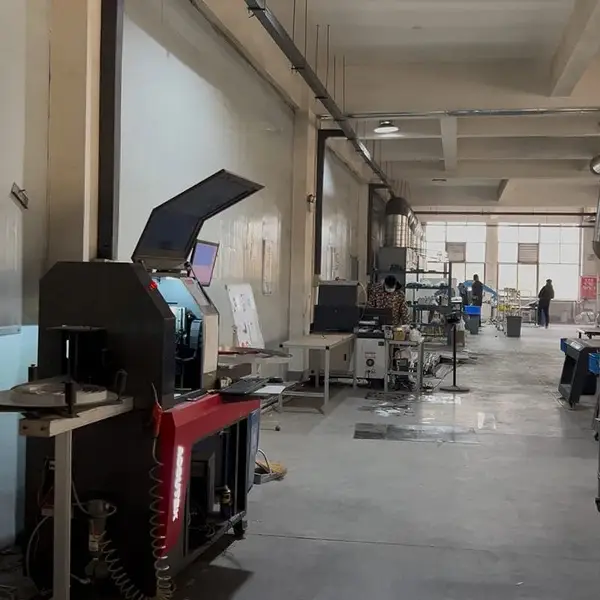
Real photo from our production floor — every sign we ship is made here.
From $24/letter · MOQ 1 piece · Flexible lead time · CE & UL certified · ships to 20+ countries
Custom sizes, colors, and finishes. Get a factory price in 24 hours.
Get a Free Quote Copy EmailWhatsApp +86 13865703472 · business@aochuangsign.cn
See pricing, specs, and get a free quote for the sign type you need. Built in our factory, shipped worldwide.