
Look, I’ve been making signs since before the first smartphone ever lit up a strip mall. I’ve watched sign shops pay $800 for a front-lit letter from a domestic fabricator. Same 304 stainless, same Samsung LEDs. We ship that letter for $120. But you know what kills more sign projects than bad LEDs? Zoning. Not the sign itself. The paperwork.
I’ve seen a $10,000 sign sit in a crate for six months because someone thought a “sign permit” was optional. That’s not a mistake you make twice. So let me tell you exactly how to navigate local zoning laws without losing your shirt. I’m not a lawyer. I’m a guy who’s built 3,000 signs per year for a decade. This is what I’ve learned the hard way.
Here’s what nobody tells you: Most cities have overlay districts. Historic district? Flood plain overlay? Transit corridor? That changes your sign size, brightness, and materials. A 4000K neutral LED sign might be fine on a commercial strip, but in a historic residential overlay they’ll want 3000K warm and no brighter than 500 nits. I’ve had to swap out LEDs three times because the inspector knew the code chapter but not the ‘design guideline appendix’ that overruled it.
Quickest way to spot a bad zoning research process: They only check “commercial” or “industrial” on the form. You need the municipal code section on signs (usually Chapter 18 or 20) plus any specific overlay rules. Some cities, like Columbus, Ohio, have a separate “Sign Code” booklet. Other cities have non-binding “design guidelines” that the planning board uses to deny permits anyway. And here’s the ugly truth: There’s no national database that works. You have to call the zoning office, read the PDFs (often buried three clicks deep), and then ask again.
I’ve seen a perfectly legal 4-foot-tall monument sign get rejected because it was 6 inches too close to the property line. The code said “setback minimum 5 feet” but the survey they used was from 1975 and the actual line was different. That’s a $300 survey vs. a $5,000 sign built too big. Save yourself. Order a current property survey before you design.
You think zoning just cares about where the sign goes? Not even close. Many towns require specific finishes. Stainless steel grade, paint color, even the acrylic thickness. We’ve got a job right now in a coastal town that demands all signs use 316 marine-grade stainless, not 304. They had a problem with rust on beachfront restaurants. Now they wrote it into code. 316 costs 20-30% more than 304, but if you ignore it, your permit gets denied and you throw away a $2,000 blank.
I’ve seen this go wrong: A sign shop in Ohio ordered 304 stainless for a restaurant in Miami Beach. The inspector checked the mill certificate. It said 304, not 316. He taped a sticker that said “REJECTED – NON-COMPLIANT MATERIAL” right on the back of the letters. The sign had to be rebuilt with 316, shipped back, and re-installed. Two months lost. The lesson: Always email your material specs to the zoning office before you cut metal. They’ll either approve or tell you what to change.
Same goes for acrylic. If your city requires UV-resistant acrylic (and many do for signs facing streets), you need Mitsubishi or Degussa grade. Domestic acrylic lasts 1-2 years before yellowing. That’s a code violation when it fades. I’ve replaced signs that were only 3 years old because the cheap yellowed acrylic made the store look closed. Don’t be that guy.
Brightness limits are real. I’ve seen signs fail inspection because the LEDs were too powerful. SMD 5730 chips can push 40-60 lumens each. If you stuff 20 of those into a channel letter, you might hit 800-1200 lumens per foot. Some towns cap signs at 0.3 footcandles above ambient at the property line. Others use a “maximum nits” spec. For example, Santa Fe, NM caps all illuminated signs at 50 nits. That’s dim. You can’t use standard LEDs. You need dimmable drivers or lower-grade modules.
Here’s the test that fails: I’ve watched installers light up a sign in the parking lot and the inspector has a light meter. If it’s over the limit, you get a red tag. Then you have to remove the sign, or block half the LEDs, or swap drivers. None of that is cheap. Best practice: Ask for the municipality’s lighting ordinance section. Then build your sign to 80% of the maximum allowed brightness. That way you pass even if the meter is 10% off.
IP ratings matter for outdoor signs, but don’t let IP65 fool you. IP65 means the sign can take water jets from any direction. It does NOT mean your sign survives a Florida hurricane. IP66 is better for coastal areas, but if you’re in a flood zone, you might need IP68 (submersible). I know a sign shop that used IP65 drivers on a ground-level monument sign in Houston. The sign flooded during a storm. All LEDs died. The inspector wrote a violation for “inadequate weather protection.” That code was in the building code, not the sign code. You have to read both.
I’ve heard it a thousand times: “It’s just a wall sign. We don’t need a permit.” Wrong. Almost every city in the US with over 10,000 people requires a sign permit for any illuminated sign, any sign over a certain square footage (often 4 square feet), and any sign attached to a building. Even non-illuminated stainless steel letters often need approval for placement, height, and sizing.
The real trick is understanding the difference between a permit and a variance. If your sign doesn’t strictly meet the code, you need a variance hearing. That means you pay a fee ($200-$1,500), present your case to a board, and maybe get approval with conditions. I’ve seen a variance approved because the sign was one foot taller than allowed, but the business was on a corner lot with heavy traffic. The board granted it because the increase improved safety for drivers. But I’ve also seen variances denied for a 2-inch overhang. Win some, lose some.
Standard permits: 2-4 weeks processing, fees $50-$500. Variances: 6-12 weeks, fees higher. And here’s the part nobody tells you: If you apply for a permit and it’s denied, you can’t just reapply with the same design. You need to modify the sign or get a variance. So don’t waste time trying to game the system. I’ve seen a sign shop submit the same drawing three times hoping for a different inspector. Didn’t work.
If your sign is for a public business, ADA rules kick in. Tactile signs need Grade 2 Braille, non-glare surface, and mounting height 48-60 inches. That’s federal. Local zoning can’t override it, but they can enforce it. I’ve installed signs that passed zoning but failed ADA because the Braille dots were too tall. The inspector used a gauge. We had to re-route the entire face.
Electrical code: NEC Article 600 covers signs. It requires proper wiring, disconnects within sight, and grounding. Many cities adopt the NEC with local amendments. For example, some require GFCI protection for signs in wet locations. Others mandate specific conduit types. If you buy a sign from a factory overseas (like ours in Lu’an, Anhui), make sure it’s built to UL 48 or ETL standards. UL certification costs $4,000 to $15,000 and takes 4-9 months. ETL is 10-30% cheaper. But labels matter. I’ve seen signs shipped without a mark get rejected at the job site. The importer tried to claim the CE marking was equivalent. The inspector didn’t care. CE is not accepted in the US for electrical safety. Period.
I’ve watched more than a few permit applications get rejected because the drawing wasn’t to scale, or didn’t include electrical details, or left out the mounting method. The zoning office wants a site plan showing the sign location, distances to property lines, building elevation, sign dimensions, materials, and lighting specs. Some cities want a photometric plan (light distribution map). If you’re doing a big monument sign, they might want a structural calculation stamped by a licensed engineer.
Now here’s the brutal honesty: Most small sign shops don’t have a draftsman. They hand-draw a sketch on graph paper. That gets rejected 9 times out of 10. Spend the $200 to get a proper CAD drawing. Or ask your sign manufacturer if they provide permit-ready drawings. We do — it’s part of our service because we know you need it. But most factories won’t. So ask.
Yes. Most cities define a sign as anything that’s visible from a public way and conveys a message. That includes a single letter. Unless you’re in a jurisdiction that exempts signs under 4 square feet (and many don’t), you need a permit. I’ve seen a pizza shop get a $500 fine for a “Pizza” sign that was 6 inches too tall. Don’t chance it.
2-8 weeks, depending on the complexity and whether the plan reviewer knows what they’re doing. If you’re in a small town, the clerk might review it themselves and turn it around in a week. Big cities like LA or NYC — figure 6 weeks minimum, and plan for rejection and resubmit. I’ve seen a permit in Chicago take 4 months because the reviewer was waiting on a signature from a supervisor who was on vacation. No joke.
In most places, the property owner or their authorized agent can apply. That includes the sign contractor. But if you’re a tenant, the landlord might need to sign. Check who owns the building. I’ve had jobs where the tenant paid for the sign, but the landlord submitted the permit. That worked fine. Just know that if the sign is permanent, the responsibility sits with the property owner.
You roll the dice. If no one complains, you might get away with it. But if a new tenant moves in next door and calls the city, they’ll inspect. Then you get a “stop work” order and a fine (typically $100-$1,000 per violation). Plus you have to retroactively get a permit, which might require changes. I’ve seen a sign that was too big have to be cut down. The cost of retrofitting is always more than doing it by the book. Always.
Here’s what nobody tells you: Your manufacturer can help — if you ask. When you order signs from a factory like ours, we can provide CE, ISO 9001, material certifications, and even UL folder if you need it. We know the common code requirements. We build with proper LED modules (Samsung or Osram, not cheap Chinese junk). We suggest acrylic thickness (5mm for letters over 2.5 meters). We use neutral silicone for sealing. All of that matters when an inspector walks up.
But
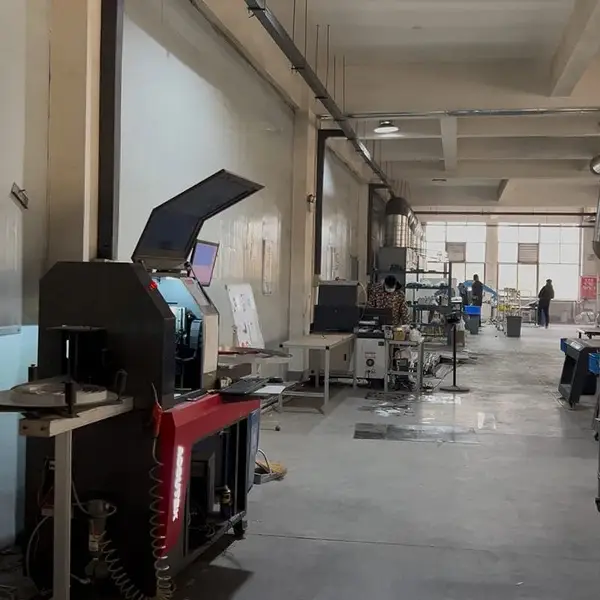
Real photo from our production floor — every sign we ship is made here.
Products mentioned or relevant to this topic — factory-direct, custom built.
From $24/letter · MOQ 1 piece · Flexible lead time · CE & UL certified · ships to 20+ countries
Custom sizes, colors, and finishes. Get a factory price in 24 hours.
Get a Free Quote Copy EmailWhatsApp +86 13865703472 · business@aochuangsign.cn
See pricing, specs, and get a free quote for the sign type you need. Built in our factory, shipped worldwide.