IP Ratings Are a Marketing Trap If You Don't Know the Context
Look, every customer who walks in asking for "fully waterproof" signs has been lied to by a sales brochure. IP65, IP66, IP67—they're not interchangeable. And they sure as hell don't mean your sign can survive a pressure washer blast or a hurricane. I've seen more signs fail because someone bought IP67 modules with cheap seals than because of actual water ingress. Let's cut through the marketing garbage.
Here's what nobody tells you: IP65 means dust-tight and protected against water jets from any direction. It does NOT mean submersible. It does NOT mean it'll survive being hosed down for two hours straight. It's the minimum for any outdoor sign that sees rain and occasional washdowns. Most of our
front-lit channel letters leave the factory with IP65 LED modules. That's fine for 95% of storefronts from Ohio to Arizona.
IP66 is tougher—same dust seal, but it can handle powerful water jets. Think heavy rain with wind, or cleaning with a pressure washer from a reasonable distance. But here's the catch: it's not about the rating, it's about the sealant. We use neutral silicone at every joint. I've watched guys glob on cheap silicone and call it IP66. That sign leaks in six months.
IP67: The Overkill That Costs You Money and Headaches
The ugly truth is that IP67 (submersible up to 1 meter for 30 minutes) sounds impressive, but for a dimensional letter sign on a building facade, you don't need it. Those rubber gaskets are expensive, they degrade faster under UV, and they make maintenance a nightmare. I've got a stack of IP67 modules from a cheap supplier where the rubber ring disintegrated after 18 months. Now you're digging out failed LEDs from a sealed unit.
Where does IP67 actually matter? If your sign sits in a flood zone, like ground-level wayfinding in a coastal town. Or if it's part of a pool sign. Otherwise, you're paying for a spec sheet that won't save you from the real enemy: moisture trapped inside. That's what happens when a sign gets sealed too tight and thermal cycling creates condensation. A properly ventilated IP65 sign outlasts a poorly built IP67 sign every time.
I told a client last month: "Stop asking for IP67 on your strip mall lettering. Your real problem is the acrylic face yellowing in two years because you cheaped out on material." He didn't listen. Now he's paying for replacements. Use the right material—like
stainless steel letters with a brushed #4 finish and proper drainage weep holes—and you don't need the highest IP rating.
Factory Truths Nobody Puts in the Brochure
Here's something that'll save you money: IP65 is tested with a 12.5mm nozzle at 100 kPa pressure from 3 meters. Real life? Rain hits at 20-30 degrees, not straight on. And the sign isn't brand new in a lab. After two years of sun and freeze, that gasket shrinks. The silicone cracks. The rating means nothing if the assembly was half-assed.
We run every sign through an 8-12 hour aging test before it ships. But I've seen factories that buy pre-certified IP66 modules and stick them into a sign with gaps at the corners. The module is IP66. The sign is IP44. That's the lie.
Quickest way to spot bad assembly: look where the letter backs meet the face. If you see a bead of silicone that's uneven, or worse, silicone on the inside of the LED strip, that sign will fail. Water will find the one pinhole. We use neutral-cure silicone for a reason. Acid-cure stuff eats the copper traces in the LEDs.
And for the love of God, if you're ordering
embedded lightboxes that are flush-mounted into a wall, that face seal is critical. The rating on the lightbox means squat if the back side isn't sealed where it meets the building. I've seen more water damage from wall weepage than from rain.
How to Actually Choose the Right Rating for Your Sign
Let's make this simple. I've installed signs worldwide. Here's what I've learned:
- **IP65** – Standard outdoor. Rain, snow, occasional spray from sprinklers. Good for most retail storefronts, restaurant signs, and office buildings. Pair with quality LEDs like SMD 2835 modules from known brands (Samsung, Osram, or solid Chinese OEMs like Lan Jing). Expect 5+ years.
- **IP66** – You're on a beachfront, or the sign faces a power washer every week. Or it's ground-level on a main street with slush and salt spray. The thicker gaskets and higher pressure rating buy you peace of mind. But only if the sign box is welded properly. TIG welded seams, not MIG.
- **IP67** – Only use if: the sign is in a flood basin, or it's a pool sign, or it's a
stainless steel letter set on a fountain wall. Even then, make sure the power supply is mounted above the water line. I've seen IP67 signs fail because water entered through the conduit, not the sign body.
Here's what nobody tells you: a well-designed IP65 sign with a drainage path and proper ventilation will outlast an IP67 sign that's sealed airtight. Why? Because trapped moisture kills LEDs faster than a splash of rain. If you seal it like a submarine, every temperature swing condenses water inside. You need either a full nitrogen purge (expensive) or weep holes with a one-way membrane (smart).
The Rookie Mistake: Over-Specifying for a Strip Mall
I've watched sign shops pay $800 for a front-lit letter from a domestic fabricator that claims IP66. Same 304 stainless, same Samsung LEDs. We ship that letter for $120, and it's IP65. The extra $680 you paid for a sticker that says "IP66" could have bought you thicker acrylic, a better finish, or a longer warranty. Instead, you're paying for a spec that does nothing for you.
And here's the kicker: the plastic face on that $800 letter is domestic acrylic (2mm). It'll yellow in 2-3 years. Our IP65 letter uses Mitsubishi acrylic with 90-92% light transmittance and UV resistance for 5-8 years. Which one really protects your investment?
Stop chasing numbers on a chart. Start asking about sealant type, gasket material, and drainage. That's what keeps water out.
FAQ – The Questions I Get Asked at 6 PM on a Friday
**Q: Can I use IP67 modules in a standard IP65 channel letter to make it "more waterproof"?**
A: No. You're mixing standards. The module may survive a dunking, but the letter housing isn't sealed to that level. Water will still come in through the return or the back mesh. You've wasted money on modules you don't need.
**Q: IP65 versus IP66 for a sign on the Gulf Coast. What's the real difference?**
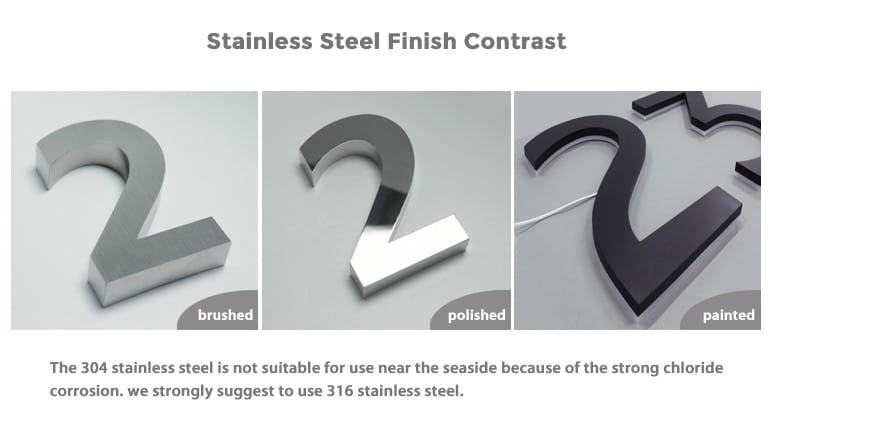
A: I've done signs for Biloxi and Mobile. IP66 is safer there because of hurricane-driven rain at 60 mph. But you also need 316 stainless steel, not 304. And a drainage hole at the bottom. My rule: if your sign is inside 5 miles of salt water, go IP66 with 316. If you're a mile inland, IP65 with 304 is fine.
**Q: Does a higher IP rating mean the sign lasts longer?**
A: No. It means it resists water ingress better under test conditions. But real-world lifespan depends on LED quality, thermal management, material thickness, and assembly. I've seen IP67 modules fail in 12 months because the driver overheated. I've seen IP65 signs last 10 years because they used good LEDs and proper ventilation.
**Q: My supplier says their modules are "IP68." Should I believe it?**
A: Ask for the test report with a date and model number. IP68 is a deep submersion rating (over 1 meter). For a sign, you don't need it. If they claim IP68 but can't show a test certificate, they're lying. And even IP68 modules won't save you from a poorly sealed sign box. Focus on the whole system, not just the component.