It’s the international rule that stops bugs from hitching a ride in your sign crate. If you import channel letters, light boxes, or any metal signage packed in solid wood, you need to know this.
ISPM-15 stands for International Standards for Phytosanitary Measures No. 15. Fancy words, simple reality: any raw wood packaging thicker than 6mm must be heat-treated or fumigated and stamped. The stamp proves it’s bug-free. Without it, your entire shipment from our factory in Lu’an can get rejected at the port, fumigated on your dime, or even sent back to China.
Look, I’ve watched a sign contractor lose $12,000 on a church LED light box job. The crate landed in Houston, customs saw raw wood with no stamp, and held it. Methyl bromide fumigation cost him $1,100 and killed two weeks. The church dedication happened without the sign. Don’t be that guy.
Here’s what nobody tells you: ISPM-15 doesn’t apply to manufactured wood. Plywood, OSB, particle board, and MDF are exempt because the glue and heat in production already kill pests. Our standard export crates are plywood. That means 90% of what we ship—your front-lit channel letters, your back-lit halo letters—goes out in boxes that customs waves right through.
That little wheat-ear logo with the country code, treatment method, and facility code? It’s not decoration. It’s your insurance policy. Every solid wood pallet or dunnage board leaving our dock gets that mark only after we’ve done the heat treatment to 56°C for 30 minutes at the core. No exceptions.
I’ve seen this go wrong: a competitor’s factory once used a rubber stamp bought on Taobao. Fake stamp, real wood. US customs sectioned the crate, found live beetle larvae, and blacklisted the exporter. The sign shop at the receiving end got a $5,000 penalty for importing non-compliant wood. We don’t play that game.
Our 3,000-square-meter plant in Anhui handles compliance properly. For the rare orders that need solid wood beams—say, a 4-meter-wide set of stainless steel letters with a heavy steel frame—we’ll upgrade from plywood to heat-treated pine, stamp every board, and include the treatment certificate in the shipping docs. It adds $80-120 to the crating cost. Cheap compared to quarantine charges.
The ugly truth is: some sign importers try to skip the stamp to save a few bucks. They think “it’s just a pallet.” Customs thinks it’s a biohazard. If your wood gets flagged in Miami or Los Angeles, they won’t phone you nicely. They’ll fumigate on arrival, bill you $500-1,500, and delay your job about 10 days. Your client’s grand opening turns into a grand embarrassment.
Since most of our signage—rimless channel letters, LED light boxes, neon flex signs—fits inside plywood crates, you’re already ISPM-15 exempt. Plywood’s laminated under heat and pressure. Customs sees it as a processed product, not raw wood. We’ve shipped worldwide with zero phytosanitary holds using plywood crates lined with foam and double-walled cartons.
If you truly require solid wood pallets for forklift handling or because your oversized architectural sign weighs 300 kilos, we’re not going to talk you into plywood and hope for the best. We’ll tell you straight up: “This needs treated lumber.” We charge cost for the treatment, stamp it, and send you the NPPO certificate from China’s plant quarantine authority. No bullshit, just paperwork.
Here’s another brutal truth: not all “treated” wood is legal. The ISPM-15 stamp must include the IPPC logo, a two-letter country code (CN for China), a unique facility number, and the treatment code—HT for heat treatment, MB for methyl bromide. If the stamp is blurry, missing a code, or printed in ink that rubs off, it’s dodgy. We use branded iron marks into the wood. Permanent. I’ve seen customs officers in Hamburg scratch a stamp with a coin. If it flakes off, they pull the shipment.
Our standard packaging line is designed to skip the headache entirely. A typical order of acrylic light boxes gets wrapped in anti-static foam, nested in a 5-layer carton, then sealed inside a plywood crate with steel edge protectors. No solid wood anywhere. No stamp needed. The crate’s so tough you could drop it from a dock and the sign inside wouldn’t know.
Let’s talk raw numbers. Adding ISPM-15 heat-treated solid wood pallets to your sign order typically adds $40-65 per pallet at our factory. If we need to build a full custom crate from solid wood—say, for a 6-meter-wide illuminated entrance sign—the upcharge runs $100-200 over the plywood equivalent. Still a fraction of what a failed customs inspection will cost you on American soil.
Lead time? Heat treatment at our certified off-site kiln takes about 24 hours extra. We don’t lose a week. Our total production remains about 5-15 days for most sign types because we schedule the wood treatment parallel to LED assembly and silicone sealing. Your timeline doesn’t shift by more than a day.
Look, I’ve crunched the freight math a hundred times. Sea freight LCL for a cubic meter of sign cargo runs $80-200. Add a solid wood pallet and you might nudge into the next weight bracket. But a customs hold in Long Beach costs $150 a day in demurrage before they even touch fumigation. That pallet stamp is the cheapest insurance you’ll ever buy.
Rookie mistake #1: “My receiving warehouse will just throw away the wood anyway, so I don’t care.” Wrong. The stamp is required on the wood at the point of entry. If the pallet you’re using has no stamp, it’s illegal the moment it crosses the border. Doesn’t matter if it’s firewood in your mind.
Rookie mistake #2: mixing wood types. A customer once asked us to strap three plywood boxes onto a raw wooden skid because “the plywood is stamped.” Skid wasn’t. Entire shipment flagged. You can’t hide non-compliant wood under compliant plywood. Customs x-rays see through everything.
Here’s a tip from someone who’s filed 800+ export declarations: always ask your Chinese supplier for a photo of the actual stamp before the crate leaves the factory. I send these photos unasked. If a factory won’t show you the stamp, they probably don’t have one.
When you request a quote from Aochuang Sign, tell us upfront if your receiving dock requires a forklift-friendly pallet, or if you’re fine with our standard plywood crate with internal runners. I’ll spec the packaging on the invoice line-by-line: “Plywood crate, ISPM-15 exempt” or “HT solid wood pallet with IPPC stamp.” No ambiguity.
For architects and general contractors importing large-format dual-lit channel letters, I usually recommend plywood crates with integrated steel channels that forklifts can grab. No solid wood at all. Saves $200 in treatment and documentation, shaves a day off, and eliminates any phytosanitary risk. My crew has built these for a mall in Dubai and a casino in Macau—no pests, no problems.
Here’s what nobody tells you: even if your crate is ISPM-15 compliant, some countries demand additional declarations. Australia and New Zealand, for instance, require bark-free wood and a separate treatment certificate beyond the stamp. Our shipping department knows the regs worldwide. If you’re importing into Auckland, we’ll add the extra sheet and charge you zero dollars extra for knowing it.
I once had a US sign franchise owner order 60 stainless steel letters in 304 brushed finish. They arrived at Port Everglades on a Friday. The crate—a solid wood box he insisted on for “heavy goods”—had a smeared stamp. Customs gave him two options: re-export at his cost or pay for methyl bromide fumigation plus demurrage. He chose fumigation. Total damage: $2,300. Lead time blown by 16 days. The letters themselves were perfect. The wood was the problem.
That story gets repeated every month in this industry. The crate is the last thing you think about, and the first thing that can wreck your project. I’ve seen perfect neon flex signs sit in a bonded warehouse for three weeks because a random piece of dunnage inside the container was raw pine. Nobody even knew it was there.
Our packing team pulls every scrap of untreated wood before closing the container. We use plywood for internal bracing, never offcuts from the bending jig. It’s a five-minute check that saves you five thousand dollars.
Some sales reps will tell you “all international sign shipments must have fumigated wood.” That’s either ignorance or an upsell. Plywood crates are ISPM-15 exempt. Don’t let anyone charge you for treating something that doesn’t need it. I’ll tell you to your face when solid wood is avoidable, and I’ll eat the cost of convincing you because I’d rather you come back for the next project than get ripped off on the first one.
On the flip side, if you’ve got a 15-foot pylon sign that genuinely needs a timber cradle for ocean freight, don’t cheap out. Pay the $150 for heat-treated lumber, get the stamp, and sleep. Our factory has been shipping under ISPM-15 rules since 2010. CE, RoHS, ISO 9001—those matter. But the IPPC stamp on your crate matters just as much when the USDA inspector opens your container.
Order with your eyes open. Ask for the stamp photo. Trust a factory that volunteers it.

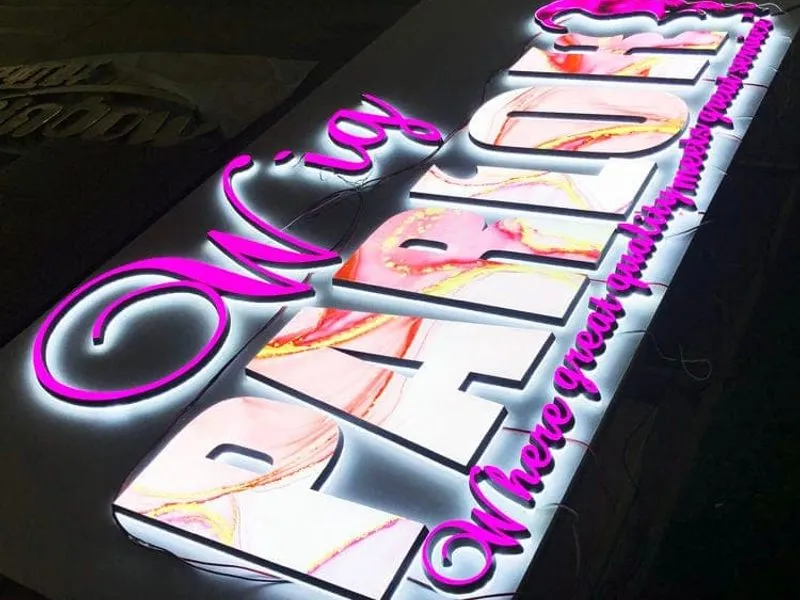
Real photo from our production floor — every sign we ship is made here.
From $24/letter · MOQ 1 piece · Flexible lead time · CE & UL certified · ships to 20+ countries
Custom sizes, colors, and finishes. Get a factory price in 24 hours.
Get a Free Quote Copy EmailWhatsApp +86 13865703472 · business@aochuangsign.cn
See pricing, specs, and get a free quote for the sign type you need. Built in our factory, shipped worldwide.