I've seen it happen. A shop owner orders a set of front-lit channel letters, pays express shipping, then gets a call that the crate is sitting at the port because the wood isn't stamped. Not the LEDs. Not the acrylic. The wood holding it all together.
The ugly truth is: most sign factories ignore ISPM-15 until a shipment bounces back. That's their problem, not yours — until it becomes your three-week delay.
Look, ISPM-15 isn't a marketing badge. It's a phytosanitary standard for raw wood used in packaging. Raw wood carries bugs. Bugs get into foreign forests. So the world agreed to heat-treat or fumigate that wood, then mark it with an approved stamp.
Here's what nobody tells you: it's not just the main crate. It's every pallet, spacer, block, and brace. If a single piece of untreated lumber shows up in your disassembled packaging, the whole shipment gets stopped. Not one box. The whole thing.
I've seen this go wrong: a client in Australia watched his order sit in Melbourne Dock for six days because we missed a small wooden block under the internal frame. Bad on us. It was the first and last time we ever did that.
All non-exempt raw wood thicker than 6mm must be heated to 56°C core temperature for a minimum of 30 minutes, then stamped by a registered treatment provider. The stamp means the International Plant Protection Convention audited that provider.
A compliant stamp looks like a wheat stalk over the initials IPPC. Under it you'll see three codes: country code (CN for China), treatment code (HT for heat), and a provider number. Anything that says "safe wood" or "pest-free" without those codes is a joke.
Some buyers ask for MB fumigation instead of HT. That works too, but methyl bromide is being phased out internationally for environmental reasons. We use heat treatment only. It's cleaner and it's permanent.
Every sign we ship uses ISPM-15 compliant plywood or solid wood. Our crate supplier holds a Certificate of Registration with the Chinese National Plant Protection Organization. We keep copies of every heat treatment certificate for at least a year.
But here's the honest part: we don't treat wood in our own chamber. We outsource it to a certified treatment plant 20 minutes from our factory in Lu'an. That's how it should work. A factory that claims on-site treatment without a visible chamber is usually lying to you.
We also store raw wood wrapped in plastic inside our 3,000m² workshop, away from moisture and insects. A treated board that gets rained on is no longer compliant. That's a fact people forget.
And we photograph the stamp you can't write an article about this without being blunt.
We can guarantee every crate assembled for our own production uses ISPM-15 wood. We'll show you the stamp live on a video call before the crate is sealed. We've done it for clients worldwide. That's not a marketing line.
We can't control what the freight forwarder does after the crate leaves our floor. If they swap your pallet for a non-compliant one during consolidation, or if they re-crate it in a third country, that's outside our visibility. We tell buyers up front: trust your forwarder or don't use them.
We also can't guarantee a country won't take a second look. Japan and Korea have extra quarantine protocols beyond ISPM-15. New Zealand inspects at the border. Australia often asks for treatment certificates even if the wood is stamped.
The ugly truth: some factories skip ISPM-15 entirely by wrapping small signs in cardboard or plastic and dropping the crate. That works for a 30cm letter. But a two-meter acrylic light box needs wood. There's no honest alternative.
So ask any supplier this: "Can you show me the ISPM-15 stamp on my crate before you seal it?" If they say "sure, wait a second," that's good. If they say "no problem" but never send a photo, run.
Compliant crates cost about 10–15% more than cheap ones. For a large sign, that means $150 to $400 depending on volume. We itemize that in every quote. Some buyers flinch. I usually tell them to find another factory if they don't want to pay for a stamp that protects a $5,000 order.
Here's the math: sea freight takes about 65 days. If a crate gets rejected at origin, that becomes 60–80 days. The delay costs you more than the crate itself, especially if you have an installer and rent paid.
We don't add extra production time for ISPM-15 because we keep treated wood in stock. Our lead time stays at 7–15 days. The stamp never moves your shipping date.
But the US Section 301 tariff, currently around 30%, gets calculated on the product plus crate value. A heavier crate means a slightly higher tariff bill. That's not a reason to skip compliance, but it is a reason not to overbuild your crate. We engineer our crates to be strong enough for transit, not bulky enough to survive a bomb.
First mistake: assuming "plywood" is automatically exempt. Plywood made from thin layers can be exempt if it's fully pressed and glued. But a standard 18mm plywood board with a rough saw edge often contains solid wood strips in the core. Customs can flag it. We don't risk it.
Second mistake: shipping loose wooden parts inside a crate. If your sign comes with wooden mounting blocks or decorative wood trim, those are covered by ISPM-15 too. They must be treated. A few factories ship those as "accessories" and skip the treatment. That's a rookie move that costs the client.
Third mistake: unpacking the crate and leaving the wood with the customer. In many countries, you can't just toss treated wood in a landfill — it needs disposal documentation depending on local rules. We print a disposal note and attach it inside the crate for forwarders.
I've watched installers break down a crate and leave the stamped boards at the job site for a week. That's fine legally, but it confuses the property manager. Just tell them the wood is treated and can be recycled as construction scrap.
For orders going to coastal or humid regions, we use high-grade plywood with marine seals inside the crate and silica gel packs for the electronics. Your back-lit halo letters survive months in a containership better when we control internal moisture.
For orders to Australia, we include dust covers and extra bracing because drop handling at Australian ports is notorious. For the EU, we use lightweight but strong crate formats that meet Euro pallet exchange rules when needed.
And for some long runs of stainless steel letters, we can turn the crate into the mounting template. The stamped plywood becomes a jig you can use to align letters on a wall. Saves your installer time and reduces waste. That's a small trick we developed with a contractor in Texas.
We can't turn every crate into a jig — that only works for certain sign shapes. Don't ask for it on a curved neon flex order. But when it works, it's a nice touch.
If you're shipping one or two small letters, we can use corrugated double-wall cartons with foam end caps and internal braces made of recyclable cardboard. No wood, no stamp needed. We've shipped plenty of aluminum letters that way.
But cardboard won't handle stacking weight. If the carton sits at the bottom of a consolidated pallet, it can crush. So we always tell you when a crate is non-negotiable. For signs over 1.5 meters, wood is the answer.
There's also steel strapping and plastic pallets. Plastic pallets are ISPM-15 exempt because they can't host pests. But they cost 3 times more than wood and aren't available everywhere. We use them only for very special export orders.
Every order leaves with a packing list, a certificate of treatment, and photos of the stamps. For large shipments, we also provide a letter of origin. This isn't overkill. It's what our export managers do to avoid 6 PM phone calls from angry buyers.
One client in Florida asked us to sign the certificate with a wet ink signature and scan it before container loading. That took two minutes. We now do it for every order because it costs us nothing.
The only paperwork we can't produce is a certificate with your name on it if your freight forwarder reconsolidates your shipment. You'll need them to issue a bill of lading and any local import forms. We're a factory, not a customs broker. Don't ask us to file your entry.
ISPM-15 is not the most glamorous part of buying a sign. But it's the difference between getting your letters installed on time and watching them sit in a cold warehouse in a foreign country while your customer calls you every day.
Don't trust a factory that's fuzzy about wood treatment. Ask for the photo. Ask for the stamp. Ask for the certificate. If you're ordering from us, ask directly — we'll show it to you live before the crate is closed and sealed.
The ugly truth: packaging is the part that keeps us awake. With Aochuang Sign you get a factory that's been shipping worldwide since 2010, with CE, RoHS and ISO 9001 behind our products. But a certificate on the wall doesn't stop bugs. Only a proper stamp does.
That stamp costs us about 15 minutes of work and a little money. We pay it every time.

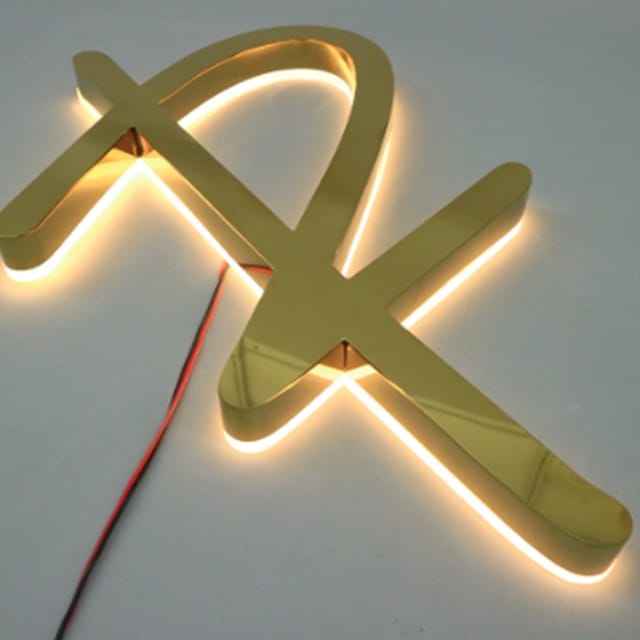
Real photo from our production floor — every sign we ship is made here.
From $24/letter · MOQ 1 piece · Flexible lead time · CE & UL certified · ships to 20+ countries
Custom sizes, colors, and finishes. Get a factory price in 24 hours.
Get a Free Quote Copy EmailWhatsApp +86 13865703472 · business@aochuangsign.cn
See pricing, specs, and get a free quote for the sign type you need. Built in our factory, shipped worldwide.