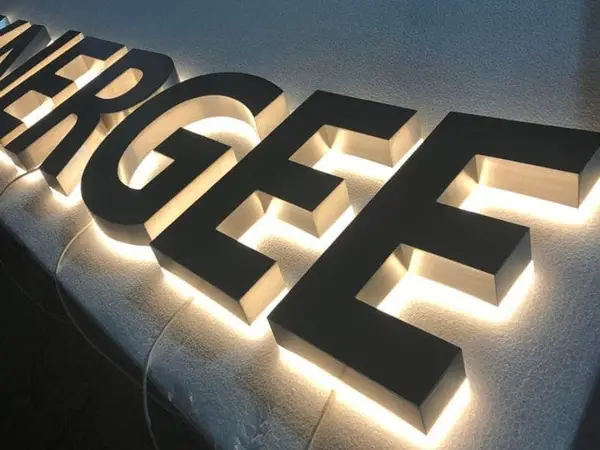
Look, an LED light box sign isn't one thing. You're buying a cabinet with a lit face, and the configuration changes the entire job. If a supplier quotes you without asking about mounting location, face depth, or service access, they're guessing. Walk away.
Single-sided boxes sit flat against a wall. Double-sided boxes hang from brackets and need to look clean from both sides. You recess embedded light boxes flush into fascia or drywall, so the finish has to be tight. Hollow-out light boxes have a cutout face that turns the whole panel into the shape of the logo or message. Double-sided light boxes swing over sidewalks and catch wind, so the internal frame needs to be rigid, not flimsy.
I've built all of them. Double-sided units fail faster when installers skip the top weep holes.
Retail storefronts need a shallow single-sided box with an acrylic face. Gas stations and QSRs need double-sided pylons. Hotel lobbies and office buildings need recessed or hollow-out panels. Don't know which one you need? Stand in the parking lot, look at the wall, call the sign company.
Here's the ugly truth: most light boxes die from the face, not the LEDs. The aluminum extrusion can be fine, the modules can still light, but the acrylic face yellows or the diffuser warps and your sign looks 20 years old.
Use UV-resistant acrylic from Mitsubishi or Degussa for the diffuser. That material keeps 90-92% light transmittance and holds its color for 5-8 years outdoors. Domestic acrylic without UV stabilizers will start yellowing in 1-2 years. I don't care if the factory says "acrylic" — ask whose acrylic. A branded sheet and a mystery sheet aren't the same thing.
Aluminum extrusions weigh about one-third of steel and last 8-12 years outdoors if powder coated. Use 1.0-1.6mm wall thickness. Anything thinner bends when a ladder leans on it.
If you're spec'ing an acrylic LED letter set or a light box, don't overbuild the face. A 3mm acrylic face transmits 92% light output. A 2mm face transmits 90%. Chasing that last 2% isn't worth a flimsy sign.
LED modules separate the cheap sign from the sign that's still lit five years later. SMD 2835 modules set the industry standard, pushing 100-150 lumens per watt. SMD 5730 chips run 40-60 lumens each and give you the brightest option for a big face. SMD 5050 is what you use for RGB color-changing work.
Samsung, Osram, and Blueview modules last 5-plus years in the real world. Cheap no-name modules start failing at 12-18 months. I've swapped enough of them to know the pattern. First one string flickers. Then half the face goes dim. Then the landlord calls.
Quickest way to spot bad LED modules: look at the solder joints. Dull gray solder won't last 18 months. Shiny silver solder means proper lead-free work. Ask for a photo of the module close-up before you pay.
Drivers are the other half. A quality LED driver should be derated 20% below its max load if it's in a sealed light box in Phoenix. If the factory doesn't know what derating means, walk away. Bad sign. Standard module warranty runs 2 years. Power supply warranty? 1 year. You can guess what fails first.
Color temperature matters. 4000-5000K for corporate and retail. 6000-6500K for industrial and highway. Spec 6500K for a bistro and it'll look like a gas station.
Decent modules hit L70 at 50,000 hours. That's 11 years at 12 hours a day.
Nobody tells you this: edge-lit boxes look great in a showroom and like garbage after six months if the light guide plate warps. Edge-lit mounts LEDs on the edges and leans on a plastic or acrylic guide plate to spread light. Backlit puts modules directly behind the face. Hybrid uses both.
Backlit is the workhorse. Backlit forgives mistakes, is easier to service, and throws more even light if you space modules correctly. Edge-lit can be thinner — good for shallow fascia — but the hot spots and dark corners show up fast when the guide plate gets hot or bows.
Shallow cabinet under 4 inches? Edge-lit is sometimes the only option. Anything over 6 inches deep and bigger than 4x4 feet? Use backlit. Hybrid costs more and earns its keep only when you need a thin profile with a bright punch, like a high-end lobby sign.
I've seen this go wrong: a customer ordered the cheapest light box on Alibaba to save 200 bucks and ended up replacing the diffuser in 14 months. They paid triple my quote after labor, shipping, and two days of downtime for a factory-built box with proper UV acrylic.
Factory-direct light box prices run $80-250 per square meter. Product only, not installed. Buying factory-direct typically saves 50-65% off US retail product pricing. Add the Section 301 tariff of about 30%, express shipping of $30-100 for small parcels or sea freight at $80-200 per cubic meter for LCL, and you still come out ahead.
I've watched sign shops pay $800 for a front-lit letter from a domestic fabricator. Same 304 stainless, same Samsung LEDs. We ship that letter for $120. Light boxes aren't any different. Markup is markup.
Energy is where LED crushes fluorescent. SMD 2835 at 100-150 lm/W means a typical 4x8 box pulls less than half the power of the old T8 fluorescent box it replaces. Over 50,000 hours of L70 life, you're not paying a bucket truck to relamp every 18 months. People forget maintenance costs until they own a sign.
CE marking runs 20,000-50,000 RMB. Most factories will say they have it. Ask to see the certificate with today's date. Watch them sweat.
For the US, spec UL 48 or ETL listing. UL 48 runs $4,000-15,000 and takes 4-9 months with quarterly audits. ETL is an accepted alternative and usually costs 10-30% less. If a factory says they have "UL-approved" components, that's not the same as a UL-listed sign. Rookie mistake: thinking it is.
IP65 is the minimum outdoor rating. IP65 means dust-tight and protected against water jets from any direction. That rating won't save your sign from a Florida hurricane. IP66 handles more powerful jets for coastal areas. IP68 is submersible and overkill for 99% of light boxes.
Every light box I ship goes through an 8-12 hour aging test and 100% QC inspection before export packaging. Packaging goes foam, carton, plywood crate. Standard. If a factory skips the aging test, dim modules show up on your client's wall instead of on the bench. Check for ISO 9001 and RoHS on the certpack, but don't assume the factory floor matches the paperwork.
Before you send an RFQ, know your dimensions, face material, LED brand, driver brand, mounting type, IP rating, and warranty. If you just say "I need a light box," you'll get a quote for a box you don't want.
Demand the LM-80 test report on the LED modules. Demand the driver's derating curve. Get a photo of the solder joints. Ask for the acrylic brand. Ask what happens when one module fails in year two — do they send a replacement, or do they tell you it's normal?
A light box takes about 5-15 days from design confirmation to export crate. The 10-step process includes laser cutting at ±0.1mm, TIG welding, grinding, CNC face cutting, LED assembly, neutral silicone sealing, the 8-12 hour aging test, and 100% QC. Sea freight LCL changes hands 6-8 times between our dock and yours. Every handoff risks damage. Brochures won't mention that.
MOQ is one piece, so don't let anyone tell you a custom size needs 50 units. It doesn't.
Q: What's the real lifespan of an LED light box? The modules should hit L70 at 50,000 hours, but the driver and power supply will fail first. Budget for a power supply replacement at year 3-5 on a heavily used sign. LED modules carry a 2-year warranty; the power supply only 1 year.
Q: How much cheaper is factory-direct really? Product runs $80-250 per square meter from the factory. Add tariffs, shipping, and installation, and you still come out 50-65% below US retail product pricing. Anyone promising 80% off is lying or selling trash modules.
Q: What's the difference between IP65 and IP66? IP65 handles water jets from any direction. IP66 handles more powerful jets — think coastal salt spray and pressure washing. If you're within 500 meters of salt water, spec IP66.
Q: Can I retrofit my old fluorescent light box with LED? Yes, but don't just slap LED tubes in and call it done. You need to check the driver load, the diffuser condition, and thermal clearance. I've seen retrofits with new LED tubes and 1-inch clearance that cooked themselves in a Texas summer.
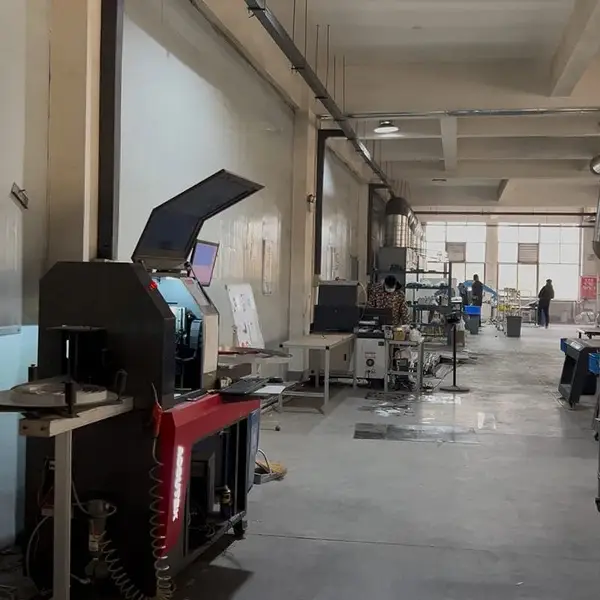
Real photo from our production floor — every sign we ship is made here.
Products mentioned or relevant to this topic — factory-direct, custom built.
From $24/letter · MOQ 1 piece · Flexible lead time · CE & UL certified · ships to 20+ countries
Custom sizes, colors, and finishes. Get a factory price in 24 hours.
Get a Free Quote Copy EmailWhatsApp +86 13865703472 · business@aochuangsign.cn