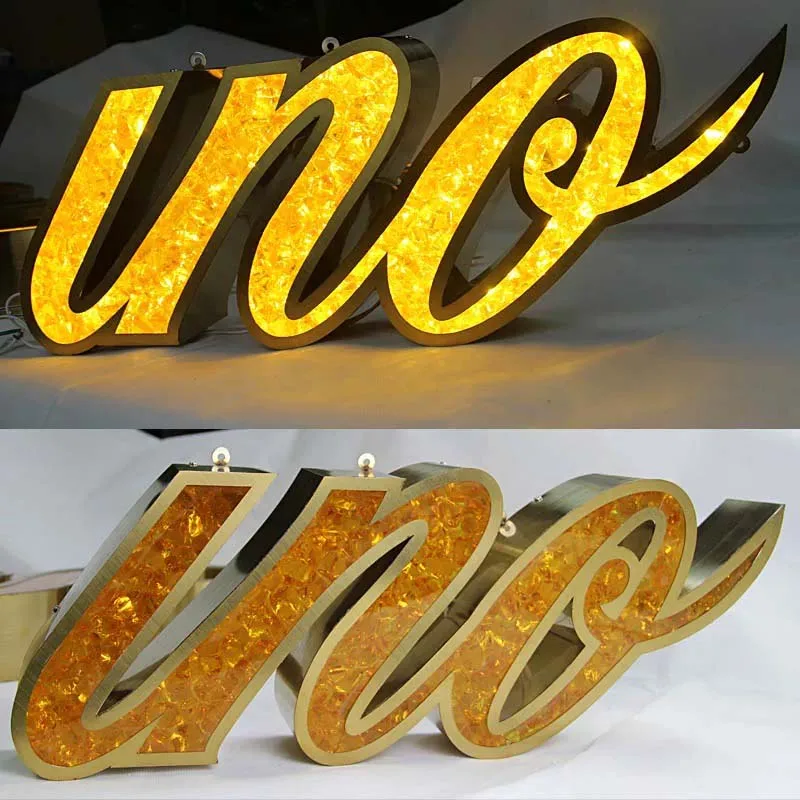
I still remember the casino in Macau — 240 linear feet of traditional glass neon burning 27,000 watts every hour the switch was on. Their monthly power bill for that one sign? $2,800, give or take. The owner’s face when he saw the alternative running on less than one-third the juice ... he looked like a guy who just found out he’d been paying for premium gas in a car that takes regular. That’s the conversation we’re having today, no marketing fluff, just factory-floor numbers and a few scars from years on the production line.
LED neon flex isn’t a perfect clone of glass neon. But in most commercial signage applications — storefronts, channel letter accents, backdrops, coarse outlines — it’s doing the same job for a lot less money and a lot less drama. The reason sign shop owners are shifting imports from China toward LED neon flex signs isn’t trend-chasing; it’s the math. Let me show you the math.
Upfront, a traditional glass neon sign is a handcrafted object. The tube bender shapes 10-15mm diameter soft lead glass over a 1,600°F ribbon burner. Every curve is a human decision. For a medium-complexity store logo — say 4 feet by 2 feet — a local glass neon shop will charge you $400 to $900, just for the tube work. Add the transformer, GTO cable, mounting supports, and a metal or acrylic backing panel, and the sign lands at $700 to $1,400. That’s a single-color, non-dimming unit.
Now, source an equivalent LED neon flex sign direct from a specialized factory. I’ve seen pricing from a manufacturer like Aochuang Sign in Anhui, China: a custom-shaped neon flex sign with 12V SMD 2835 tubing, UV-resistant silicone jacket, and a Mean Well power supply runs between $30 and $200, depending on complexity and length. A 4-foot by 1-foot outline logo? Often under $120 FOB Lu’an. You add sea freight — LCL around $80 to $200 per cubic meter, a sign that size crated takes maybe 0.05m³, so $4 to $10 in freight. Even with the Section 301 tariff bumping it 30%, landed cost on your shop floor: $160 to $180. You read that right.
But the sticker shock goes beyond the purchase. Maintenance kills you with glass. A broken glass tube means bringing back the neon guy, evacuating the tube, re-pumping gas — or building a new section. The minimum call-out in most US cities? $250. I’ve seen a single windstorm wipe out $3,000 worth of neon on a monument sign. LED neon flex breaks, you cut out the bad 2-foot section, splice a new piece with waterproof connectors, and you’re back in business for $20 in materials and a half-hour of labor. Even a junior installer can do it.
Lifetime cost over a 10-year period: My back-of-envelope for a 12-foot-wide storefront sign, running 12 hours a day. Traditional glass neon: initial build $1,200, two inevitable broken-tube repairs $500 each, one transformer replacement at $200, electricity at 65 watts per foot x 12ft x 12hr x 365 days x 10 years at $0.12/kWh = $4,100 in power. Total somewhere north of $6,000. LED neon flex: sign cost $170, zero breakage repairs if you spec quality (Samsung or Osram-based modules, IP66 jacket), one power supply swap at year 7 for $35, energy at 3.2 watts per foot x 12ft = 38W, same usage: $2,000 in power. Total under $2,300. The difference buys you a new plotter, or a month’s rent in a decent industrial unit.
Traditional glass neon is essentially a linear plasma discharge lamp. The voltage across the electrodes excites the gas — neon for red/orange, argon with a tiny mercury droplet for blues and greens — and the tube itself acts as a resistive load. A typical 15mm diameter clear red tube draws about 20-25 milliamps from a magnetic transformer, but the transformer’s own inefficiency pushes the wall-plug draw to roughly 5-7 watts per linear foot. A bright white argon/mercury tube can hit 8-10 watts per foot.
LED neon flex, built around SMD 2835 chips with 120 LEDs per meter, sips power. Good quality flex runs at 2.5 to 4.0 watts per foot for white or warm white, depending on density. The luminous efficacy: 100-150 lumens per watt from the LEDs, versus maybe 30-50 lumens per watt out of a phosphor-coated neon tube. So you’re getting equal or better surface brightness — that soft, even glow that clients love — for 50-70% fewer watts.
Let me frame that in real electrical terms. A 50-foot run of storefront accent lighting, 12 hours a day, 365 days a year:
Over the 50,000-hour rated life of the LEDs, that’s a 10- to 12-year run. You pocket the difference — or, more realistically, your client does, and they remember that you’re the sign shop that thinks about their operating costs.
The thing is, lower wattage also means cooler operation. Glass neon tubes run at around 40-60°C surface temperature. LED neon flex rarely exceeds 35°C. That matters when you’re mounting inside lightboxes with acrylic faces sensitive to heat warping. I’ve seen 3mm acrylic bow inward after two summers behind hot glass. With LED flex, 2mm acrylic stays flat.
Glass neon demands respect. The secondary output of a neon transformer — typically 4,000 to 15,000 volts at 30 or 60 milliamps — can arc through worn GTO cable insulation, causing fires. Underwriters Laboratories’ UL 48 standard covers neon transformers and power supplies for exactly that reason. The NEC requires secondary wiring to be in conduit or specifically rated GTO sleeving, with strict clearance from combustible materials. Permits are often a headache.
LED neon flex runs on 12V or 24V DC. The entire circuit falls under Class 2 low-voltage wiring rules. No conduit. No high-voltage inspection separate from the basic electrical. If a kid daisy-chains a power supply wrong, the worst outcome is a tripped breaker or a dead strip — not a 5,000-volt shock. For a sign shop, that translates into faster permitting, fewer callbacks, and a liability profile that doesn’t keep you up at night.
Then there’s the physical safety. Glass tubing, even lead glass, is fragile. A stray shopping cart, a rock from a lawnmower, a branch in a storm — and you’ve got shards. A broken neon tube can expose live electrodes dangling on thin wires. In some older signs, the tube contains mercury vapor. The cleanup is a hazmat situation. I’ve seen a broken sign at a daycare playground; the landlord had to fence off the area until a specialist arrived. With LED neon flex, the “tube” is flexible silicone with a solid LED strip inside. You can drive a truck over it. I’ve literally run over a sample with a forklift — scuffed the jacket, still lit.
For coastal and industrial environments, the story gets sharper. Salt spray eats transformer housings and the copper-to-glass seals on electrodes. Marine-grade stainless 316 might survive, but that doesn’t protect the tube. LED neon flex with an IP66 or IP68 rating? It laughs at salt. I’ve shipped IP68 flex to a seafood restaurant on a pier in Florida. Two years in, zero failures. The old glass sign mounted next to it? Replaced twice.
One of the most overlooked costs in the glass vs LED debate: getting the sign from the shop floor to the wall. Glass neon signs need a full plywood crate, often lined with two inches of foam. A medium sign might occupy 0.15 cubic meters and weigh 15 kilograms. Shipping that from a Chinese factory via air freight at $8/kg — $120 — hurts. Via sea, you add fragility risk and a 50-70 day wait. And you pray no forklift driver had a bad morning.
LED neon flex signs pack flat. Aochuang’s export packaging: layer of closed-cell foam, heavy-duty carton, then an outer plywood crate only for larger orders. A neon flex crown logo for a barbershop might weigh 1.8 kg packed. Express shipping (FedEx/DHL) runs $30 to $80, arriving in 7-15 days. For volume orders, sea LCL works out to a few dollars per unit. The resilience of the product means damage claims are nearly non-existent. I’ve unloaded containers with 200 flex signs; our damage rate over five years is under 0.2%. Try that with glass.
Installation is another silent budget-killer. Hanging a heavy glass neon piece requires mounting a back panel to structural supports, attaching glass saddles precisely, then tying down the high-voltage wiring safely. A two-person crew, half a day. LED neon flex sign comes with an acrylic or aluminum backing, pre-assembled, with a single low-voltage whip. One person, a cordless drill, 45 minutes. The labor difference can be $150 to $400 per sign — and that’s money that stays in your shop’s pocket.
Nobody wants a sign that looks like a plastic imitation. Here’s where the LED industry has closed the gap. Traditional glass neon glows evenly because the light emits from the entire gas column. Early LED neon flex — circa 2010 — had a dotted look, hotspot to hotspot. Today, with SMD 2835 chips at 120 LEDs per meter and a thick, milky silicone diffusion layer, the line of light is continuous to the eye beyond eight inches. At typical viewing distances (six feet and beyond), even a trained sign guy will struggle to tell the difference.
Color selection is actually broader with LED. Glass neon is limited by available phosphors and gas mixtures — you can get about 40 distinct colors from a decent glass shop. LED neon flex, using RGB or tunable white IC chips, gives you access to millions of colors and dynamic chasing effects without inline dimmers or multiple transformers. For a restaurant that wants to shift from warm white for dinner service to a fiery orange for late-night events, LED flex does it from a DMX controller. Glass? That’s a completely separate sign.
But I’ll be honest with you: If the client wants a razor-thin 8mm tube with that iconic exposed-glass industrial aesthetic — think trendy speakeasy — glass is still king. LED neon flex in a narrow 6mm or 8mm profile exists, but the bend radius is larger, and the silicone texture reads differently than glass. For those niche applications, I still point customers toward a skilled local glass bender. For 90% of the rest, LED wins.
Let’s put this into a table sign shop owners can actually use when talking to a client.
| Factor | Traditional Glass Neon | LED Neon Flex (Quality Grade) |
|---|---|---|
| Rated Lifespan | 20,000 – 30,000 hours (till 50% brightness drop) | 50,000+ hours L70 (Samsung/Osram chips) |
| Voltage | 4,000 – 15,000V AC through magnetic or electronic transformer | 12V or 24V DC (Class 2 low voltage) |
| Power draw (per ft, white) | 7 – 10W | 3 – 4W |
| Material | Lead glass, 15mm – 18mm diameter, fragile | Flexible silicone, IP65–IP68 rated, impact-resistant |
| UV resistance | Phosphors degrade in direct sun; some colors fade in 3–5 years | UV-stabilized silicone jacket; Mitsubishi-grade formulations 5–8 years outdoor |
Need Custom Signage?Factory-direct since 2010. Free quote within 24 hours — no obligation. Get a Free Quote →MOQ: 1 piece · 7-15 days · 2-year warranty · Worldwide shipping |