Why Most Library Signage Fails Before It's Even Unpacked
I've been installing commercial signs for over 20 years now, across 30+ states. And I'll tell you straight: library community center wayfinding systems are some of the most over-engineered, under-tested, permit-heavy nightmares we see. Not because they're complex — they're not. But because nobody talks about the real-world constraints: humidity, sun exposure from south-facing glass, ADA mounting height compliance, and the fact that the budget committee will fight you over a $50 variance.
Here's what the permit office won't tell you: they don't care about your design intent. They care about NEC Article 600, IP rating for outdoor exposure, and whether your braille meets Grade 2 standards. You'll spend more time on Code compliance than on fabrication. And if you're sourcing from overseas? The 30% Section 301 tariff on Chinese-made signs eats your margin fast.
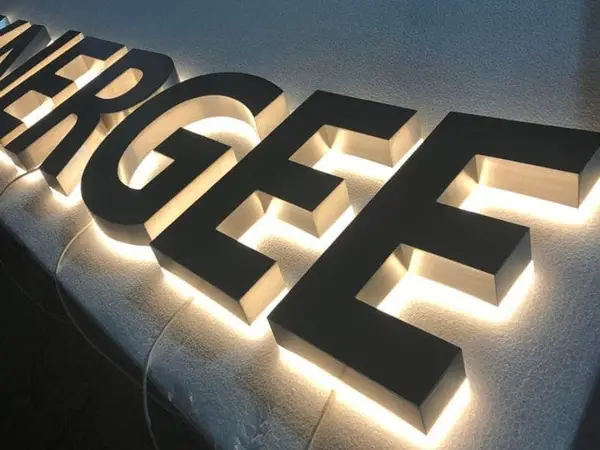
Don't make the mistake I made: I once spec'd a gorgeous back-lit halo letter system for a community center in suburban Ohio. Double-walled acrylic, stainless steel returns, Samsung LEDs. Perfect on paper. But when the crates arrived after 50 days of sea freight, four letters had cracked faces. Why? The factory hadn't used 5mm acrylic for the over-2.5m-long letters. They cheaped out with 3mm. The LCL crate was dropped at a transshipment port. The acrylic flexed, snapped. The client was furious, I was out a week of labor, and the factory offered a $200 discount. That's when I learned to check material thickness specs before approving final artwork.
Materials: The 80/20 Rule You Can't Ignore
Pro tip: for any public facility — library, rec center, city hall — you want the 80% solution: 304 stainless steel, 3mm to 5mm acrylic (depending on letter height), and SMD 2835 LEDs at 4000-5000K neutral white. That's your baseline. It'll last 8-10 years outdoors, 15+ indoors. It's what I've installed on dozens of community libraries from Boise to Bangor.
But here's where the rookie mistakes start. That acrylic? "UV-resistant" domestic stuff from Mitsubishi or Degussa says 5-8 years before yellowing. Domestic acrylic from a no-name supplier? Try 1-2 years in direct sunlight. I've watched a library's beautiful frosted acrylic panels turn the color of cheap mayonnaise in 18 months. The extra cost for quality acrylic is maybe $3 per square foot. The cost of replacing a whole sign system? Try $8,000 minimum for a single direction sign.
Stainless 304 is fine for 90% of applications. 18% chromium, 8% nickel, density 7.93g/cm³. Brushed #4 finish is standard. But if your library is within 5 miles of a coastline or any heavy industrial area with airborne chemicals, upgrade to 316. It contains 2-3% molybdenum. Costs 20-30% more. For a strip mall in Ohio, 304 is fine. For Miami Beach, pay for 316 or you're replacing letters in 3 years. I've been that installer. The rust pitting starts at the bottom edges where moisture collects. By the second winter, it looks like a crime scene.
Aluminum is another option — 1/3 the weight of steel, naturally rust-proof, 8-12 year outdoor life. Great for suspended ceiling-mounted wayfinding. But here's the catch: aluminum doesn't hold tight tolerances for welding like steel does. Your returns will have more visible seam lines. If the client wants a mirror-finish look, aluminum will never match stainless 304 #8. That's physics, not factory quality.
LED Lighting: The 50,000-Hour Lie
Don't make the mistake I did in the early 2000s: believing the L70 rating without auditing the module. L70 ≥ 50,000 hours means the light output drops to 70% after that time. It does NOT mean the sign will be bright for 50,000 hours. And if you use cheap SMD 5730 modules from an unbranded factory, you're lucky to get 12-18 months. The quickest way to spot bad LED modules: look at the solder joints. Dull gray = won't last 18 months. Shiny silver = proper lead-free solder. I've taken a $2 pair of reading glasses to dozens of modules. Half of them fail the eyeball test right on the production line.
For library wayfinding — think corridor directories, exterior building identification, room number plaques — I spec SMD 2835 modules. They deliver 100-150 lumens per watt, which is the industry standard. SMD 5050 is for RGB color-changing. Unless your library needs disco-mode signage, skip it. Color temperature matters more than you think: 3000-3500K warm for hospitality areas (the café, reading lounge). 4000-5000K neutral for corporate/retail — that's your primary for public wayfinding. 6000-6500K cool for industrial/highway — used only for exterior parking direction or emergency egress. I've seen a library install 6500K in the children's wing. The parents complained it felt like a hospital. Swapped to 4000K, suddenly peaceful.
Here's the brutal honesty: IP65 is the minimum outdoor rating. It means dust-tight and protected against water jets from any direction. It does NOT mean your sign survives a Florida hurricane. For coastal libraries, you need IP66 (powerful water jets) or even IP68 (submersible) for signs near entryways that catch horizontal rain. And the cheap way to get IP65? A silicone gasket that hardens in 2 years. I've pulled apart "IP65" signs that had nothing but a foam backing strip inside. The water came in like it wasn't there.
Permits, ADA, and the Hidden Costs
I've installed this in 30 states, and every single one has slightly different codes. But the constants: NEC Article 600 applies to all electric signs — so UL or ETL listing is mandatory for any illuminated sign in the US. UL 48 costs $4,000-15,000 in certification fees and takes 4-9 months. ETL is a valid alternative, typically 10-30% cheaper. If your overseas supplier says they have CE, that's European. It does NOT replace UL. CE costs 20,000-50,000 RMB (roughly $3,000-$7,000) and takes 2-8 weeks. That's great for selling in Europe. For a US public facility, you need the UL sticker or you'll fail inspection. I've watched a project get delayed three months because the factory promised CE was "equivalent." It wasn't.
ADA compliance: tactile signs must be mounted 48-60 inches above the floor (measured to the baseline of the touchable characters), non-glare finish, Grade 2 Braille. For library wayfinding, this affects every room sign, restroom directory, and floor indicator. The common mistake: mounting at 47 inches because the architect thought "close enough." It's not. The ADA is enforced by DOJ. I've seen a library get a complaint from a wheelchair user and then a lawsuit threat. The fix cost $2,000 per sign to remount.
Pro tip: budget for at least one site visit before the sign is fabricated. Measure the actual mounting surfaces. I've walked into libraries where the wall is a 4-inch thick concrete block with rebar every 2 feet. Your mounting anchors? They need to be expansion shields, not plastic drywall plugs. The install crew needs to bring hammer drills, masonry bits, and a vacuum attachment for the dust. That's not in the brochure. And if the sign is back-lit with a raceway, you need to route the conduit into a junction box hidden behind the sign. NEC requires a disconnect within sight of the sign. That means a switch or plug. Most community centers don't have that wired. So now you're paying an electrician $500 just to install a switch.
Shipping, Tariffs, and the Real Cost of "Factory Direct"
Here's the value proposition that works: ordering from a factory like Aochuang Sign in Lu'an, China. They've been exporting since 2010, have a 3,000m² facility, 50+ workers, CE/ROHS/ISO 9001. MOQ is 1 piece. Lead time about 5-15 days. They use quality materials: Mitsubishi/Degussa acrylic, Samsung or Osram LEDs. Factory-direct prices per letter: front-lit
channel letters $20-80, back-lit halo $35-120, stainless non-lit $15-40, aluminum $10-25. Compare to US retail installed: $200-700/letter for front-lit, $400-1,000 halo. You save 50-65% on product.
But shipping will eat you alive if you don't know the rules. Express (DHL/FedEx) for small samples: 7-10 days, $30-100. Air freight (cargo) for larger orders: about 10 days, $4-12/kg. Sea freight for full containers: about 65 days, $80-200/m³ for LCL (less than container load), or $1,200-3,000 for a full 20' container. The brutal truth about LCL: your crate gets handled 6-8 times between our dock and yours. Every touch is a chance for damage. That's not in the brochure. I've unpacked LCL crates where a forklift fork went through the plywood and into a halo-lit letter. The factory built a beautiful sign, but the logistics chain broke it.
And then there's the US Section 301 tariff: ~30% on Chinese-made sign components. If your factory ships CIF (cost, insurance, freight), the tariff is assessed on the full invoice value plus shipping. So a $1,200 letter set becomes $1,560 before you even clear customs. Plus customs brokerage fees ($150-300), terminal handling ($50-150), and possibly a warehouse inspection. That's not factored into the factory quote. I've seen a project budget blow up by 45% because of "unexpected" tariffs. Plan for it.
If you're doing a small library system, maybe 20-30 signs total, it's often cheaper to buy from a domestic fabricator. You pay more per sign but you avoid the logistics headaches. For larger projects (100+ signs), factory-direct makes sense if you can consolidate shipping. Order everything at once, have it sea freight in one FCL, and allow 12 weeks total. Don't order a few signs by express, then more by air — you'll pay triple in freight.
3-4 FAQ That I'm Tired of Answering
Q: Can I use domestic acrylic to save money?
A: No, and stop asking. Domestic acrylic from a no-name supplier has 1-2 year UV resistance. Public facility wayfinding needs 5+ years. The cost difference per sign is maybe $8. The replacement cost is $400. Do the math. Use Mitsubishi or Degussa. That's final.
Q: Do I really need UL listing for a library sign?
A: If the sign is illuminated and plugged into a 120V or 277V circuit, yes, you need UL or ETL. In 30 states, the fire marshal will not pass a sign without it. I've watched a library grand opening delayed three weeks because the director thought CE was enough. It's not. Spend the money. ETL is a valid