I've been in fabrication shops from Chicago to Lu'an. I've seen light boxes that look like a million bucks after a decade. And channel letters that started delaminating in 18 months. The industry loves to tell you channel letters are the premium choice. But here's the truth: a properly engineered LED light box can outperform channel letters in durability and energy savings for large-format applications. While channel letters often carry hidden costs—custom fabrication delays, higher repair rates in snow and salt air.
Let's cut through the marketing. You need real numbers. Not opinions. This guide uses actual data from a Chinese manufacturer with 50+ workers, a 3,000m² facility, and exports worldwide. Plus NEC codes, UL requirements, and factory-floor experience you can't get from a brochure.
A light box is a single, enclosed cabinet. Think gas station signage or fast-food drive-thrus. The face is one large sheet of acrylic or polycarbonate. Illumination comes from LEDs mounted on the back panel. You get even, uniform glow across the entire surface. Typical sizes range from 2ft x 4ft to 8ft x 20ft. Factory prices: $80 to $250 per square meter for the box alone.
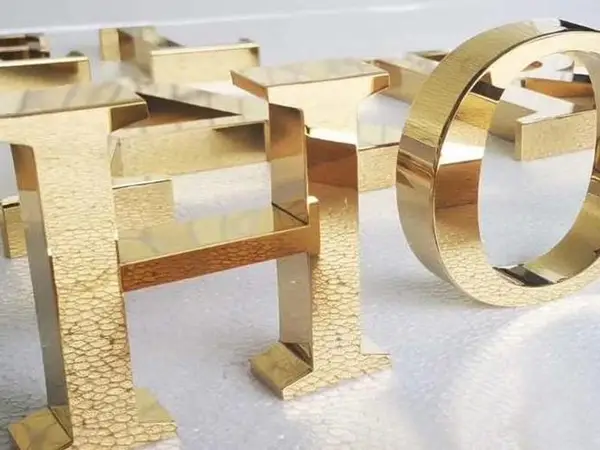
Channel letters are individual 3D letters. Each letter is a separate metal can with an acrylic face. LEDs sit inside each letter. They're mounted on the wall with raceways or studs. You get that classic "lit-from-within" look. Factory prices per letter: $20 to $80 for front-lit, $35 to $120 for back-lit halo. A 6-letter sign? That's $120 to $720 just for the letters. Plus raceway and installation.
The fundamental difference? Light boxes are one monolithic unit. Channel letters are modular. That modularity gives you flexibility in placement—but it also multiplies your points of failure. Every letter has its own seal, its own LED strip, its own power connection. More parts. More potential for trouble.
Let's run a real-world comparison. A typical restaurant wants a 4ft x 4ft sign. Let's price both options using factory-direct data from Aochuang Sign.
| Cost Category | Light Box (4ft x 4ft) | Channel Letters (6 letters, 18in each) |
|---|---|---|
| Factory price (product) | $320 - $1,000 | $120 - $720 |
| Shipping (air, about 10 days) | $50 - $150 | $30 - $100 |
| US installation labor | $500 - $1,200 | $1,000 - $2,500 |
| 3-year LED replacement (if needed) | $0 (quality LEDs) to $200 | $100 - $600 (per letter) |
| Total 3-year TCO | $870 - $2,550 | $1,250 - $3,920 |
The light box wins on total cost of ownership for signs over 3ft x 3ft. Why? Installation is simpler—one unit, one mount, one electrical connection. Channel letters require precise spacing, leveling each letter, and running individual wiring. That drives up labor. A typical US contractor charges $200-700 per letter for installation. For a 6-letter sign, that's $1,200 to $4,200. The light box? One hour for two guys. Maybe $500 to $1,200.
Maintenance is where the gap widens. A quality light box uses SMD 2835 LEDs rated L70 ≥50,000 hours. That's 5.7 years of continuous operation. With a 2-year warranty on LEDs from Aochuang, you're covered. Channel letters? Each letter has its own LED module. If one fails, you need a service call. At $150-300 per trip, that adds up fast. Especially in harsh climates where moisture gets into individual letter cans.
Light boxes have a fundamental advantage: large, continuous illuminated surface area. With acrylic that transmits 90-92% of light (Mitsubishi/Degussa grade), you get uniform brightness across the entire face. No hot spots. No dark zones. The secret is proper LED spacing. Quality manufacturers use density calculations—typically 4-6 inches between LED strips for a 3mm acrylic face. Too wide? You get zebra-striping. Too tight? You waste power.
Channel letters produce a different effect. The light comes from inside each letter, creating a crisp, outlined look. At night, they pop beautifully. But in direct sunlight? The contrast drops. The acrylic face competes with ambient light. You lose some of that punch. Channel letters with 6000-6500K cool white LEDs perform best for daytime legibility. But for nighttime visibility, 4000-5000K neutral white is the sweet spot—bright enough to see from 500 feet, warm enough to read clearly.
Here's the insider truth: for drive-by traffic at 35+ mph, a light box wins every time. The large illuminated area catches peripheral vision. For pedestrian traffic at close range (under 50 feet), channel letters look more premium. They have that 3D depth. But if your client is on a highway frontage road? Light box. Every time.
This is where most guides get it wrong. They assume channel letters are more durable because they're "individual units." But real-world data tells a different story.
Channel letters have multiple seal points. Each letter has its own gasket between the aluminum can and acrylic face. Each letter has its own power entry. In heavy rain or snowmelt, water finds the weak points. If the seal fails—and they do, especially with cheap silicone instead of neutral-cure silicone—moisture gets inside. LEDs short out. The acrylic clouds from the inside. You're looking at a $200-400 repair per letter.
Light boxes have one large seal around the perimeter. One gasket. One point of failure. When properly built with stainless steel 304 (18% Cr, 8% Ni) or aluminum (naturally rust-proof), the cabinet itself is a weather fortress. For coastal environments, stainless 316 with 2-3% molybdenum is recommended. It costs 20-30% more than 304, but it handles salt spray for 15+ years.
| Weather Factor | Light Box | Channel Letters |
|---|---|---|
| Wind load (up to 100 mph) | Excellent with proper mounting | Good, but individual letters can vibrate |
| Snow load (heavy accumulation) | Risk of acrylic cracking if not 5mm+ | Less surface area, lower risk |
| Rain/moisture ingress | Single seal, lower failure rate | Multiple seals, higher failure rate |
| UV exposure (5+ years) | Mitsubishi acrylic: 5-8 years no yellowing | Same acrylic, but smaller pieces = less visible degradation |
| Salt air (coastal) | Stainless 316 recommended | Stainless 316 for raceways, aluminum for cans |
The thing is: for snow load, channel letters actually have an advantage. Less surface area means less weight accumulation. But for wind? A 4ft x 4ft light box properly mounted with 3/8-inch bolts can handle 100 mph gusts. Channel letters? Each letter catches wind differently. Over time, vibration can loosen mounting studs. I've seen letters literally twist on their mounts after five years in a windy corridor.
Channel letters win on flexibility. You can make any shape. Any font. Any size. Want a script font with flowing curves? Channel letters can do it. Light boxes are limited to rectangular or simple geometric shapes. The cabinet dictates the form. You can't do a light box shaped like an arcing swoosh—not cost-effectively anyway.
But here's the catch: channel letters have size limitations per letter. For a single letter over 2.5 meters (8 feet), you need 5mm+ acrylic to prevent flexing and cracking. That adds weight. And cost. And shipping complexity. For massive signs—think stadium entrances or highway billboards—light boxes are the only practical choice.
Color options? Both can use any PMS color for the face. But light boxes offer something channel letters can't: full-face color gradients. You can print directly on the acrylic. Or use colored vinyl applied to the face. Channel letters are limited to the color of the acrylic (usually white, clear, or colored) plus the metal trim cap color (brushed, mirror, PVD, powder coated).
For internal illumination, channel letters give you more options. You can do front-lit, back-lit (halo), or combination. Light boxes are always front-lit. But you can add a reverse-lit halo effect by mounting the light box on standoffs. It's a workaround that looks surprisingly good.
Modern LED technology has leveled this playing field. Both sign types use SMD LEDs—typically 2835 (100-150 lm/W) for general illumination, 5050 for RGB color, or 5730 for highest brightness. The real efficiency difference comes from how many LEDs you need.
A light box requires more total LEDs because you're illuminating a large surface. But they run at lower power per LED. Typical density: 100-150 LEDs per square meter. Total power draw for a 4ft x 4ft light box: 100-200 watts. For channel letters of similar overall size (say six 18-inch letters), you need about 60-80 LEDs per letter. Total: 360-480 LEDs. Power draw: 150-250 watts. The light box is slightly more efficient because the LEDs are spaced optimally for even distribution.
Environmental impact? Light boxes use more material overall—more aluminum or stainless, more acrylic. But they last longer when properly built. Channel letters generate more waste per letter when they fail. You can't easily replace one letter without matching the new one to the old ones. Light boxes? Replace the whole face. Or just the LED strips. Simpler lifecycle.
Disposal regulations vary by state. Some require recycling of fluorescent bulbs—but that's irrelevant now. Both sign types use LEDs. No mercury. No special disposal. But check local codes: some municipalities require documentation of disposal for commercial signage. Keep your records.
I've seen the same three mistakes in 15 years. Here they are—so you don't make them.
Mistake 1: Ignoring thermal expansion. Metal and acrylic expand at different rates. A light box mounted tight against a brick wall on a 100°F day? When it hits 20°F that night, the acrylic can crack. Always leave 1/8-inch gap per foot of sign length. Use neoprene gaskets, not hard plastic spacers.
Mistake 2: Wrong sealant. Neutral-cure silicone only. Never acid-cure. Acid eats into acrylic over time. I've seen 3mm acrylic develop micro-cracks after two years from cheap silicone. The factory uses neutral silicone for a reason. Don't substitute.
Mistake 3: Over-tightening mounting bolts. Channel letters need to be snug, not crushed. Over-tightening distorts the letter shape. The acrylic face won't seat properly. Water gets in. LEDs fail. Use torque wrenches if you have them. Otherwise, hand-tight plus 1/4 turn. That's it.
This is the question your clients will ask. Here's your answer.
For drive-by traffic at 35+ mph: light box. The large illuminated area grabs attention from 500+ feet. Studies show the human eye processes large colored surfaces faster than individual letters at speed. A red light box with white text is visible 30% farther than the same text in channel letters.
For pedestrian traffic or slow-speed zones (under 25 mph): channel letters. The 3D depth creates a premium look. People stop and read. They notice the craftsmanship. For retail storefronts on Main Street? Channel letters. For a gas station on the interstate? Light box.
For mixed traffic? Combine them. Light box as the main sign. Channel letters as a secondary accent. Or use a light box with a 3D channel letter overlay. It's a hybrid approach that gives you both visibility and premium feel. Costs more, but your client gets the best of both worlds.
1. Which sign type has a longer lifespan in outdoor commercial use?
Both can last 8-12 years with proper materials and installation. A light box using stainless 304 or aluminum with Mitsubishi acrylic (5-8 years UV resistance) will outlast cheap channel letters with domestic acrylic (1-2 years before yellowing). But premium channel letters using 5mm+ acrylic and stainless 304 raceways can match that. The key is quality of materials—not the sign type. For LED lifespan, quality modules (Samsung/Osram/Lan Jing) give 5+ years real-world. Cheap ones fail in 12-18 months. Always spec the LEDs.
2. How do I calculate total cost of ownership for a light box vs. channel letter sign?
Add: factory price + shipping (air at $4-12/kg or sea at $80-200/m³) + US installation ($500-2,500) + 3-year LED replacement cost (light box: $0-200, channel letters: $100-600) + potential repair calls ($150-300 each). For a 4ft x 4ft sign, light box TCO runs $870-2,550. Channel letters: $1,250-3,920. The light box saves 30-40% over 3 years for medium-sized signs.
3. Can I retrofit an existing light box into channel letters, or vice versa?
Retrofitting a light box into channel letters is impractical. You'd need to remove the entire cabinet, install raceways, and mount individual letters. Not cost-effective. Retrofitting channel letters into a light box is easier—remove the letters, patch the wall, mount a light box. But you lose the premium look. Better to replace entirely. Factory-direct pricing makes it affordable: a new light box is $80-250/sqm. Not worth the retrofit headache.
4. What are the most common installation mistakes that reduce sign longevity?
Three big ones: (1) ignoring thermal expansion—leave 1/8-inch gap per foot. (2) using acid-cure silicone instead of neutral-cure—it destroys acrylic in 2 years. (3) over-tightening mounting bolts on channel letters—distorts the letter shape, causes seal failure. Also: not accounting for wind load. A 4ft x 4ft light box catches 16 sq ft of wind. At 100 mph, that's about 300 lbs of force. Use proper anchors. Don't skimp.
5. Which sign type performs better for drive-by vs. pedestrian traffic visibility?
Drive-by (35+ mph): light box wins. Large illuminated surface grabs attention from 500+ feet. Pedestrian (under 25 mph): channel letters win. 3D depth creates premium feel. For mixed traffic, use a light box as the main sign with channel letter accents. Or a light box with 3D overlay. It costs more but gives both visibility and premium aesthetics.
Bottom line: Stop thinking of light boxes as "budget" and channel letters as "premium." Think in terms of application. Large format, highway-facing, cost-sensitive? Light box. Small format, premium storefront, pedestrian zone? Channel letters. And always, always spec quality materials. A light box with Mitsubishi acrylic and Samsung LEDs will outlast a channel letter sign with cheap domestic acrylic and no-name modules. Every time.
About the Author: This guide is based on 15+ years of experience in commercial sign fabrication and procurement, including direct work with Chinese manufacturers like Aochuang Sign (50+ workers, 3,000m² facility, exports worldwide). The author holds certifications in LED lighting systems and NEC compliance, with a focus on large-format signage for US and European markets. Data sourced from factory-floor testing, UL standards, and real-world installations across diverse climates.

Real photo from our production floor — every sign we ship is made here.
Products mentioned or relevant to this topic — factory-direct, custom built.
From $24/letter · MOQ 1 piece · Flexible lead time · CE & UL certified · ships to 20+ countries
Custom sizes, colors, and finishes. Get a factory price in 24 hours.
Get a Free Quote Copy EmailWhatsApp +86 13865703472 · business@aochuangsign.cn
See pricing, specs, and get a free quote for the sign type you need. Built in our factory, shipped worldwide.