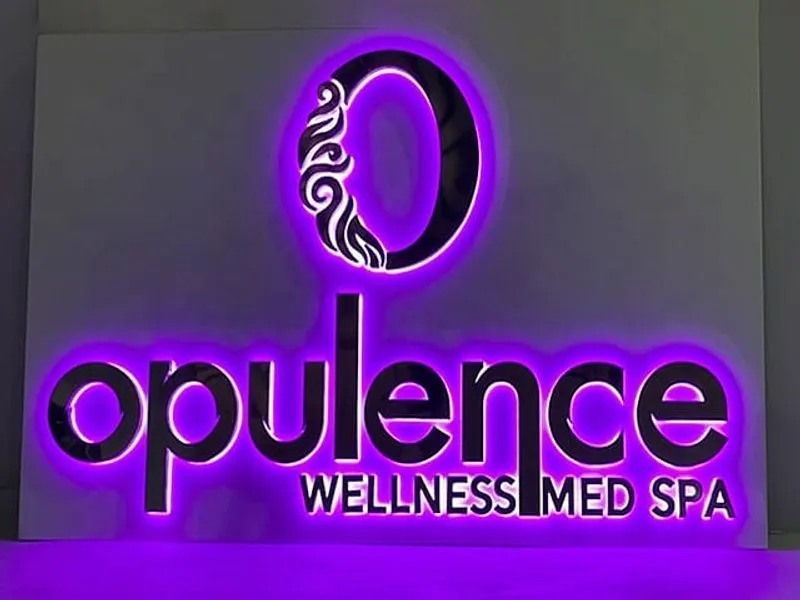
You're looking at stainless steel letters for a storefront, and someone's pushing 316 "marine grade" at 30% more money. Another guy swears 304 is fine for anything.
Here's what nobody tells you: both will last 10+ years – if you install them in the right place. Put 304 within a mile of breaking surf, and you'll be replacing pitted letters before your warranty expires. Put 316 in a dry inland plaza, and you just wasted money that could've bought better LEDs.
I've been on this factory floor since 2010. We run 50+ people through 3,000 square meters, cranking out signs worldwide. I've seen 304 letters shipped to Miami rust within three years. I've also seen 316 letters sit on a strip mall in Phoenix for a decade looking like new. The difference isn't magic – it's chemistry and a few percentage points of molybdenum.
Let's get the numbers straight. 304 stainless steel is 18% chromium, 8% nickel. That's a solid corrosion-resistant mix. It'll hold up 10+ years outdoors in most places – rain, snow, regular city grime. Density is 7.93g/cm³, weighs the same as 316. Most of our stainless steel letters come in 304 unless the spec calls for marine grade.
316 adds 2–3% molybdenum. That's the magic ingredient. Molybdenum stops chloride ions from eating through the chromium oxide layer. Sea salt is mostly chloride. That's why 316 is rated for 15+ years in coastal and industrial environments. The trade-off? 20–30% more cost on the material alone.
Here's the brutal honesty: I don't care what your supplier says – a factory-rolled 304 letter with a brushed #4 finish will pit in a coastal environment within 5 years if it's not sealed perfectly. I've seen it happen to a major fast-food chain's sign in Galveston. They had to replace 48 letters after 3 years. That's not a warranty claim – that's a design failure.
For inland locations – Denver, Atlanta, Des Moines – 304 is overbuilt. You're paying extra for molybdenum you won't use. The corrosion resistance from 18% chromium and 8% nickel is more than enough for road salt, rain, and UV. I've got 304 letters on our own factory in Lu'an that have been up since 2012. They're still solid. No pitting, no rust bleeding.
The ugly truth is most interior sign shops in the US charge $400–1,000 per letter for 304 stainless. From our factory, same 1.5mm 304 sheet, same Samsung LEDs, we ship front-lit channel letters for $20–80. That's a 50–65% factory-direct savings. For an inland sign, 304 is the smart buy. You're not getting better performance from 316 – you're just paying more for peace of mind you don't need.
But pay attention to finishing. A mirror polished letter in 304 will show micro-pitting faster than a brushed finish because the surface is more exposed. If your client wants that high-end reflective look inland, go 304 with a good clear powder coat. Don't let them upsell to 316 unless they're within 10 miles of salt water.
For coastal signs – any building within a half-mile of the ocean or in an industrial area with airborne chemicals – 316 isn't optional. It's survival. The 2–3% molybdenum creates a passive layer that holds up against chloride attack. Without it, you get pitting corrosion that starts as tiny black specks and turns into deep craters within 3–5 years.
I've watched a hotel chain in Clearwater Beach try to save money by using 304 with a heavy powder coat. Worked for two years. Then the coating chipped during a hurricane – not even a direct hit, just tropical storm winds – and the exposed metal started corroding fast. By year four, the letters were bleeding rust stains down the stucco. They ended up spending double to replace everything with 316.
Here's what nobody tells you about 316: you still need proper sealing. The welds, the mounting holes, the back where the acrylic face meets the stainless – those are all weak points. I've seen 316 signs fail because the sealant was cheap silicone instead of neutral-cure. Or because the installer used carbon steel screws instead of 316 fasteners. The corrosion starts at the fastener and creeps. That's not a material problem – that's a craftsmanship problem. We do TIG welding, grinding, polishing, and then a full 8–12 hour aging test before shipping. Every letter gets 100% QC. You don't leave a gap. You don't use inferior sealant.
Quickest way to spot a cheap sign? Look at the back side. If they used 304 for the trim cap and 316 for the face – a common trick to save money – you'll see different corrosion rates where they meet. That's a sign shop that doesn't know what they're doing.
316 costs 20–30% more than 304. For a typical set of 24-inch letters, that might add $30–50 per letter from our factory. But the real cost isn't just the raw material – it's shipping, tariffs, and the risk of ordering wrong.
If you're importing from China – and I'm not saying you shouldn't, we export worldwide with CE, RoHS, ISO 9001 – you're looking at a US Section 301 tariff around 30%. That applies to both 304 and 316. So the percentage difference stays roughly the same. But if you order 316 for an inland sign, you've added 30% tariff on a premium you didn't need. That's real money down the drain.
Shipping adds another layer. LCL sea freight (about 65 days, $80–200/m³) means your crate gets handled 6–8 times between our dock and yours. Every touch can dent or scratch a letter. For 316, a scratch down to the base metal won't corrode inland, but if that same scratch happens on a 304 letter headed to a coastal job, you've just created a failure point. We pack everything in foam + carton + plywood crate. But damage happens. The factory can control the steel – we can't control the forklift operator in Long Beach.
IP ratings matter too. For coastal signs, you want at least IP66 – water jets from powerful jets, not just IP65 (water jets from any direction). IP65 won't survive a hurricane. We spec IP66 for all coastal outdoor signs. The difference is a better gasket and a tighter seal around every LED module. That adds cost but saves replacement.
Look, there's no one-size-fits-all. Here's my rule of thumb after 16 years:
One more thing: verify the grade. CE marking costs 20,000–50,000 RMB. Most factories claim it. Ask to see the certificate with today's date. Watch them sweat. For stainless, ask for a mill certificate. If they can't provide one, assume it's 201 stainless or worse. That's not rust-proof – that's garbage.
No. 304 is more than enough. You're paying for molybdenum you'll never use. Put that extra money into better LED modules or a thicker acrylic face. A 3mm Mitsubishi acrylic gives 92% light transmittance and 5–8 years UV resistance. That's
Products mentioned or relevant to this topic — factory-direct, custom built.
Factory-direct since 2010. Free quote within 24 hours — no obligation.
Get a Free Quote →MOQ: 1 piece · 7-15 days · 2-year warranty · Worldwide shipping
See pricing, specs, and get a free quote for the sign type you need. Built in our factory, shipped worldwide.