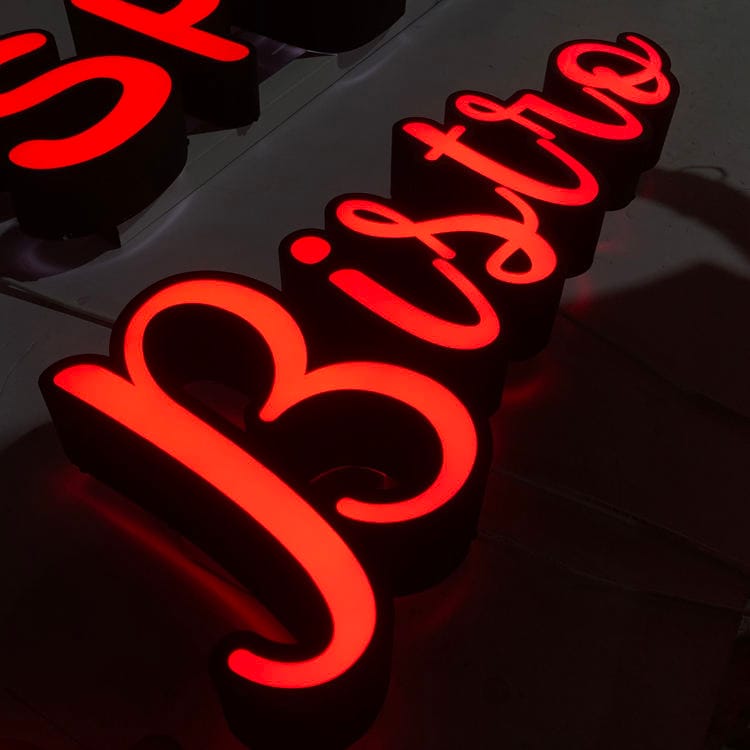
A year ago, a contractor yelled at me over the phone. His “gold” channel letters on a Miami restaurant had turned bronze-green in 14 months. He’d saved $11 per letter by not specifying PVD.
He didn’t yell at the electroplating shop. He yelled at us, the manufacturer, because we didn’t push him harder. He’s right. That’s why I write this guide — so you understand how these two finishes actually age, not how they look on a sample swatch under showroom lights.
I’ve been on factory floors for 16 years. I’ve watched zinc-plated letters pit in coastal air, and I’ve pulled PVD-coated stainless out of a scrap bin after 8 years looking brand new. This isn’t theory. It’s metal, electricity, and chemistry.
Physical Vapor Deposition isn’t paint. It’s not a wet bath. It’s a vacuum chamber where solid metal — like titanium or zirconium — gets vaporized by an arc or electron beam and bonds atom-by-atom to your letter’s surface. The result is a layer 0.3 to 5 microns thick. A human hair is 70 microns.
I know. It sounds too thin to matter. Here’s what nobody tells you: PVD bonds at the atomic level, so it doesn’t have the adhesion layers that peel on electroplating. You get a ceramic-like hardness rated above 2000 HV on the Vickers scale — about four times harder than nickel plating.
In practical terms, a PVD gold finish on our stainless steel letters won’t fade, tarnish, or rub off onto a cleaning cloth after 5 years. We’ve tested it. The color is stable under UV, salt spray (over 1500 hours in ASTM B117), and city smog.
Look, the process isn’t magic. PVD only adheres to conductive, clean surfaces. Stainless 304 and 316 are perfect. Brass can work but requires a nickel underlayer. Aluminum? Let’s get brutally honest in a minute.
Electroplating is a chemical bath. An electric current pulls metal ions from a solution and deposits them onto your letter. It’s been around for over 200 years. I’ve walked through shops in Guangdong where they still use wooden barrels for small brass parts. The process can produce gorgeous, deep mirror finishes.
The ugly truth is that most commercial electroplating for sign letters relies on cheap cyanide-based copper/nickel/chrome layers. A typical outdoor letter might get 5 microns of semi-bright nickel, 0.2 microns of bright chrome — all done in 20 minutes.
That thin chrome layer is brittle. It micro-cracks. Moisture gets to the nickel underneath and white rust blooms through. I’ve seen this go wrong: a hospital paid $45,000 for a lobby donor wall with electroplated brass nameplates. Within 18 months, the edges flaked, exposing dull grey nickel. They looked cheap. They were.
You can get quality electroplating. Thick deposits (20+ microns), duplex nickel, trivalent chromium instead of hexavalent. But request it, pay for it, and test it. Our brass letters receive an electroplated clear lacquer only when a client absolutely demands it and signs off on a 3-year outdoor limit. Otherwise, I steer them away.
Let’s compare lifetimes. Our standard PVD on 304 stainless: 8-10 years in a temperate city, no color shift. On 316 stainless by the ocean: 10-15 years. The PVD color layer does not oxidize because it is already a stable compound — titanium nitride for gold, titanium carbonitride for rose gold.
Electroplated gold, even with a clear coat, starts to darken and lose luster in 2-4 years outdoors in direct sun. Without a clear coat, you’re looking at 12-18 months before a dull brownish tone takes over. That’s unless it’s thick, hard gold plating applied via a cyanide-free alkaline process. That costs more than PVD. You’ll rarely see it in sign work.
Here’s what nobody tells you: PVD colors are repeatable. We give the lab a L*a*b* value, and every batch comes back within a Delta E of 1.5. Electroplating baths drift. The shade of “gold” you get in January might look slightly cooler than the one you get in July because the bath temperature and current density shift.
For black finishes, a PVD black (using chromium carbonitride) stays as deep as a moonless night. Electroplated black chrome fades to a smoky grey after a few summers. If you want your brand’s black logo to stay black, PVD is the only real answer outdoors.
I had a client demand PVD rose gold on aluminum letters to save weight. I said no. He found another factory that said yes. Six months later, the coating looked like peeling nail polish.
The ugly truth is, aluminum naturally forms an oxide layer in seconds. PVD can’t bond to that oxide. Some shops apply a dip-coat that looks like PVD but is just tinted lacquer over polished aluminum. It fails instantly.
For durable colored aluminum, we anodize. The oxide layer becomes part of the metal, dyed, and sealed. It’s not as shiny as PVD — no mirror finish — but it’ll last 8-12 years outdoors. Our aluminum letters with anodized gold or bronze are the right call for lightweight facades. Anyone claiming they PVD-coat aluminum is either clueless or lying. Don’t fall for it.
Our factory prices for 12-inch tall stainless steel 304 letters. Non-lit, brushed finish: around $18 each. Add electroplated gold with a basic clear coat: $26. Add PVD gold (titanium nitride): $32. That’s a 23% jump over electroplating and 78% over the base letter.
Over 30 letters on a storefront, the difference is about $180. In the US, that storefront rent is $6,000 a month. The owner won’t blink. But in 3 years, when electroplated letters look tired and the brand manager at corporate is emailing photos of the facade, the replacement cost — new letters, lift rental, installer — can hit $3,000.
Look, I’m not here to upsell you. For an interior lobby wall with zero UV and controlled humidity, electroplated brass letters will stay beautiful for a decade. They’re warm, traditional, and they look like real brass because they often are brass-plated brass. You’ll save money and get the exact look you want.
Outdoors, the math changes. PVD’s lack of topcoat means no yellowing, no peeling, no annual maintenance. Do the lifecycle cost: PVD wins after year three. Every time.
I need to be clear about a downside few will admit. PVD is extremely scratch-resistant but not scratch-proof. If a delivery truck scrapes a PVD gold letter, the gouge goes through the layer and reveals raw stainless steel underneath. You can’t touch it up. You replace the letter face.
Electroplated letters can sometimes be sanded and re-plated locally, but that’s a specialized job. On a $22 letter, nobody does it; they swap the whole letter anyway. So in reality, both finishes become a replacement situation after a bad hit. Don’t choose based on repairability unless you’re dealing with very large 4-foot letters where field repair is feasible.
For outdoor branding on stainless steel letters, PVD is the clear winner. Rose gold for a fashion boutique, black for a law firm, champagne for a hotel — all will stay crisp for years. Specify 316 stainless if you’re within 2 miles of saltwater.
For indoor directories or elite lobby signage, electroplated brass or copper on brass letters feels right. The patina of age can even be desirable. Just don’t let anyone sell you electroplated “gold” for outdoors without a five-page warranty you can phone-check.
If you need lightweight letters and want a metallic color, go anodized aluminum. It’s the honest, proven method.
At Aochuang, our 50-person team fabricates the letters, then sends them to a specialized PVD partner 20km away running automotive-grade vacuum chambers. It adds 2-3 days to our 7-15 day lead time, but yields a mirror gold that’s survived 2000-hour salt spray tests. Our electroplating is done with trivalent chrome and proper wastewater treatment, so the price isn’t rock-bottom, but your conscience and the finish won’t crack after one winter.
Factory-direct, you’ll pay $35-80 for a 14-inch PVD halo-lit stainless letter, and $8-45 for a basic electroplated non-lit letter. The cost difference is real, but so is the call six months later when the cheaper finish starts to fail.
Get samples. We’ll send you a small plate with both finishes side-by-side. Scratch it with a key. Leave it in a bucket of salt water on your roof for a month. Then place your order based on what you see, not what a catalog promises. I’ve been doing this too long to sell you fairy tales.
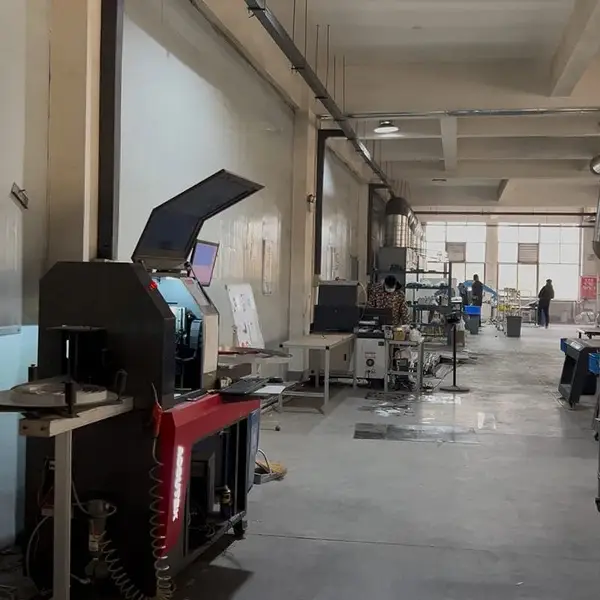
Real photo from our production floor — every sign we ship is made here.
Products mentioned or relevant to this topic — factory-direct, custom built.
Factory-direct since 2010. Free quote within 24 hours — no obligation.
Get a Free Quote → Copy EmailMOQ: 1 piece · Flexible lead time · 2-year warranty · Worldwide shipping
See pricing, specs, and get a free quote for the sign type you need. Built in our factory, shipped worldwide.