I've been in this business since before LED modules were worth a damn. I've watched sign shops pay $800 for a front-lit letter that costs me $120 to build in our Lu'an factory. I've also watched importers lose their shirts on garbage shipments because they chased the cheapest quote without asking the right questions.
Here's what nobody tells you: the decision between a local fabricator and a Chinese factory isn't about patriotism or quality. It's about math. And most buyers do the math wrong because they only look at the price tag.
Let's break this down like adults.
The Raw Numbers: What You're Actually Paying
Your local fabricator has overhead. Rent, workers' comp, insurance, a sales guy who plays golf with the chamber of commerce. That's real money, and it lands in your quote. A typical US shop needs to charge $200-700 per letter for front-lit channel letters to stay profitable. I'm not knocking that — they've got mortgages and payroll.
Our factory prices on the same letter run $20-80. Backlit halo letters? $35-120 from us. Your local guy quotes $400-1,000 per halo letter. The gap isn't because he's greedy. It's because his cost structure is completely different.
But here's the catch nobody talks about: shipping. A small sign shipment via express runs $30-100 and takes about 5-15 days. Bulk orders go by sea — $80-200 per cubic meter for LCL, about 65 days to your door. And if you're in the US, Section 301 tariffs add roughly 30% on top.
Do the math on a $3,000 order. Even with $1,000 in shipping and tariffs, you're still 40-60% ahead of the local quote. That's real savings. That's a new truck payment.
Where Local Wins: The Honest Truth
I've seen this go wrong: an importer ordered 50 channel letters without checking voltage requirements. They arrived at 220V. The job site ran 110V. That's a $2,000 mistake that cost $6,000 in electrician fees to fix.
Local shops win on immediacy, not quality. Your storefront floods at 2 AM — your local guy can be there by 8 AM. Need a custom size that doesn't match the spec sheet? He's a 20-minute drive away. You're on a deadline and the client changed the logo again? Local wins, period.
Chinese factories aren't built for same-week changes. We're built for efficient batch production, not hand-holding through iterations. Our lead time is about 5-15 days for production. Plus transit. Plus customs. If you need it yesterday, buy local.
The ugly truth is that local also wins on installation. A sign is only as good as its mounting. If the wall is popcorn concrete and nobody told the factory, the anchors will fail. Your local guy can walk the site and adjust. We have to trust your measurements and photos.
What You Get From a Factory Like Ours (If You Do It Right)
Here's what nobody tells you: the factories that survive in this business aren't the fly-by-night operations cranking out garbage. We've been at this since 2010. We've got a 3,000-square-meter facility, 50-plus workers, and we ship worldwide. Our certifications aren't decoration.
That doesn't mean every Chinese factory is legit. It means the good ones are worth their weight in gold if you know how to work with them.
When you order from us, you're getting:
- **Laser cutting with ±0.1mm accuracy** — we don't eyeball cuts
- **TIG welding** on stainless steel, not the cheap MIG joints that corrode in two years
- **A 10-step production process** that ends with a 100% QC inspection and an 8-12 hour aging test on every LED unit
- **SMD 2835 LEDs from brands like Samsung or Osram** that run 50,000+ hours, not the cheap modules that die in 12 months
- **5mm acrylic for anything over 2.5 meters**, because the 2mm stuff flexes and cracks
We make
front-lit channel letters,
back-lit halo letters,
stainless steel letters — the whole catalog. And if you're doing a modern build, check out our
rimless channel letters or
dual-lit channel letters for that day-and-night visibility your clients want.
The Hidden Costs of Going Cheap
I've watched contractors buy from a Shenzhen wholesaler who promised the moon. Got a container of aluminum letters where the powder coating was 0.3mm thick — you could scrape it off with a fingernail. The client's building was three blocks from the ocean. Six months later, they were paying a local shop to strip and re-coat everything.
That's not a factory problem. That's a "you bought from a trading company without a factory" problem.
The cheap route always costs more in rework. Here's what to look for:
- **Ask for the CE certificate** — not a photocopy, but the actual document from TÜV or similar. CE certification runs 20,000-50,000 RMB. If they can't produce it, they don't have it.
- **Ask about LED brand** — if they say "stable quality" instead of "Samsung" or "Osram," walk.
- **Ask for sample photos** — not stock photos, but pictures of your specific design being made.
- **Ask about 316 stainless** — for coastal jobs, 304 will corrode in 3-5 years. 316 costs 20-30% more but lasts 15+ years in salt air.
When Importing Is Stupid (Yes, I Said It)
Not every job should come from China. Here's the brutal honesty you need:
Don't import for a single sign on a tight deadline. The math doesn't work. The lead time alone will kill you. We produce in about 5-15 days, but sea freight takes about 65 days. If you need it in three weeks, we're not your answer.
Don't import if you can't send precise measurements. Our fabrication is exact, but garbage in means garbage out. If your site survey is sloppy, the letters won't fit. Local shops can adjust. We can't — not without another shipping cycle.
Don't import if you need a UL-listed product. We can build to UL 48 standards, and we've got the certifications to prove it — but the full UL process costs $4,000-15,000 and takes 4-9 months with quarterly audits. Most buyers don't want to wait.
How to Win With a Chinese Factory
Here's what nobody tells you: the clients who save real money with us aren't the ones who send a single email and pray. They're the ones who treat us like a partner.
The guys who get it right:
- **Send vector files, not JPEGs** — we can't cut a pixel
- **Specify the environment** — coastal, industrial, indoor, highway → we'll recommend the right material
- **Group their orders** — 20 letters is better than 5, even if they're for different jobs
- **Take photos of the site** — we've seen too many signs that were designed for a wall that turned out to be a glass storefront
- **Order samples first** — $50 for a single letter is the cheapest insurance you'll ever buy
When you do that, you get a product that beats local quality at half the price. We've got the track record — worldwide and counting.
The Bottom Line: Work Both Sides
The smart sign shop owners I know don't pick a side. They use local fabricators for rush jobs, service calls, and complex installs. They use factories like ours for anything with volume, repeat patterns, or a flexible timeline.
That's not outsourcing. That's strategy.
If you're doing a single build-out and the client needs it in three weeks, stay local. If you're a contractor doing 15 storefronts over the next year, importing from our factory is a no-brainer. Even with the 30% tariff and 50-plus days of sea freight, you're coming out 50-65% ahead on product cost.
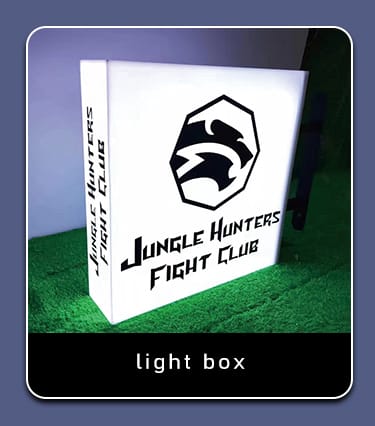
Let me put it in perspective: a full set of
acrylic light boxes for six locations runs about $150 per square meter from us, plus shipping. Your local guy charges $500-900 per square meter installed. Even with the freight, you're saving thousands per location.
What We Can't Do (And Won't Pretend To)
I'm not going to sell you a fantasy. We can't look your client in the eye and hold their hand. We can't do a site survey in Ohio. We can't fix an installation if your crew messes up the wiring. We won't be there when a drunk driver takes out your sign at 2 AM.
But what we can do is build a damn good sign. One that uses 304 stainless with a brushed #4 finish that will still look right in a decade. One that uses 3mm acrylic with 90-92% light transmittance and UV-resistant protection. One that's sealed with neutral silicone and tested for 8-12 hours before it leaves our dock.
That's not hype. That's process.
The
stainless steel letters we ship are cut, welded, ground, polished, and packed by people who've been doing this since before most of my competitors' websites existed. We sweat the details — the welds are clean, the edges are smooth, the LEDs are seated properly, and the gaskets seal correctly.
The 5 Questions Every Buyer Should Ask
Before you place an order with any overseas supplier, get answers to these:
1. **What's the exact LED brand and model?** If you hear "SMD 2835" without a brand name, push harder.
2. **What's the warranty?** We offer 2 years on LEDs and 1 year on power supplies. If someone won't put it in writing, they don't have it.
3. **What's the IP rating?** IP65 is the minimum for outdoor. If you're near the coast, demand IP66 or higher. For submersible applications, IP68.
4. **Can I see the production photos?** Real photos, not renders. We send progress updates on request.
5. **What happens if the shipment arrives damaged?** If they don't have a clear policy, assume you're eating the loss.
These questions separate factories from middlemen. Trading companies can't answer them. Manufacturers can.
Final Word
Look, I get it. The idea of sending your money to another country for something as personal as a business sign makes people nervous. I'd feel the same way.
But I've also watched the industry change. Twenty years ago, local fabrication was the only option. Today, the global supply chain is a tool — and refusing to use it means your competitor down the street is winning jobs you can't price.
We're not here to replace your local fabricator. We're here to give you a better margin on the work that doesn't need to be done locally.
Want a quote? Send me your vector files, your dimensions, and your site conditions. I'll tell you exactly what it'd cost — and what I'd do differently if I were you.
The worst thing I can say is "that doesn't make sense for your timeline." You'll have your answer in 24 hours, not after a month of runaround.
That's how business should work.