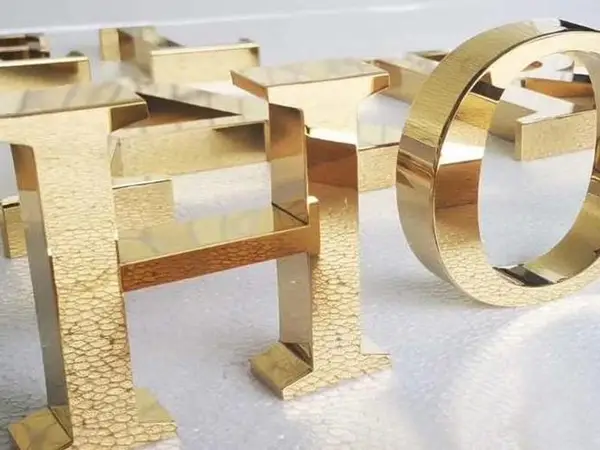
Here's a number that should stop you cold: a 3mm acrylic sign face from a domestic supplier will yellow and crack in 18 to 24 months of outdoor exposure. Meanwhile, a 1.5mm stainless steel 304 sign from a direct factory like Aochuang Sign costs roughly the same per piece at 50+ units — and lasts 10 years before it even needs a polish.
So, are metal signs expensive compared to acrylic? The short answer is yes — on the invoice. But the real answer is no, not if you calculate total cost of ownership. And if you're a sign shop owner or commercial buyer placing bulk orders, the math flips hard in favor of metal.
Let's dig into the numbers. Real factory prices. Real durability data. And the hidden costs that most buyers miss until they're staring at a reorder request from an angry client.
First, let's put the materials on the table with actual factory prices from a Chinese manufacturer with a 3,000m² facility and 50+ workers — Aochuang Sign (founded 2010, exports worldwide).
Acrylic sheet costs vary massively by quality. Mitsubishi or Degussa UV-resistant acrylic (90-92% light transmittance) runs about 2.5x the price of domestic Chinese acrylic. Domestic stuff: 1-2 years before yellowing. Premium: 5-8 years. Common thicknesses are 2mm, 3mm, and 5mm. For signs over 2.5 meters, you need 5mm minimum — and that gets expensive fast.
Aluminum, at 0.040-0.063 inches (1.0-1.6mm), weighs one-third of steel and naturally resists rust. It's the budget metal. Stainless 304 (18% chromium, 8% nickel) delivers 10+ years outdoor life. Stainless 316 adds 2-3% molybdenum for coastal and industrial environments — but costs 20-30% more than 304.
| Material | Thickness | Outdoor Lifespan | Factory Price per sq ft (approx) | Best Use Case |
|---|---|---|---|---|
| Domestic Acrylic | 3mm | 1-2 years | $8-12 | Indoor, short-term outdoor |
| Premium UV Acrylic (Mitsubishi) | 3mm | 5-8 years | $20-30 | High-end retail, 3-5 year outdoor |
| Aluminum 5052 | 1.6mm | 8-12 years | $10-15 | Budget metal signs, large formats |
| Stainless Steel 304 | 1.5mm | 10+ years | $15-25 | Premium exterior, corporate |
| Stainless Steel 316 | 1.5mm | 15+ years (marine) | $20-32 | Coastal, industrial, chemical |
The thing is, raw material is only half the story. Fabrication costs separate the winners from the losers.
Acrylic signs get CNC routed. That's a fast, automated process. A 50-letter run of 3mm acrylic channel letters? A factory can cut, bend, and assemble those in 3-4 days. Total cost per letter: $20-80 for front-lit, $35-120 for back-lit halo.
Metal signs require laser cutting (±0.1mm precision), TIG welding, grinding, polishing, and often powder coating or PVD finishing. That's 5-7 production steps versus 3-4 for acrylic. The labor adds up.
But here's the factory-floor wisdom: metal fabrication scales better. For a 20-unit order of acrylic letters, setup time dominates. For metal, the laser cutter runs the same program whether you're cutting 10 letters or 100. The per-unit cost drops 30-40% once you hit 50+ pieces.
Actual factory prices per letter (Aochuang Sign, 2024):
Notice something? The cheapest metal option — aluminum flat cut — starts at $10 per letter. That's cheaper than most acrylic channel letters. And aluminum lasts 8-12 years outdoors. Acrylic at the same price point? You're replacing it in 2 years.
Most buyers compare upfront prices. That's a mistake. Here's what acrylic does to your bottom line over 5 years:
Yellowing and cracking. Domestic acrylic yellows in 18-24 months. Premium UV acrylic (Mitsubishi/Degussa) lasts 5-8 years — but costs 2.5x more. If you spec domestic acrylic to save money, you're scheduling a replacement in year 2. That means a second fabrication run, second shipping, second installation crew. Your 50-65% factory-direct savings evaporate.
UV protective coatings. You can add UV-stabilized films or laminates to acrylic. That adds $3-5 per square foot. Now your "cheap" acrylic sign costs the same as aluminum — but still cracks under thermal stress.
Thermal expansion. Acrylic expands and contracts 5-7x more than stainless steel. In direct sun, an acrylic face can bow, warp, or pop out of its frame. That's a service call. Metal doesn't do that.
Mounting hardware. Metal signs are heavier. A 1.5mm stainless steel letter weighs about 2.5x more than the same 3mm acrylic letter. That means heavier gauge standoffs, reinforced walls, and sometimes structural engineering. But here's the trade-off: once mounted, metal stays mounted. Acrylic signs need re-leveling and re-siliconing every 3-4 years outdoors.
So the real cost comparison isn't material vs material. It's total cost of ownership over 5-10 years.
| Cost Factor | 3mm Premium Acrylic (5yr) | 1.5mm Stainless 304 (10yr) |
|---|---|---|
| Initial fabrication (20 letters) | $1,600 ($80/letter) | $2,400 ($120/letter) |
| Replacement at year 5 | $1,600 (if yellowed) | $0 |
| Mounting hardware (heavy duty) | $200 | $350 |
| Maintenance (cleaning, resealing) | $400 (year 3) | $100 (polish year 5) |
| Total over 10 years | $3,800 | $2,850 |
| Cost per year | $380 | $285 |
Metal wins by 25% over a decade. And that's not counting the value of not having to explain to a client why their $8,000 sign looks like a dirty windshield after two summers.
Here's the insight most sign shops miss. Standard sign supply distributors mark up metal 40-60% over factory cost. They buy 1.5mm stainless at wholesale and sell it to you at retail. But if you source direct from a manufacturer like Aochuang Sign (MOQ: 1 piece, lead time about 5-15 days), you skip that markup entirely.
For a 50-unit order of channel letters:
Notice aluminum is cheaper than acrylic at 50+ units. That's because the laser cutting and bending for aluminum is automated. Acrylic CNC routing is slower per piece, and waste is higher (acrylic chips and cracks more easily during routing).
For 100+ units, the gap widens. Metal per-unit cost drops another 15-20%. Acrylic drops maybe 5-10% because you still have to handle each sheet carefully. The factory floor doesn't lie: metal scales. Acrylic doesn't.
I won't sugarcoat it. Metal signs are heavier. A 3-foot aluminum channel letter set weighs about 40-50 pounds. Same set in stainless? 80-100 pounds. That means:
But here's the flip side. You install metal once. Acrylic signs need re-siliconing and re-leveling every 3-4 years. That's a return trip. At $150-300 per service call, two service calls over 10 years eats up the installation savings.
For indoor use, the weight penalty is smaller. Wall-mounted acrylic letters in a lobby? One guy with a level and some adhesive. Metal letters indoors? Same install, maybe stronger adhesive. The cost difference is negligible.
Smart shops mix metal and acrylic to get the best of both worlds. Here's how:
Aluminum returns + acrylic faces. This is the classic channel letter. The aluminum body gives structural strength. The acrylic face provides light transmission (90-92% with premium acrylic). You get metal durability where it matters (the sides and back) and acrylic cost savings where it works (the face). Total cost: $20-80 per letter.
Stainless steel back + acrylic halo. For back-lit halo signs, use a stainless steel backplate (10+ year life) with an acrylic face for the halo effect. The stainless takes the weather; the acrylic diffuses the LED light. Cost: $35-120 per letter.
Aluminum substrates + vinyl graphics. For large format signs, use 0.063" aluminum as the base and apply UV-stable vinyl. The aluminum lasts 8-12 years. The vinyl can be replaced in 3-5 years for a fraction of the cost of a new sign. Total cost per square meter: $80-250 for the light box, plus vinyl.
This hybrid approach cuts metal weight by 30-40% while maintaining 80% of the durability. It's the smart play for budget-conscious commercial buyers.
If you're importing from a Chinese factory like Aochuang Sign, here's what shipping adds:
Metal signs are heavier, so air freight is more expensive. But sea freight is charged by volume, not weight. A crate of aluminum letters takes the same space as a crate of acrylic letters. The shipping cost per sign is roughly the same on sea freight — about $5-15 per letter depending on container utilization.
Then there's the US Section 301 tariff — roughly 30% on Chinese-made signage. That's a hard cost. But even with the tariff, factory-direct pricing beats US wholesale by 50-65% on product cost. A $50 stainless steel letter from China costs $65 landed. Compare that to $120-150 from a US distributor.
If you're selling to US commercial clients, UL 48 certification is non-negotiable. It costs $4,000-15,000 and takes 4-9 months, plus quarterly audits. ETL is a UL alternative at 10-30% less. CE certification (for EU) runs 20,000-50,000 RMB and takes 2-8 weeks.
For outdoor signs, you need IP65 minimum (dust-tight, water jets). Coastal environments need IP66 (powerful jets) or IP68 (submersible). These ratings add $2-5 per letter to the fabrication cost — same for metal and acrylic.
But here's a factory-floor observation: metal signs pass IP testing more consistently. Acrylic seals can degrade in UV. Stainless steel welded seams don't. If you're certifying a sign for a 5-year warranty, metal is the safer bet.
Metal wins when:
Acrylic wins when:
The smart money? Start with aluminum. It's the cheapest metal option ($10-25 per letter at factory), weighs less than steel, lasts 8-12 years outdoors, and doesn't rust. For most commercial applications, aluminum beats acrylic on total cost of ownership by year 3.
For 20 front-lit channel letters, acrylic runs $20-80 per letter at factory. Aluminum runs $15-28 per letter. Stainless steel non-lit runs $18-30. At 20 units, aluminum is actually cheaper than acrylic by $2-5 per letter because of automated laser cutting. Stainless is comparable to premium acrylic. The gap widens at 50+ units.
Domestic acrylic yellows in 1-2 years and cracks under thermal stress. Premium UV acrylic (Mitsubishi/Degussa) lasts 5-8 years. Aluminum naturally doesn't rust, doesn't yellow, and lasts 8-12 years outdoors. Aluminum's powder coating can fade in 5-7 years, but the substrate remains sound. Acrylic's failure mode is catastrophic cracking; aluminum just looks worn.
For indoor use, the durability advantage shrinks. Acrylic lasts 5-8 years indoors with no UV degradation. Metal offers a premium look but costs 40-60% more. The exception is high-traffic areas where acrylic gets scratched — brushed stainless hides wear better. For most indoor applications, acrylic is the value play. But if the client wants "the look of money," nothing beats a mirror-finish stainless sign.
Aluminum flat cut letters at $10-25 per letter from a direct factory. For large format signs (3ft+), use 0.063" aluminum sheet with routed letters or vinyl graphics. Total cost per square meter: $80-250 for the light box, plus $10-25 per letter. That's cheaper than 5mm acrylic (needed for spans over 2.5m) which runs $20-30 per square foot just for material.
Absolutely. The most cost-effective approach is aluminum returns with premium acrylic faces for channel letters. You get structural strength from the aluminum (8-12 year life) and light transmission from the acrylic (90-92%). For back-lit signs, use a stainless steel backplate with acrylic face. This hybrid approach cuts weight by 30-40% and reduces material cost by 15-25% compared to all-stainless construction, while maintaining 80% of the durability.
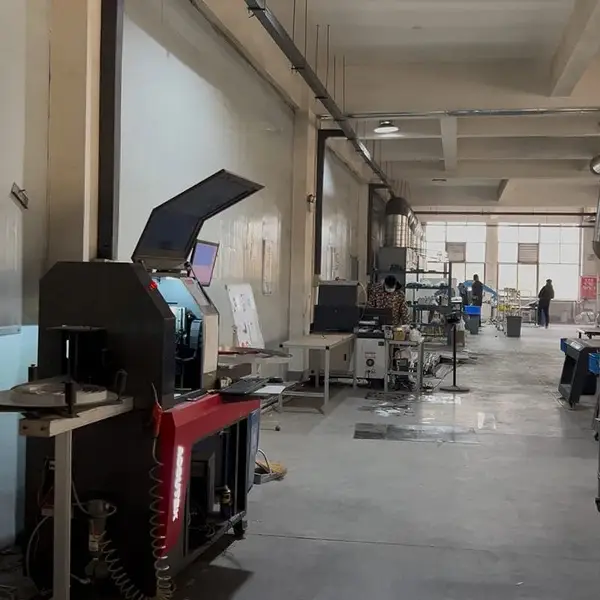
Real photo from our production floor — every sign we ship is made here.
Products mentioned or relevant to this topic — factory-direct, custom built.
From $24/letter · MOQ 1 piece · Flexible lead time · CE & UL certified · ships to 20+ countries
Custom sizes, colors, and finishes. Get a factory price in 24 hours.
Get a Free Quote Copy EmailWhatsApp +86 13865703472 · business@aochuangsign.cn
See pricing, specs, and get a free quote for the sign type you need. Built in our factory, shipped worldwide.