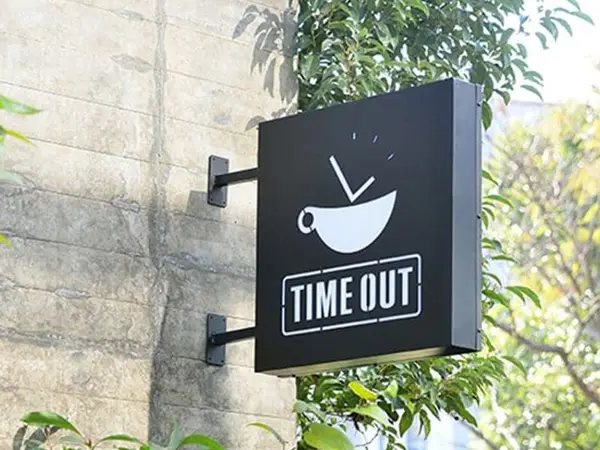
You think because you’ve done retail storefronts for a decade you can handle a museum job? I’ve watched guys walk into a gallery bid thinking they’ll just slap together some illuminated letters. Then the curator starts asking about LED color temps that won’t alter the oil painting next to the sign. Or the mounting height has to meet ADA but also look invisible. The ugly truth is: museum signage is less about the letters and more about control. Control of light. Control of reflection. Control of every damn detail so the visitor never notices the sign — they just follow it.
Here’s what nobody tells you: you can’t use domestic acrylic for a museum piece that’s supposed to last a decade. I’ve seen it yellow in 18 months. Mitsubishi or Degussa acrylic runs 90-92% light transmittance and holds its clarity 5-8 years. The cheap stuff gives you 1-2 years before it looks like a nicotine stain. For a gallery with track lighting overhead, that yellowing will be the first thing the donor sees. And they will call you.
If the sign sits indoors behind glass, 3mm acrylic is fine. But if it’s got any edge-lighting or backlighting, bump to 5mm for rigidity. A 2mm face cuts 90% light output; 3mm cuts 92%. Your customer won’t notice the 2% difference but they will bitch about the 40% cost bump. Don’t explain — just spec the right thickness.
Stainless steel? For a museum lobby sign, 304 brushed #4 is standard. 18% chromium, 8% nickel. Ten years outdoor life minimum. But if the museum is coastal — say anywhere within a mile of salt air — you need 316 with molybdenum. It costs 20-30% more. I’ve seen 304 pitting in three years on a Miami Beach cultural center. That’s not a warranty issue; that’s a spec failure.
Look, LEDs are not all the same. A museum director will spend six figures on a Rothko and then cheap out on the sign that tells people where the bathroom is. I get it — budgets. But SMD 2835 modules at 100-150 lm/W are the baseline for any illuminated letter in a gallery. If you use SMD 5730 chips (the bright ones at 40-60 lm/chip), you’ll get hotspots and a sign that screams “I’m lit” instead of gently guiding.
Quickest way to spot bad LED modules: look at the solder joints. Dull gray? That’s cheap lead-free solder that’ll fail in 18 months. Shiny silver means proper process. Samsung or Osram chips will give you L70 life of 50,000 hours — about 5-6 years running 12 hours a day. The knock-off modules from a no-name supplier? 12-18 months before half the letters flicker. I’ve seen this go wrong: a museum called me two years after install saying the “G” in “GALLERY” was out. I flew out, opened the letter, and found LEDs that looked like they’d been soldered with a wet noodle.
Most sign guys think “white is white.” Not in a museum. If your sign is warm white (3000-3500K) hanging next to a gallery wall lit with 4000K neutral, it’s going to look like a beer sign. For cultural institutions with neutral lighting, spec 4000-5000K LED modules. For a historic house museum with warm incandescent lighting, stick to 3000K. Get it wrong and the sign fights the environment. That’s the rookie mistake I see most often.
I’ve had architects hand me drawings with tactile letters mounted at 42 inches. Wrong. NEC Article 600 and ADA say tactile signs must be 48-60 inches from the floor to the baseline. Grade 2 Braille. Non-glare finish on the face — that means no polished acrylic or mirror-finished stainless anywhere near the lettering. You can do a brushed #4 stainless face or a matte acrylic with UV-stable ink. I’ve been on jobs where the GC made us rip off a $3000 sign because the braille dots were 0.01mm too shallow. Don’t be that guy. Buy a braille gauge. Use them.
The ugly truth is: you’re paying 300-500% markup if you buy fabricated letters from a US shop. I’ve watched sign shops pay $800 for a front-lit letter from a domestic fabricator. Same 304 stainless, same Samsung LEDs. We ship that letter from our factory in Lu’an for $120. And no, it’s not crap. We’re CE, RoHS, ISO 9001 certified. 3,000 square meters, 50+ guys who’ve been bending metal since 2010. MOQ is one piece. Lead time about 5-15 days. Two-year LED warranty.
But here’s the part nobody talks about: Section 301 tariff. You’re looking at roughly 30% on top of the factory price. Plus shipping. Express (7-10 days, $30-100 for small stuff). Air freight (about 10 days, $4-12/kg). Sea (about 65 days, $80-200 per cubic meter LCL). LCL means your crate gets handled 6-8 times between our dock and yours. Every touch is a chance for damage. That’s not in the brochure. So if you’re in a hurry, pay for air. If you’re patient and build in buffer, sea is fine.
I’ve seen this go wrong: a museum director ordered halo-lit letters from a Chinese factory he found on Alibaba. No CE cert, no audit. They arrived six weeks late with LEDs that ran hot and a power supply that hummed. He called me to fix it. I charged him double to replace the guts. You get what you audit. When we ship you, you get a 100% QC inspection video. If you want UL certification, that’s $4,000-15,000 and 4-9 months — and then quarterly audits. Most museums don’t need UL for interior signs; CE and IP65 is usually enough. But if it’s exterior or fire-rated, don’t skip it.
We run a 10-step process that doesn’t change. Design confirmation one day. Laser cutting with ±0.1mm accuracy — one to two days. TIG welding and bending another day or two. Grinding and polishing — that’s the step that separates a $20 letter from a $120 letter. Then acrylic face CNC (one day), LED assembly (one day), sealing with neutral silicone (one day). Every single sign goes through an 8-12 hour aging test before it’s packed. Foam, carton, plywood crate. Total: about 5-15 days, and that’s if the CAD is clean. Don’t send me a napkin sketch and expect it in five days.
No. Not unless you want me to skip the aging test and risk LEDs failing in a month. Seven days is the rush. Fifteen is normal. Plan better. If you’re in a genuine emergency, I can air freight a small order — but don’t expect me to cut corners on QC because you didn’t read the calendar.
Ask for the module data sheet. Look for the chip brand — Samsung, Osram, or a certified Chinese brand like Lan Jing. If it says “SMD 2835 high brightness” with no manufacturer listed, it’s garbage. Then ask for a photo of the solder joints before we seal the letter. Shiny silver = proper. Dull gray = run.
Probably because you’re looking at a rendering, not a photo of the actual finished piece. We send you a QC video showing every letter lit. If you approved that video, whatever comes out of the crate is on you. But also — lighting. Museum gallery lights will change how your sign looks. That’s not my problem. Spec the color temp right at the start.
IP65 means water jets from any direction. It does NOT mean your sign survives a Florida hurricane or a New York winter freeze-thaw cycle. For outdoor museum signage, spec IP66 at minimum — that handles powerful jets. For coastal or roof-mount, go IP68. And use 316 stainless, not 304. Otherwise you’re replacing letters in three years and the museum board will ask why you didn’t listen to the old guy who told you so.

Real photo from our production floor — every sign we ship is made here.
Products mentioned or relevant to this topic — factory-direct, custom built.
From $24/letter · MOQ 1 piece · Flexible lead time · CE & UL certified · ships to 20+ countries
Custom sizes, colors, and finishes. Get a factory price in 24 hours.
Get a Free Quote Copy EmailWhatsApp +86 13865703472 · business@aochuangsign.cn
See pricing, specs, and get a free quote for the sign type you need. Built in our factory, shipped worldwide.