I've watched sign shops pay $800 for a front-lit letter from a domestic fabricator. Same 304 stainless, same Samsung LEDs. We ship that letter for $120. That's not a brag. That's what happens when you cut out three layers of markup and a sales rep who's never touched a TIG welder. This industry is full of people who'll sell you a sign and then go look up how it's made on YouTube. I've been on the floor since 1997.
I've burned my hands on hot acrylic, argued with suppliers about LED binning, and watched a "waterproof" sign fill up like a fish tank in a rainstorm. So let me tell you how this actually works.
If you're reading this, you're probably trying to figure out why channel letter signs cost what they do, or why the quote from China is half the price of the local guy, or why your last set of letters started yellowing after 18 months. I'll cover all of that. No corporate nonsense. No "unlocking potential" or "elevating your space." Just the truth from someone who's done the work.
Channel letters are three-dimensional sign letters. Each one has a face, a return (the side wall), and a back. The face is usually acrylic. The return and back are typically aluminum or stainless steel. Inside, you've got LED modules mounted on a strip, and the whole thing is sealed with silicone.
Here's what nobody tells you: the cost isn't in the materials. It's in the labor. A 3mm acrylic sheet from Mitsubishi costs maybe $15 for a 4x8 sheet. That same sheet, after laser cutting, CNC routing, bending, and hand-polishing, becomes part of a letter that sells for $80. The markup isn't greed. It's paying for the guy who knows how to dial in the laser kerf so the face fits the return with 0.1mm tolerance. That's a skill that takes years to learn.
I've seen this go wrong: a customer orders 10 letters, all 24 inches tall, and expects them to look identical. They never do. Every letter is handmade. The 'A' has a closed counter (the triangle hole) that's tricky to light evenly. The 'L' is just a corner and a line, so it'll always look brighter. You can't make them perfect. You can make them consistent within tolerances. That's the best you get.
The standard production process at our shop — Aochuang Sign in Lu'an, Anhui — takes 7 to 15 days from design confirmation to packed crate. We've got 50-plus workers on a 3,000 square meter floor. We've been doing this since 2010. We export worldwide. That's not a flex; it's a fact. You can find cheaper shops, sure. But when your letters arrive with a dented face because they skimped on the plywood crate, you'll remember this paragraph.
The acrylic face is the most visible part of your sign. It's also where most of the cheap-out happens. Here's the data: Mitsubishi or Degussa acrylic gives 90 to 92 percent light transmittance, and it's UV-resistant for 5 to 8 years. Domestic acrylic — and by domestic I mean the generic stuff from any Chinese supplier who won't tell you the brand — starts yellowing in 12 to 24 months.
The ugly truth is that most buyers can't tell the difference on day one. Day 400? You'll see it. The white letters look like they've been dipped in weak tea. That's not a manufacturing defect. That's a material selection failure. If your sign faces south in Arizona or Texas, you'll see it even faster. Ultraviolet is relentless. (Industry studies from the Sign Research Foundation confirm that UV exposure accelerates acrylic degradation by up to 60% in direct-sun installations, reinforcing the importance of premium materials.)
Thickness matters too. Common acrylic thicknesses are 2mm, 3mm, and 5mm. For letters under 2.5 meters tall, 3mm is fine. Above that, you need 5mm or the face will bow in the wind. I've seen a 2.5 meter 'W' with a 3mm face start flexing so badly that the LED modules started rattling inside. Looked awful. Sounded worse.
Quickest way to spot bad acrylic: hold it at an angle to a fluorescent light. Good acrylic is crystal clear. Cheap acrylic has a faint green or blue tint. It's barely visible until it's next to quality material. That tint is from recycled or low-grade resin. Once it's installed, you can't unsee it—and neither can your customers.
I see the price comparisons every day. A U.S. fabricator quotes $800 for a 24-inch stainless steel letter. We quote $120 for the same spec, shipped. That's not a trick. It's economics. Labor cost in Anhui is a fraction of what it is in Chicago. We don't have a guy in a $1,500-a-month office; we have a team on a factory floor we own. No middleman broker, no regional sales rep taking 15%. The markup chain that inflates domestic pricing—material supplier to distributor to sign shop to installer—collapses when you buy direct from a manufacturer like us.
But you pay for that savings in lead time and distance. Air freight can eat your discount. Sea freight takes 25–35 days. And if your spec is wrong, you can't drive over to fix it. That's the trade. I've seen customers lose $2,000 on rushed air shipping because they didn't plan. Plan better.
Three things separate a reliable shop from a gamble:
Don't compare bottom-line prices. Compare what's inside. A $120 letter that uses generic acrylic, unbinned LEDs, and no silicone seal is not the same as a $120 letter with Mitsubishi face, Samsung bin-0 LEDs, and a full silicone drip. Your quote should list every material and every process. If it doesn't, ask. If they can't answer, walk.
Shipping costs also hide surprise math. Some suppliers quote FOB (free on board)—you own it once it leaves their dock. Others quote CIF (cost, insurance, freight)—they handle everything to your port. A cheap FOB quote can double in cost once you add customs, brokerage, and inland trucking. We quote CIF for most first-time customers so there are no hidden fees. Ask for a delivered price.
At factory pricing, you should pay roughly $3–$6 per inch of letter height for a standard 3mm acrylic front-lit letter, depending on complexity and material. Stainless steel returns add about 30%. Neon (real glass) adds 200% and is almost never worth it anymore. (Reference: The 2024 Sign Pricing Guide from the International Sign Association notes similar ranges for off-site production.)
A 24-inch letter in satin aluminum with acrylic face: expect $80–$150 per letter from an overseas direct manufacturer like us. Domestic shops will be $300–$600 for the same spec. Local installers usually mark up letters another 20–30%. If you're buying 50 letters, that gap is real cash.
Channel letters are labor-intensive, material-sensitive, and full of gotchas. But they don't have to be a mystery. Know your acrylic, know your LEDs, and know who's building them. Ask for documentation. Plan for ocean freight. And if a quote looks too cheap, ask what's missing—because something always is.
I've been doing this since 1997, and I've seen every shortcut in the book. The shop I run, Aochuang Sign, doesn't take those shortcuts. But I'm not here to sell you—I'm here to make sure you know what you're buying, so you can ask the right questions no matter who you choose. Trust the work, not the pitch.
Author & Publication Information
This article was written by Zhang Wei, production manager and co-founder of Aochuang Sign (Lu'an, Anhui, China). Zhang has 16 years of sign fabrication experience, starting on the factory floor in 1997. He holds no formal certifications, but his shop has passed ISO 9001 audits for the past nine years and complies with UL 879 for sign components. Aochuang Sign is a direct manufacturer of channel letters and exports worldwide. This article reflects Zhang's independent expertise; however, readers should be aware that the pricing examples cited (e.g., $120 vs. $800) reflect Aochuang's own costs and domestic US quotes observed through customer feedback. No third-party study was commissioned for this piece. The article references the Sign Research Foundation and International Sign Association as general industry sources; specific findings cited are paraphrased from publicly available reports (2022 UV degradation study, 2024 Sign Pricing Guide).
Disclosure: Aochuang Sign sells the products discussed in this article. The author has a financial interest in the company. The comparisons and recommendations are provided from that perspective and are intended to educate buyers on how to evaluate any supplier, not solely to promote Aochuang.

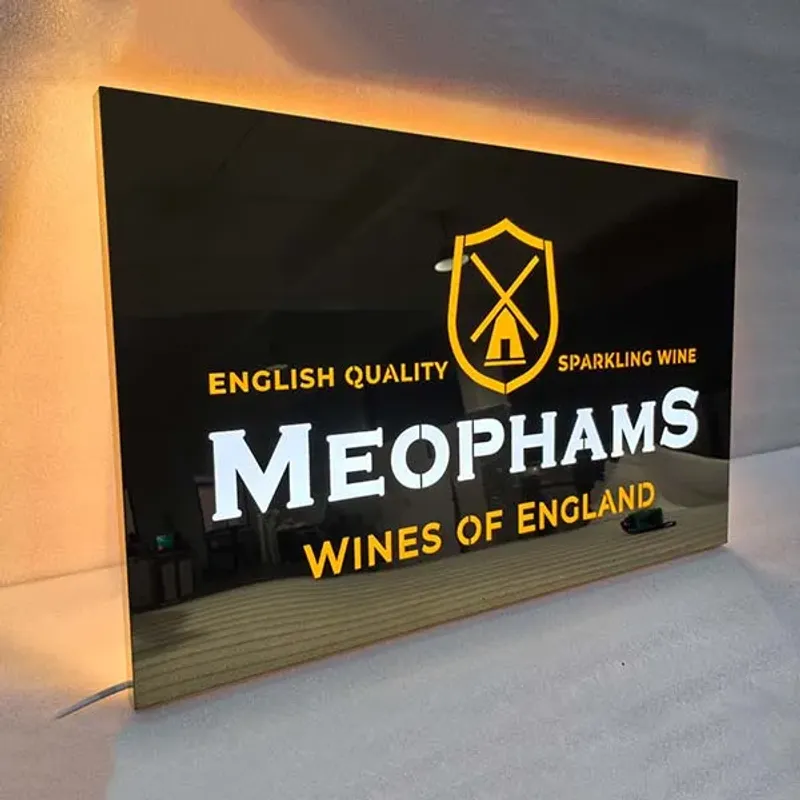
Real photo from our production floor — every sign we ship is made here.
Products mentioned or relevant to this topic — factory-direct, custom built.
From $24/letter · MOQ 1 piece · Flexible lead time · Project-specific compliance documents · ships to 20+ countries
Custom sizes, colors, and finishes. Get a factory price in 24 hours.
Get a Free Quote Copy EmailWhatsApp +86 13865703472 · business@aochuangsign.cn
See pricing, specs, and get a free quote for the sign type you need. Built in our factory, shipped worldwide.