I've been cutting, welding, and wiring signs on a factory floor in Lu'an, Anhui since 2010. So when a sign shop owner asks what OEM signage means, I know they're really asking: can I trust a factory I've never seen with work my name goes on?
Fair question. A lot rides on it.
Here's what nobody tells you: most of what you find online about OEM signage was written by people who've never touched a router or soldered an LED module. Let's fix that.
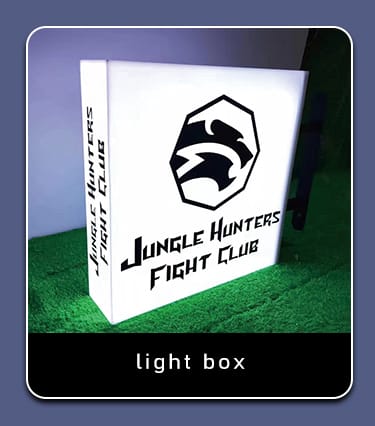
OEM means you spec it, I build it, your name goes on it. The sign carries your brand, not mine. Standard signage is off-the-shelf — pick a catalog, pick a size, pay the price. OEM is the opposite: you bring drawings, materials spec, lighting layout, and I build exactly what you designed for your client.
In my shop, OEM work means your logo goes on the crate, your drawings drive production, and your client's sign gets built to your tolerances, not mine. You own the design. I own the execution.
That distinction matters more than people think. Buying standard signage means buying whatever the factory decided to make. Buying OEM means buying a manufacturing partnership. And that partnership is only as good as the factory's QC, their honesty about certifications, and their willingness to build a one-off with the same care as a container load.
Don't forget the liability angle. When you sell OEM signage, you're selling under your name. Warranty claims land on your desk, not mine. So the factory you pick has to be someone you'd stake your reputation on — because you literally are.
The math is simple. Factory prices on front-lit channel letters run $20-80 per letter. US retail installed runs $200-700 per letter. That's not a discount, that's a different zip code.
I've watched sign shops pay $800 for a signature letter from a domestic fabricator. Same 304 stainless, same Samsung LEDs. We ship that same letter for $120.
You don't need a shipping quote to see that difference.
I remember a shop owner in Ohio who used to fabricate everything in-house. Two guys, one garage, constant bottlenecks. He started importing a year ago and took on a 40-store pharmacy roll-out that would've taken him six months to build himself. His overhead didn't grow an inch.
Second benefit: capacity. We run 3,000m² of production floor with 50+ skilled workers. No overhead. You can take a national contract without adding a single welder to payroll. Your shop looks twice the size it is, and your clients never see the time zone gymnastics happening behind the scenes.
Your material choices decide how long a sign lives and how long your warranty headaches last. Spend accordingly.
Acrylic faces are the industry workhorse. Premium UV-resistant acrylic from Mitsubishi or Degussa holds its clarity for 5-8 years. Domestic acrylic starts yellowing in 1-2 years. If you're ordering front-lit channel letters for a storefront, the upcharge for quality acrylic is the cheapest insurance you'll ever buy.
Metal is where I see the most expensive mistakes from first-time importers. Stainless 304 gives you 10+ years outdoors with the right finish — brushed #4, mirror #8, PVD, or powder coated — the way stainless steel letters should be done.
But if the job is anywhere near salt water, you need 316 marine grade. I've seen this go wrong: a shop owner saved 20-30% on 304 for a Miami Beach contract, and the letters were pitting within three years.
Aluminum's lighter — one-third the weight of steel, naturally rust-proof, 8-12 years outdoors, commonly supplied in 1.0-1.6mm sheets. For big fascia letters where weight's a structural problem, aluminum beats steel every time.
Lighting is where cheap manufacturing hides. SMD 2835 modules are the industry standard at 100-150 lm/W, and quality modules from Samsung, Osram, or Blueview run 5+ years. Cheap ones die in 12-18 months.
Quickest way to spot bad LED modules: look at the solder joints. Dull gray means it won't last 18 months. Shiny silver means proper lead-free solder.
For premium architectural jobs, back-lit halo letters run $35-120 per letter at factory prices. You're paying for that clean daylight halo effect, and your client's paying a premium for it. Don't underquote it.
Indoor work? Acrylic LED letters are versatile and cost-effective in storefronts and lobbies. Just pick the right color temperature: 3000-3500K for hospitality, 4000-5000K for corporate and retail, 6000-6500K for industrial. Get that wrong and the whole space feels off.
Most buyers think they email a drawing and boxes arrive. That's not how it works.
Our production cycle runs about 5-15 days from confirmed design to crated goods. Design confirmation takes one day — this is where we kill ambiguities before they become expensive mistakes. Laser cutting holds ±0.1mm over 1-2 days. Bending and TIG welding, 1-2 days. Grinding and polishing, another 1-2. CNC routing the acrylic face, one day. LED assembly, 1-2 days. Sealing with neutral silicone, one day.
Then an 8-12 hour aging test, where dead modules reveal themselves, followed by 100% QC inspection and export packaging: foam, carton, and a plywood crate.
Here's what nobody tells you: a prototype isn't a production run. Your sample got babied by our best fabricator. The production order is fifty pieces on a deadline. Ask any factory how QC differs between the two. Can't answer clearly? You're about to learn what "acceptable shrinkage" means.
When you send your design files, include the material spec, the LED type, and the IP requirement. The more your drawings lock down, the less room a factory has to quietly substitute cheaper parts.
Factory-direct pricing saves 50-65% on the product itself. But the product's only half the story.
Shipping comes in three tiers. Express: about 5-15 days, $30-100 for small packages. Air freight: about 10 days, $4-12 per kilogram. Sea freight: about 65 days, $80-200 per cubic meter for LCL, or $1,200-3,000 for a full container. Then the US Section 301 tariff adds roughly 30% on top.
LCL sea freight is where rookies get burned. Your crate gets handled 6-8 times between our dock and yours. Every touch is a chance for damage. Ordering more than half a container? Pay for FCL. Or fly it. Pick your poison.
Here's the ugly truth: the cheapest quote on your desk is the most expensive decision you'll make all year. A factory undercutting everyone by 40% is cutting corners somewhere — solder joints, acrylic grade, sealant quality. You'll find out where in month fourteen, right after your warranty expires.
Ask for itemized quotes that split materials, labor, and packaging. If a factory can't break down their own pricing, they don't know their own costs — and neither will you.
Certification is where this industry lies hardest.
UL 48 is the real standard for US electrical signs. Expect to pay $4,000-15,000 and wait 4-9 months, plus quarterly audits. ETL is a legitimate alternative at 10-30% cheaper. CE marking runs 20,000-50,000 RMB and takes 2-8 weeks. Most factories will say they have it. Ask to see the certificate with today's date. Watch them sweat.
Half the factories claiming UL compliance have never hosted an auditor in their lives. Check the UL directory directly — not the factory's website, the actual UL database. Ten minutes of checking saves you a year of recalls. If a factory's CE certificate is a photocopy from 2018, you're looking at marketing fiction.
IP ratings get misrepresented constantly. IP65 means dust-tight and protected against water jets from any direction. Sounds impressive — but it doesn't mean the sign survives a hurricane. Coastal installations need IP66 or IP68. Even then, nobody builds for flying debris in a Category 5.
Installing in the US means NEC Article 600 for electrical installations. Directional signage means ADA compliance — tactile signs at 48-60 inches mounting height, non-glare finish, Grade 2 Braille. Miss that and it's not a fine, it's a lawsuit.
Look, I could write a book on vetting factories, but here's the short version.
Verify certifications yourself. Check the UL online directory and the Intertek database. Ask for references from shops in your country — not your region, your country — and actually call them. Ask whether the factory ran the aging test or just printed a QC sticker. Ask what the last three returned orders were about.
Order a sample before you commit to a container. A real factory won't hesitate at a single-piece order. Our MOQ is one piece, and that one piece goes through the same 100% QC as a 500-piece run.
Ask about warranties. We give 2 years on LED modules and 1 year on power supplies. If a factory won't put their warranty in writing, walk away. A warranty isn't a cost — it's a statement of confidence.
If you can't visit the factory in person, demand a live video walkthrough of the floor. If they hide the production area, you already have your answer.
Sixty percent of the import failures I've seen trace back to buyers who skipped due diligence and chased the lowest quote. Don't be that guy.
What's the minimum order quantity for OEM signage?
One piece. We've shipped a single letter to a shop in Texas and a full storefront to Dubai. The real question is whether the factory treats that one-piece order like it matters. If they don't, they won't treat your 500-piece order right either.
How do I verify a factory's certifications are real?
Ask to see the actual certificate with an issue date that isn't eight years old. Then cross-reference the company name against the UL or Intertek database. If the names don't match exactly, it's fiction.
Do tariffs and shipping destroy the savings?
Run it yourself. A $120 letter with $30 freight and a 30% tariff lands around $186. The domestic quote is $600-800. The math still works — if you pick a factory that doesn't cut corners.
How fast can I get an OEM order?
Production takes about 5-15 days after design confirmation. Shipping adds 7-70 days depending on whether it flies or floats. If you need it by Friday, buy local and pay for the privilege.
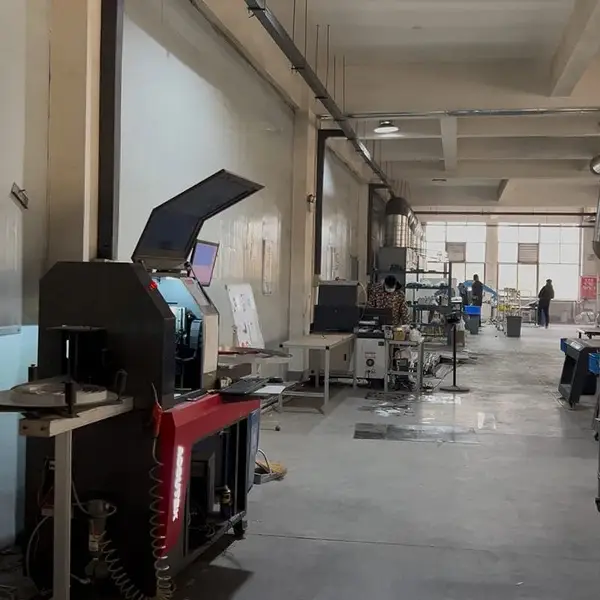
Real photo from our production floor — every sign we ship is made here.
Products mentioned or relevant to this topic — factory-direct, custom built.
From $24/letter · MOQ 1 piece · Flexible lead time · CE & UL certified · ships to 20+ countries
Custom sizes, colors, and finishes. Get a factory price in 24 hours.
Get a Free Quote Copy EmailWhatsApp +86 13865703472 · business@aochuangsign.cn