I've seen a $50,000 monument sign crack its concrete base within six months. Not because the sign was poorly built. The soil under the slab wasn't compacted to spec. A lesson I learned the hard way.
Here's the truth most guides ignore: your building's structural envelope dictates your sign choice more than any design preference. A sign that works perfectly on a brick storefront can fail catastrophically on a glass curtain wall. Thermal expansion alone can pop rivets on aluminum signs mounted to steel frames if you don't account for a 50°C temperature swing.
So let's cut through the noise. We're going to match sign types to building materials, climates, and codes. No fluff. Just factory-floor wisdom from 15 years in the trenches.
Every building surface behaves differently under load, temperature, and moisture. Here's how the main sign types stack up against common building materials.
Masonry is the workhorse. It can handle heavy signs. Monument signs, pylon signs, and large channel letter sets are ideal. But you need proper anchoring — wedge anchors or epoxy-set threaded rods into solid masonry, not just into mortar joints. A 100-lb channel letter set on brick needs at least four 3/8" anchors rated for 1,200 lbs each.
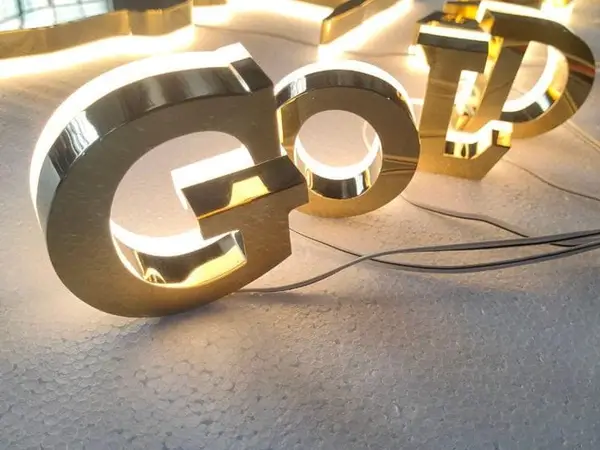
For brick storefronts with limited wall space, I recommend front-lit channel letters. They project only 2-4 inches off the wall, so they don't eat into valuable facade real estate. And they look sharp. A 12-inch tall front-lit letter in 3mm acrylic with SMD 2835 LEDs will run you around $40-80 per letter factory-direct. That's 50-65% less than US retail installed.
One catch: masonry is porous. Water infiltration behind the sign face is your enemy. Always use neutral silicone sealant and a weep hole system. I've seen signs rot from the inside out in two years because someone skipped that step.
Glass curtain walls are a different beast. They're designed for minimal weight. Heavy signs are out. You're looking at lightweight aluminum composites or acrylic-faced signs. Even then, thermal expansion is a killer. Aluminum expands roughly 0.012 inches per 10°C per meter. On a 3-meter sign, that's 0.036 inches of movement — enough to crack a glass panel if the sign is rigidly mounted.
The solution: use slotted mounting brackets that allow horizontal movement. And never mount directly through the glass. Use spider fittings or structural glazing channels that tie back to the building's steel frame behind the curtain wall.
For glass storefronts, projecting signs are a solid choice. They hang from the lintel or header above the door, avoiding the glass entirely. A 24"x24" projecting sign in stainless steel with halo-lit acrylic letters runs about $400-800 factory-direct. But check local codes — many municipalities limit projection to 4-6 feet from the building face.
Metal buildings — warehouses, factories, big-box retail — can handle almost any sign type. Pylon signs, wall signs, digital displays. The steel structure provides plenty of anchor points. But you need to account for the building's expansion joints. A pylon sign foundation should never tie into the building's slab directly if that slab has expansion joints. I've seen 20-foot tall pylon signs crack because the slab moved independently.
For warehouses, aluminum light boxes are cost-effective. At $80-250 per square meter factory-direct, they're hard to beat. Use 0.063" (1.6mm) aluminum with a powder-coated finish. That'll give you 8-12 years outdoors. Just make sure the LED modules are IP65 rated minimum — dust-tight and water jet resistant. Coastal areas need IP66 or even IP68 if you're near salt spray.
Stucco and EIFS are tricky. They look solid but they're brittle. A heavy sign can crack the finish, leading to water damage behind the wall. The fix: install a plywood or metal backing plate during construction. If you're retrofitting, use stand-off brackets that distribute the load across multiple anchors. Never bolt directly into stucco alone — you'll get stress cracks within a year.
For stucco, I recommend non-lit stainless steel letters. At $15-40 per letter factory-direct, they're affordable and elegant. Use 304 stainless (1.5mm thick) with a brushed #4 finish. That gives you 10+ years of life. For coastal areas, upgrade to 316 stainless — it's 20-30% more expensive but the molybdenum content (2-3%) resists salt corrosion.
Metal panels (e.g., aluminum composite, steel siding) are common on modern commercial buildings. They're lightweight and durable, but signs must be mounted with care to avoid panel distortion. Use stand-off brackets that distribute the load across multiple fasteners. Avoid welding directly to thin panels — it causes warping. For aluminum composite panels, use rivet nuts or threaded inserts. A 4x8-foot aluminum light box on metal panels costs $80-250 per square meter factory-direct, with installation adding $200-500 depending on height.
Wood buildings (e.g., rustic lodges, historic structures) require signs that complement the natural aesthetic. Carved wood signs or routed HDU (high-density urethane) signs are ideal. Mount with lag bolts into structural framing, not into siding alone. Wood expands and contracts with humidity, so use oversized pilot holes and stainless steel hardware. A 2x4-foot carved wood sign runs $300-800 factory-direct, with installation at $150-400. Seal all exposed wood with marine-grade varnish for 5-7 year lifespan.
EIFS is a lightweight cladding system with a foam core and synthetic finish. It's brittle and prone to water damage if punctured. Signs must be mounted through the EIFS into the structural wall behind. Use a backing plate (3/4" plywood or 1/8" steel) installed during construction. For retrofits, use stand-off brackets with at least four anchors per bracket, drilled through the EIFS into the sheathing. Seal every penetration with silicone and a weep system to drain moisture. Non-lit stainless steel letters ($15-40 per letter) or aluminum composite signs ($80-250 per square meter) work best. Avoid heavy signs over 50 lbs without structural reinforcement.
I've seen too many sign shops spec cheap materials to win a bid. Then the sign fails in 18 months. Here's the real data from our factory floor at Aochuang Sign in Lu'an, China — 3,000m² facility, 50+ workers, exporting worldwide since 2010.
| Material | Lifespan Outdoors | Best For | Cost Factor | Gotcha |
|---|---|---|---|---|
| Acrylic (Mitsubishi/Degussa) | 5-8 years | Front-lit channel letters, light boxes | Medium | Domestic acrylic yellows in 1-2 years. Always spec premium. |
| Acrylic (Domestic) | 1-2 years | Temporary or indoor use only | Low | Yellowing and cracking under UV. Avoid for outdoor. |
| Stainless 304 (1.5mm) | 10+ years | Non-lit letters, monument signs | Medium | Pitting in coastal areas if not maintained. |
| Stainless 316 (1.5mm) | 15+ years | Coastal, industrial, marine | High (20-30% premium over 304) | More expensive but worth it near salt water. |
| Aluminum (0.063" / 1.6mm) | 8-12 years | Light boxes, wall signs | Low-Medium | Thermal expansion must be accounted for. |
| SMD 2835 LEDs (Samsung/Osram) | 5+ years (L70 ≥50,000 hrs) | Channel letters, light boxes | Medium | Cheap LEDs fail in 12-18 months. Pay for quality. |
| Cheap LEDs (no-name) | 12-18 months | Nothing permanent | Very Low | False economy. You'll replace them in a year. |
| HDU (High-Density Urethane) | 8-12 years | Carved or dimensional signs | Medium | Must be sealed; UV degrades uncoated HDU. |
| Aluminum Composite (ACM) | 10-15 years | Light boxes, wall signs, glass curtain walls | Medium | Edge sealing critical to prevent delamination. |
Here's a hard-won rule: never use domestic acrylic on an outdoor sign. I don't care what the budget is. The UV stabilizers in cheap acrylic break down in 12-18 months. You'll get yellowing, cracking, and a pissed-off client. Spec Mitsubishi or Degussa acrylic with 90-92% light transmittance. It costs 20-30% more but lasts 5-8 years. That's the difference between a referral and a redo.
Same goes for LEDs. Quality SMD 2835 modules from Samsung or Osram cost about $0.30-0.50 per module. Cheap ones are $0.10. The cheap ones will fail in a year. You'll spend more on labor to replace them than you saved on parts. Our factory warranty is 2 years on LEDs and 1 year on power supplies — and we stand behind that because we use quality components.
The sign might be bulletproof. But if the mounting system fails, the sign falls. Here's how to avoid that.
Use 3/8" or 1/2" wedge anchors embedded at least 1.5 inches into solid masonry. For brick, drill into the brick body, not the mortar. Mortar joints are weak — they'll crumble under load. Space anchors every 18-24 inches for channel letters. For monument signs, the concrete footing must extend below the frost line. In northern climates, that's 4 feet deep minimum.
Never drill through glass. Use structural silicone or aluminum frames that attach to the building's steel or concrete structure behind the curtain wall. The sign should be independently supported, not relying on the glass for any load. For projecting signs, the bracket must be rated for 4x the sign's weight to account for wind load.
Weld or bolt directly to the steel frame. Use vibration-dampening grommets between the sign and the structure. Metal buildings flex in wind — a rigid mount will transfer that stress to the sign, causing fatigue cracks over time. I've seen this happen on 20-foot pylon signs after 3 years. The fix: use slotted bolt holes that allow 1/4" of movement.
Install a backing plate (3/4" plywood or 1/8" steel) before the stucco goes on. If retrofitting, use stand-off brackets with at least four anchors per bracket, drilled through the stucco into the structural sheathing. Seal every hole with silicone. Water intrusion behind stucco is a nightmare — it causes mold, rot, and delamination.
Use stand-off brackets with rubber gaskets to prevent metal-to-metal contact and corrosion. For aluminum composite panels, use rivet nuts or threaded inserts. Space brackets every 24 inches for light signs. For heavy signs, mount through the panel into structural steel behind. Seal all penetrations with silicone.
Use lag bolts into structural framing (studs or beams), not into siding. Pre-drill oversized holes to allow for wood expansion. Use stainless steel hardware to prevent rust. For carved wood signs, use a French cleat system for easy removal and reinstallation. Seal the back of the sign to prevent moisture wicking.
I've seen a $30,000 sign torn down because it was 6 inches too tall. The city inspector measured it from the sidewalk. The sign owner had no idea. That's a hard lesson.
Every municipality has different rules. But here are the common ones you'll encounter, backed by relevant codes and standards:
For US commercial work, NEC Article 600 governs electrical installation. And if you're importing from overseas, remember the Section 301 tariff adds about 30% to the cost. Factor that into your pricing.
Certifications matter. UL 48 for signs costs $4,000-15,000 and takes 4-9 months. ETL is a UL alternative that's 10-30% cheaper. CE certification runs 20,000-50,000 RMB (about $3,000-7,000) and takes 2-8 weeks. For outdoor signs, IP65 is the minimum. IP66 for coastal areas. IP68 if the sign could be submerged.
Let's talk real numbers. Factory-direct pricing from a shop like Aochuang Sign gives you a significant edge over US retail. Here's a comparison. Note: prices vary by region and volume; these are typical market ranges based on industry data from 2023-2024.
| Sign Type | Factory Price (per letter or sqm) | US Retail Installed | Savings | Best Building Type |
|---|---|---|---|---|
| Front-lit channel letters | $20-80/letter | $200-700/letter | 50-65% | Brick storefronts, metal buildings |
| Back-lit halo letters | $35-120/letter | $400-1,000/letter | 50-65% | Glass curtain walls, high-end retail |
| Stainless non-lit letters | $15-40/letter | $100-300/letter | 60-70% | Stucco, EIFS, historic districts |
| 3D fabricated letters | $40-120/letter | $300-800/letter | 55-65% | Monument signs, corporate campuses |
| Aluminum light boxes | $80-250/sqm | $500-1,500/sqm | 50-80% | Warehouses, big-box retail |
| Neon flex signs | $30-200/sign | $200-800/sign | 60-75% | Bars, restaurants, creative spaces |
| Carved wood signs | $300-800/sign | $1,000-3,000/sign | 60-70% | Wood buildings, rustic lodges |
| Aluminum composite signs | $80-250/sqm | $400-1,200/sqm | 50-80% | Metal panels, glass curtain walls |
But price isn't everything. The ROI depends on how long the sign lasts. A cheap $15/letter domestic acrylic sign might save you $5/letter upfront. But if it yellows in 18 months and you have to replace it, you've lost money. A Mitsubishi acrylic sign at $25/letter lasts 5-8 years. Do the math: $25 over 5 years is $5/year. $15 over 2 years is $7.50/year. The premium material is cheaper in the long run.
Same for LEDs. Quality modules at $0.40 each with a 2-year warranty vs. cheap ones at $0.10 with no warranty. The cheap ones will fail in 12-18 months. Labor to replace them: $50-100 per sign. You do the math.
Digital signage is tempting. But it's not always the right answer. Here's my rule of thumb: if the message changes weekly or more, go digital. If it's static for months or years, stick with traditional.
For multi-tenant office buildings, a combination works well. A monument sign with the building name in stainless steel, and a small digital inset for tenant listings. That gives you the permanence of traditional signage with the flexibility of digital. The digital inset can be a 32-inch LCD panel rated for outdoor use (IP65, high-brightness at 2,500 nits). Cost: around $2,000-4,000 for the panel plus installation.
For mixed-use properties, consider a pylon sign with multiple tenant panels. Each panel can be individually illuminated and swapped out as tenants change. Use aluminum frames with acrylic faces — easy to update, durable for 8-12 years.
Front-lit channel letters. They project only 2-4 inches off the wall, so they don't eat into your facade. Use 3mm Mitsubishi acrylic with SMD 2835 LEDs at 4000-5000K neutral white for maximum visibility. Mount with 3/8" wedge anchors into the brick body, not the mortar. Factory-direct: $20-80 per letter. US retail installed: $200-700 per letter. You save 50-65% by importing.
It depends on setback and visibility. Monument signs (6-8 feet tall) work best when the building is close to the road and you have a landscaped area for the base. Pylon signs (20-40 feet) are for buildings set back from the road or hidden by other structures. Pylon signs require a deeper foundation — typically a 3-4 foot deep concrete pier. Cost: monument signs run $2,000-8,000 installed; pylon signs run $5,000-20,000. Factor in local height limits — many cities cap monuments at 6 feet and pylons at 20-30 feet without a variance. Check IBC Section 3108 and local sign codes.
316 stainless steel for the structure — it contains 2-3% molybdenum, which resists
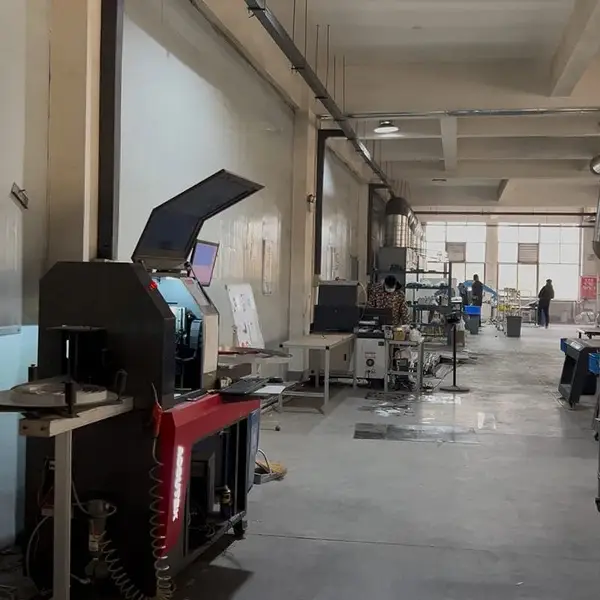
Real photo from our production floor — every sign we ship is made here.
Products mentioned or relevant to this topic — factory-direct, custom built.
From $24/letter · MOQ 1 piece · Flexible lead time · CE & UL certified · ships to 20+ countries
Custom sizes, colors, and finishes. Get a factory price in 24 hours.
Get a Free Quote Copy EmailWhatsApp +86 13865703472 · business@aochuangsign.cn
See pricing, specs, and get a free quote for the sign type you need. Built in our factory, shipped worldwide.