I've welded channel letters in a Lu'an factory while the QC guy argued with an LED supplier over solder joints. If you're sourcing from a sign company in China, you don't need another listicle. You need to know what actually happens on the floor.
So let's talk like we're both standing next to a TIG welder, not reading a press release.
Here's what nobody tells you: China doesn't just assemble signs—it makes the raw materials. The acrylic, the LED modules, the stainless steel sheet. When you buy a sign in Peoria, you're paying for Chinese components that already crossed an ocean once, got marked up by a distributor, then marked up again by a local fabricator.
Look, I've watched sign shops pay $800 for a front-lit letter from a domestic fabricator. Same 304 stainless, same Samsung LEDs. We ship that letter for $120.
Aochuang Sign in Lu'an, Anhui has been at this since 2010. 3,000 square meters, 50+ workers, CE, RoHS, ISO 9001. They laser cut to ±0.1mm, TIG weld, run 8-12 hour aging tests, and do 100% QC inspection on every order. That's not marketing fluff—that's the bare minimum if you want export buyers.
The math gets stupid fast. Factory prices for front-lit channel letters run $20-80 per letter. US retail installed: $200-700 per letter. Even after freight, tariff, and customs broker fees, you're still 50-65% below domestic product cost.
The ugly truth is most "manufacturers" on Alibaba are trading companies working out of a Shenzhen office with zero production floor. They take your deposit, call a real factory in Anhui or Guangzhou, add 20-30%, and disappear when quality goes sideways.
I've seen this go wrong: a buyer ordered 40 back-lit halo letters from a trading company that claimed "in-house production." The letters arrived with domestic acrylic that yellowed in 14 months. The "factory" stopped answering emails. The buyer ate $6,000.
How do you tell the difference? Demand a live video call from the production floor. Not a polished showroom. Ask them to pan the camera past the laser cutter, the welding stations, the aging racks. If they fumble, you're talking to a middleman.
Ask for the CE certificate with today's date. A real factory has it framed. A trading company will send you a 2019 PDF from a supplier they've never visited.
Aochuang's MOQ is 1 piece. That's a factory talking. A trading company with a 50-piece minimum is just aggregating small orders and skimming margin.
Quick way to spot bad LED modules: look at the solder joints. Dull gray means oxidized solder that won't last 18 months. Shiny silver means proper reflow solder that'll hit L70 at 50,000 hours.
SMD 2835 chips are the industry standard, 100-150 lm/W. Samsung, Osram, and Blueview modules run 5+ years real lifespan. Cheap no-name modules? 12-18 months, and your customer calls you in February with half a letter dark.
Acrylic is another lie factory. UV-resistant Mitsubishi or Degussa sheet holds 90-92% light transmittance and lasts 5-8 years outdoors. Domestic acrylic starts yellowing in 1-2 years. If your acrylic LED letters are going outdoors, don't let anyone sell you the cheap stuff.
Request the full QC report: 8-12 hour aging test, 100% inspection sign-off, and photos of the export packaging—foam, carton, plywood crate. If a factory won't send those before you pay the balance, walk away.
Stop comparing factory price to factory price. You need landed cost. FOB means the factory loads it at the port. CIF includes insurance and freight to your port. Then you pay a 30% Section 301 tariff, customs broker fees, and local delivery.
Let me break down a typical stainless steel letter. Factory price: $15-40 per letter for non-lit 304. Sea freight LCL adds $80-200 per cubic meter, but a crate of 20 letters runs about 0.3 cubic meters, so $24-60 total freight. Tariff 30% on declared value. Brokerage $75-150 flat. You're still nowhere near the $400-700 domestic installed rate.
316 stainless costs 20-30% more than 304. For a strip mall in Ohio, 304 is fine. For Miami Beach, pay for 316 or you're replacing letters in 3 years. Anyone who tells you 304 is fine for salt air is selling you a problem.
Express shipping takes about 5-15 days but costs $30-100 for a small box. Air cargo is $4-12/kg and lands in about 10 days. Sea freight is about 65 days, $80-200/m³ LCL or $1,200-3,000 for a full container. That's the trade-off: speed versus margin.
Here's the brutal honesty: a $40 front-lit letter from China isn't $40 by the time it's in your shop. After freight, tariff, and broker, you're at $60-75. Your competitor quotes the customer $350 installed. Don't be the guy who thinks factory price is your total cost.
Look, a real production line moves fast. Aochuang's 10-step process—design confirmation, laser cutting at ±0.1mm, TIG welding, grinding and polishing, acrylic CNC, LED assembly, neutral silicone sealing, 8-12 hour aging test, 100% QC, export packaging—runs about 5-15 days. Not weeks. Not "we'll see."
Your order doesn't sit in a queue behind 300 other jobs. With 50+ workers and 3000 square meters, one piece goes through the same line as 500 pieces. The bottleneck isn't production—it's your own approval speed.
Don't forget: total door-to-door time is production plus shipping. Sea freight adds about 65 days. Express adds about 5-15 days. If you need the sign installed in 3 weeks, you're paying express, not waiting for a container.
Can they scale? Yes, but don't expect a 500-letter order in the same about 5-15 days. 50+ workers means parallel lines, but laser cutting and welding time adds up. Plan 2-3 extra days per 100 large letters.
The ugly truth is most delays aren't the factory's fault. Buyers cause them by changing artwork after design confirmation or waiting 4 days to approve the proof. You're the bottleneck. Own it.
UL 48 certification costs $4,000-15,000 and takes 4-9 months, plus quarterly audits. ETL is a recognized alternative, 10-30% cheaper. CE marking runs 20,000-50,000 RMB and takes 2-8 weeks. RoHS is standard for LED modules. ISO 9001 is nice, but it doesn't guarantee product quality—it just means the processes are documented.
If a factory says they have UL, ask for the file number and check the UL database. Anyone can type "UL listed" on a quote. I've caught three trading companies in one month faking certificates.
IP65 means dust-tight and protected from water jets. It doesn't mean your sign survives a Florida hurricane. For coastal areas, demand IP66. For submersion, IP68. Most outdoor signs need IP65 minimum; anything less is a lawsuit waiting to happen.
Protecting your artwork in China? NNN agreements are mostly paper. Chinese courts enforce them sporadically, and chasing a factory through legal channels costs more than the order. The real protection: build a relationship with a factory that's been around since 2010 and won't torch their export reputation over your one design.
This is what I'd tell my own kid, if my kid was dumb enough to skip trade school.
Do all seven and you'll be fine. Skip one and you might still get lucky. Skip three? I'll see you in the "I got scammed by a Chinese supplier" Facebook group.
Is buying from a sign company in China risky?
Only if you skip vetting. The factories aren't the problem—your impatience is. Do the video call, check the certs, order a sample. The risk drops to near zero.
What's the minimum order quantity?
One piece. But shipping one piece express costs $30-100, so your "cheap" letter just got less cheap. Order at least 5-10 pieces to make sense.
How long will my sign take?
Production about 5-15 days. Shipping 7-70 days depending on express, air, or sea. If you need it next week, buy local and pay the markup.
Do I need UL certification for my sign?
If you're installing in the US, NEC Article 600 applies. Many jurisdictions require UL or ETL listing. Ask your local electrical inspector, not me. But if the factory can't provide it, find one that can.

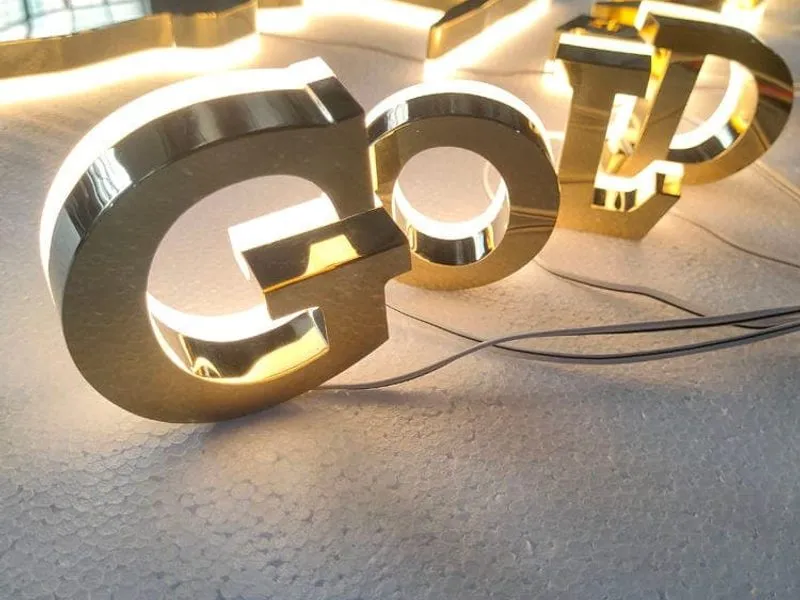
Real photo from our production floor — every sign we ship is made here.
Products mentioned or relevant to this topic — factory-direct, custom built.
From $24/letter · MOQ 1 piece · Flexible lead time · CE & UL certified · ships to 20+ countries
Custom sizes, colors, and finishes. Get a factory price in 24 hours.
Get a Free Quote Copy EmailWhatsApp +86 13865703472 · business@aochuangsign.cn