I've walked into forty factories in the last decade, and I can tell you within five minutes which ones are going to ship you garbage. Here's what nobody tells you: most importers skip the audit entirely and pray instead. That's not a strategy, that's gambling with your reputation.
This guide is the checklist I use when I audit a
sign factory. It's the same one I'd hand you if we sat down over a beer and you asked me how to not get burned. I run a factory in Lu'an, Anhui — Aochuang Sign — so I'm going to tell you both what to look for and where we stand. Because if I'm being honest, there are things we do great, and there are things where we're not the right fit. Any factory that tells you they're perfect at everything is lying to you.
Let's get into it.
---
1. Certifications: The Ugly Truth About "We Have CE"
The ugly truth is that CE marking costs 20,000 to 50,000 RMB and takes 2-8 weeks to obtain. I've seen factories print CE labels on a laserjet printer in the back office. It means nothing unless you see the certificate.
**What to ask for:**
- The actual certificate, with the issuing body's name and the factory's legal address
- The date of issue. If it's six years old and they've changed production lines since, it's stale
- UL 48 certification if you're shipping to the US. That's the big one — $4,000 to $15,000 and 4-9 months to get. Quarterly factory audits. Most Chinese factories don't have it, and I'll tell you straight: we don't either. It's not because we can't pass it, it's because our core markets haven't demanded it yet. If you need UL, I'll tell you upfront and you should go with a factory that has it
- ETL is a solid alternative to UL, typically 10-30% cheaper and faster
Here's what nobody tells you: for outdoor signs headed to the US, you also need to worry about NEC Article 600 compliance. That's your licensing, grounding, and disconnects. The factory won't certify that for you, but your sign needs to be built to accommodate it.
2. The Floor Walk: What a Real Production Facility Looks Like
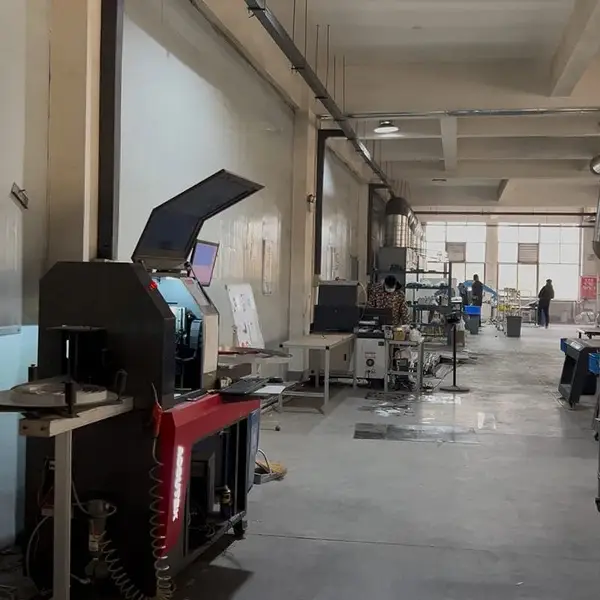
I've seen "factories" that are just an assembly room with screwdrivers. When you audit, walk the actual production floor. Not the showroom. The floor.
**Look for:**
- Laser cutting machines with ±0.1mm precision. If they're cutting with a jigsaw, walk out
- TIG welding stations for stainless steel. MIG is fine for some work, but TIG gives you the clean, smooth welds you need on visible faces
- A dedicated spray booth or powder coating line. If they outsource all their finishing, that's a quality control gap
- In-house acrylic CNC. Cheap acrylic from domestic suppliers yellows in 1-2 years. Mitsubishi or Degussa acrylic holds 90-92% light transmittance and resists UV for 5-8 years. If the factory uses cheap domestic acrylic to save money, your customer's sign is a yellow mess by year two
A proper factory has a flow. Design confirmation → laser cutting → bending/welding → grinding/polishing → acrylic CNC → LED assembly → sealing → aging test → QC → packaging. If that's not the order, they're cutting corners somewhere.
3. Materials: Stop Shopping on Price, Start Shopping on Specs
Here's what nobody tells you about stainless steel: those "
stainless steel letters" you're comparing prices on? Half of them are actually galvanized steel with a brushed sticker on it. Real 304 stainless has 18% chromium and 8% nickel. You can test it with a magnet — 304 is slightly magnetic after forming, but pure galvanized will behave differently.
**Material questions to ask:**
- What grade of stainless? 304 is your workhorse, good for 10+ years outdoors. 316 has 2-3% molybdenum added, costs 20-30% more, and is the only choice for coastal or industrial environments. For a strip mall in Ohio, 304 is fine. For Miami Beach, pay for 316
- What thickness? For stainless letters, 1.0-1.2mm is standard. If they're using 0.8mm to save money, your letters will dent on the truck ride over
- What LED modules? SMD 2835 is the industry standard, 100-150 lm/W. If they're using cheap modules, you're looking at 12-18 months of useful life. Quality modules from Samsung or Osram give you 5+ years. Our factory uses Lan Jing and Samsung — you can ask for the brand in your contract
- What's the aluminum thickness for your aluminum letters? 1.0-1.6mm is correct. 0.040" or thinner is tinfoil
4. LED Quality: The Difference Between a 1-Year and a 10-Year Sign
I've seen this go wrong more times than I can count: importer goes for the cheapest LED option to win a bid, and the sign is half dark within 18 months. That's not a manufacturing defect, it's a specification problem.
You need the L70 rating. That's the number of hours before the LED degrades to 70% of its original brightness. Industry standard for quality modules is L70 ≥ 50,000 hours. That's roughly 5.7 years if running 24/7, or 11+ years if running only at night.
**Color temperature is also critical:**
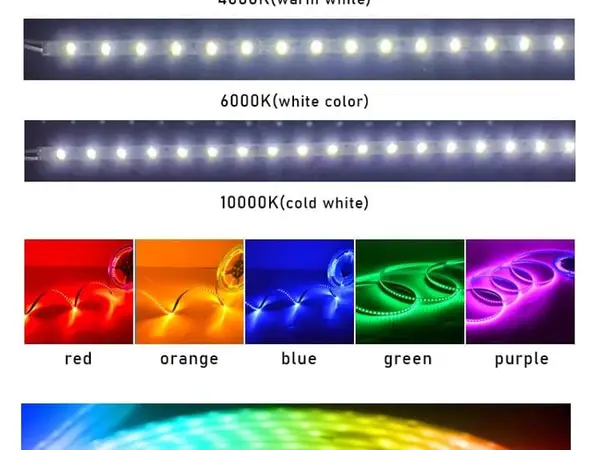
- 3000-3500K for hospitality. Warm, inviting
- 4000-5000K for corporate and retail. Clean, neutral
- 6000-6500K for industrial and highway signs. Harsh but visible
Don't let the factory pick the color temperature for you. Put it in the contract.
5. The 8-Hour Aging Test (And Why Most Factories Skip It)
The ugly truth is that many budget sign factories skip the aging test entirely. They assemble the LEDs, box them up, and ship. Your sign might work on arrival, but the solder joints are there to fail.
A proper factory runs every sign for 8-12 hours before shipping. It's a burn-in test. It catches faulty connections, weak solder joints, and failing power supplies before they become a recall problem at a customer's storefront.
Ask to see the aging test area. Are there racks of lit-up signs running? Or is it just empty promises?
6. Waterproofing: The IP65 Lie
IP65 sounds impressive. It means dust-tight and protected against water jets from any direction. It does NOT mean your sign survives a Florida hurricane or weeks of tropical downpour.
**Here's your waterproofing checklist:**
- IP65 is the minimum for outdoor. No exceptions
- IP66 for coastal areas with powerful water jets (cleaning crews with pressure washers)
- IP68 is submersible. That's for extreme weather zones or locations prone to flooding
- Ask what sealing compound they use. Neutral silicone is the industry standard. Acid-cure silicone corrodes electronics and eats through your LED wiring over time
Learn about
backlit halo letters and how they need extra waterproofing around the halo opening — that's where water gets in.
7. Quality Control: It's Not a Person, It's a System
I've been in factories where the "QC department" is one guy with a flashlight who also packs boxes. That's not quality control.
**What a real QC process looks like:**
- 100% inspection, not sample inspection. Every single sign tested before packaging
- Electrical testing: voltage, amperage draw, and brightness consistency
- Visual inspection under bright light: scratches, dents, misaligned letters
-
Light box uniformity test — you shouldn't see hotspots or dark patches
- Packaging inspection: foam + carton + plywood crate for international shipping
At our factory, QC is a separate department with a sign-off stamp. The production line can't clear a batch without QC's signature. That's non-negotiable, and you should ask your factory if they have the same rule.
---
8. Pricing: The 50-65% Factory vs. Retail Gap Explained
I've watched sign shops pay $800 for a front-lit letter. Same 304 stainless, same Samsung LEDs. We ship that letter for $120. That's the reality of the factory-direct model.
**Realistic factory price ranges (per letter):**
- Front-lit
channel letters: $20-80 depending on size and complexity
-
Backlit halo letters: $35-120
- Stainless steel non-lit: $15-40
- 3D fabricated letters: $40-120
- Aluminum letters: $10-25
-
Acrylic light boxes: $80-250 per square meter
US retail installed price for front-lit channel letters runs $200-700 per letter. Halo-lit runs $400-1,000. That's why the import model works — even after freight and tariffs, you're saving 50-65% on the product itself.
9. Import Costs That Will Drown You If You're Not Careful
Here's what nobody tells you: the ex-works price is the least important number in your quote. Freight, tariffs, and customs brokerage can add 30-60% on top.
**Shipping breakdown:**
- Express: 7-10 days, $30-100 for small packages
- Air freight: about 10 days, $4-12 per kg
- Sea freight: about 65 days, $80-200 per cubic meter (LCL) or $1,200-3,000 for a full container
**The Section 301 tariff on Chinese signs is roughly 30%.** That's separate from the general duty rate. If your factory doesn't tell you about it, that's an industry red flag — they should know their export markets.
As an honest note: if your order fits in a container, sea freight is your friend. If it's three letters, pay for air. Don't be the guy who pays $200 freight on a $50 sign.
10. Commercial Terms: MOQ, Lead Time, and Payment
Any factory quoting you 30 days for MOQ 100 pieces is stringing you along. At our factory, we run about 5-15 days standard production, even for single-piece orders. Some factories have 3-4 week lead times because they don't have in-house production — they're waiting on outsourced parts to arrive.
**Commercial terms to check:**
- Lead time in writing: about 5-15 days is realistic for most custom work. If they say 3 days, they're cutting corners
- MOQ: A factory that demands MOQ 100 for channel letters is a mass-production facility, not a custom shop
- Payment terms: Standard is 30-50% deposit, balance before shipment. If they demand 100% upfront, walk away
- Warranty: 2 years LED, 1 year power supply is our standard. We also cover defective units with replacement parts or new units depending on the issue. Get it in writing
---
What We CAN and CAN'T Do at Aochuang Sign
Since you've read this far, I'll give you the honest breakdown of what happens when you work with us.
**We can:**
- Build custom
front-lit channel letters down to a single piece, with a 7-15 day lead time
- Give you CE and RoHS certified products, with test reports you can verify
- Use quality materials: Mitsubishi/Degussa acrylic, 304/316 stainless, Samsung or Lan Jing LEDs
- Package for international shipping. We've shipped worldwide, so we know how to keep your signs intact
- Communicate in English. No middlemen, no translators, no "lost in translation" mistakes
- Run an 8-12 hour aging test on every sign before it goes in the crate
**We can't:**
- Produce UL 48 certified signs. We haven't gone through that certification process yet
- Match the price of factories using domestic acrylic and unbranded LEDs. If you want the cheapest possible sign, we're not the factory for you — and that's fine
- Guarantee lead times for massive orders (100+ complex letters) without discussing the timeline first
- Take responsibility for local permits, electrical codes, or installation in your country. That's your job, and anyone who says differently is selling you trouble
The Final Word
The factory audit doesn't stop when you get a certificate in your inbox. It's a process — you verify, you ask the awkward questions, you test with a small order before committing to a container.
I've seen sign shop owners burn $10,000 on bad production because they were afraid to ask tough questions. Don't be one of them. Save this checklist, use it, and if the factory can't answer your questions directly, that's your answer.
And if you're comparing us, ask us the same questions. I'll give you the same answers I wrote here. That's not marketing — that's just doing business the way it should be done.