Most sign warranties aren't worth the paper they're printed on.
I've been in this industry since 1998, and I've watched factories promise 5-year "bumper-to-bumper" coverage on LED channel letters that cost $35 apiece. That math doesn't work. The LED modules alone, if they're decent Samsung 2835 chips, have a real-world lifespan of maybe 5 years under perfect conditions. A factory selling at razor-thin margins can't afford to replace your sign twice. They're banking on you never filing a claim—or they'll stall until you give up.
The warranty document is a psychological comfort blanket, not a contract of mutual trust.
Look, I've seen this go wrong: a contractor installed 50 front-lit channel letters on a building in Chicago. First winter, three letters went dark. He contacted the factory. They asked for photos of the input voltage at the time of failure. He couldn't provide them. They asked for proof the letters were installed with a surge protector. He hadn't used one. Warranty denied. The factory wasn't necessarily wrong—poor power quality kills LEDs faster than anything—but the contractor assumed "warranty" meant "we fix anything." It doesn't.
Here's what nobody tells you: the vast majority of sign warranty claims are rejected because of installation errors, not manufacturing defects.
That's not an excuse; it's just reality. When you're comparison shopping for signage, you're not just buying aluminum and acrylic. You're buying a promise that the factory will stand behind their work if something goes wrong. And that promise is only as solid as the fine print—and the factory's ability to stay in business long enough to honor it. I'll lay out exactly what to look for, what to avoid, and where our 16 years on the factory floor has taught us to draw the line between our responsibility and yours.
Every sign shop owner has read "100,000-hour lifespan" on an LED spec sheet. Bullshit.
That number comes from LM-80 testing, which extrapolates data from 6,000 hours of operation under controlled laboratory conditions. It’s a theoretical L70 number—the point where light output drops to 70% of original. But real-world heat, voltage fluctuations, and moisture cut that number in half or worse. Our quality SMD 2835 modules using Samsung or Osram chips average L70 at 50,000 hours, which is about 5.7 years of continuous 24/7 operation. That’s honest. Yet we’ve seen cheap modules from unvetted suppliers hit L70 in 12 to 18 months.
The ugly truth is that no LED warranty covers lumen depreciation unless the LEDs completely go dark. So if your sign looks dim and patchy after two years but still glows, you’re out of luck.
I’ve watched factories advertise a "10-year warranty" on LEDs, knowing full well they’ll be bankrupt or rebranded by the time those modules start failing. A warranty is only as good as the factory’s longevity. We’ve been exporting worldwide since 2010, with a 3,000m² facility and 50+ skilled workers. Not massive, but we’re not a fly-by-night operation that disappears after a container shipment.
When you’re looking at a signage warranty, ignore the "LED lifespan" marketing. Focus on the actual covered period for the LEDs and power supply, and ask if that coverage includes labor—because it usually doesn’t. Our warranty is straightforward: 2 years on LEDs, 1 year on power supplies. That covers manufacturing defects. No pro-rata, no bullshit. If an LED module fails due to a soldering flaw or a bad diode, we replace the module set. But we don’t cover if you power the sign with a poor-quality generator or the circuit lacks proper grounding.
Power supplies are the heart of any illuminated sign, and they fail more often than LEDs.
Here's what nobody tells you: a Mean Well or Delta power supply, properly sized and housed in a ventilated enclosure, can last 8 to 10 years. But sign builders often spec the cheapest 12V brick they can find, then cram it into a sealed aluminum channel letter with zero airflow. Heat kills capacitors. After one Texas summer, that power supply is toast. The factory's 1-year warranty on the power supply seems short, but it's actually generous when you consider that most failures happen within the first six months due to infant mortality.
We run every sign through an 8- to 12-hour aging test before it leaves our floor. We cycle the power, monitor current draw, and catch 95% of early power supply failures. That’s why our warranty period works—because we’ve already eliminated the junk before it ships. If your sign arrives dead, it’s covered. If it fails after 18 months because you plugged it into an unregulated line without a surge protector, that’s on you. I’m not being harsh; I’m being honest.
When comparing warranties, ask what brand of power supply the factory uses and if they’ll provide a data sheet. Ours are labeled, and we can supply a Mean Well LRS series as a paid upgrade for customers who want a 3-year manufacturer warranty directly from Mean Well. That’s another way to get real coverage without relying on the sign factory alone.
One rookie mistake I’ve seen repeatedly: using an undersized power supply because it’s cheaper. A 60W unit running at 90% load will die fast. We always spec at least 20% headroom. If a warranty claim comes in and we find the power supply was overloaded—sorry, that’s on the installer. Read the electrical label.
IP65 sounds impressive. It means the enclosure is dust-tight and protected against water jets from any direction.
But IP65 doesn't mean your sign can handle a Florida hurricane, salt spray, or direct sun all day. Those are different problems. At Aochuang, our standard outdoor signs are built to IP65 minimum. For coastal installations, we strongly recommend stainless steel 316—its 2-3% molybdenum gives it 15+ years of marine-grade corrosion resistance—and we upgrade the sealing to IP66 with silicone gaskets that can take powerful jets. The warranty still only covers defects, not storm damage, but the construction can handle the environment. For premium architectural looks that survive salty air, consider our back-lit halo letters in 316 stainless.
I've seen this go wrong: a sign shop installed a set of halo-lit letters on a beachfront hotel in Miami using 304 stainless. Beautiful at first. Six months later, pitting corrosion ate through the brushed finish because the owner didn't specify 316 marine-grade. The factory's warranty didn't cover environmental corrosion. The sign shop ate the replacement cost.
The warranty fine print almost always excludes "acts of God," corrosion, and damage from airborne chemicals. So when you’re spec’ing an outdoor sign, don’t just look at the warranty length—look at the materials. A front-lit channel letter in aluminum with a proper powder coat and a breathable drain hole will outlast a sealed stainless letter that traps moisture. We drill weep holes on all outdoor letters by default. That’s not in the warranty, but it’s a practical detail that prevents 90% of water damage claims.
Also, never let an installer seal the letter with acid-cure silicone. It releases acetic acid that corrodes LED legs and solder joints within months. Neutral-cure silicone is mandatory. If a warranty inspector finds acid-cure residue, the claim is dead. Write that in your install specs.
You’ll see factories touting CE, RoHS, ISO 9001, maybe UL.
CE and RoHS are safety and materials compliance marks, not longevity guarantees. ISO 9001 means the factory has a quality management system—it lowers defect rates, which matters, but it doesn’t tell you how long the LEDs will last. A true UL or ETL listing involves quarterly audits and component traceability, and it can cost $4,000 to $15,000 with a 4-9 month lead time. Most Chinese sign factories don’t have it unless they regularly ship to the U.S. market and have a specific client demand. We’ve pursued ETL for certain product lines where required, but we’re upfront: our standard letters carry CE and ISO 9001, and we can provide component-level certifications for LEDs and power supplies.
The ugly truth is that some factories print a CE mark without ever paying the 20,000-50,000 RMB for actual testing. Ask to see a certificate with today’s date and a matching test report number. If they hesitate, walk away.
Real warranty support often comes from the quality management system, not a sticker. Our 10-step production process includes a 100% QC inspection before packaging, where we check LED color temperature consistency (±200K), water tightness, and mechanical alignment. That catches defects that would otherwise become a warranty claim down the road.
Here’s exactly what our warranty covers at Aochuang Sign, and what it doesn’t.
We warranty the LED modules for 2 years and the power supply for 1 year from the date of shipment against manufacturing defects. A manufacturing defect means a joint that wasn’t soldered properly, a cracked acrylic face that happened before packaging (documented with pre-shipment photos we send you), or LEDs that fail to illuminate entirely due to a flaw in our assembly. We’ll replace the defective parts at our cost and ship them via your next consolidated order or courier at our expense for small items. That’s it.
We don’t cover: damage during installation, incorrect voltage input, use of non-recommended dimmers or controls, water ingress caused by mounting the sign upside down without proper drainage, vandalism, natural disasters, or normal weathering and fading. The acrylic face has a UV warranty in the sense that Mitsubishi-grade acrylic won’t yellow for 5-8 years outdoors, but if you choose domestic acrylic, it may yellow in 1-2 years—and that’s a specification choice, not a defect. We tell you upfront.
Look, I’ve been burned—literally—by warranty promises that disappeared faster than a fly on a hot acrylic sheet. After 16 years on the shop floor, I’d rather under-promise and over-deliver. That’s why our customers trust us with repeat orders for front-lit channel letters and stainless steel letters. They know exactly what they’re getting.
Before you place an order, do these things.
First, ask the factory for a photo of an actual warranty claim they’ve processed. Not a template document—a real email chain showing they shipped replacement parts. A reputable factory will blur the customer’s name but show you the process. We’ve got dozens.
Second, order a single sample sign—MOQ is 1 piece for us, so it’s easy. Inspect it, hook it up, leave it running for a week. If there’s an infant mortality issue, it’ll show up. A factory that won’t sell you a sample isn’t serious about supporting their product.
Third, ask what the process is for a claim. With us, you send a short video of the problem and a photo of the wiring. We diagnose remotely and, if it’s a defect, we ship replacements immediately without requiring return of the original (for modules). The ugly truth is that many factories demand you ship the entire sign back to China at your expense, then they’ll “evaluate” for weeks. That’s a denial strategy.
A signage warranty is not insurance. It’s a signal of the factory’s confidence in their own craftsmanship.
Look for a warranty that’s short, specific, and from a company that’s been around long enough to have skin in the game. Avoid lifetime promises and 10-year coverage on LEDs unless you’re dealing with a billion-dollar corporation that self-insures. For most sign shops, 2-year LED and 1-year power supply is fair and realistic. We back it with real testing, honest material specs, and a production process that catches defects before they leave.
When you’re ready to order signs that come with a no-nonsense warranty, talk to us about front-lit channel letters or stainless steel letters that hold up outdoors. We’ll tell you what we can and can’t do, then we’ll deliver exactly what we promised. No surprises.

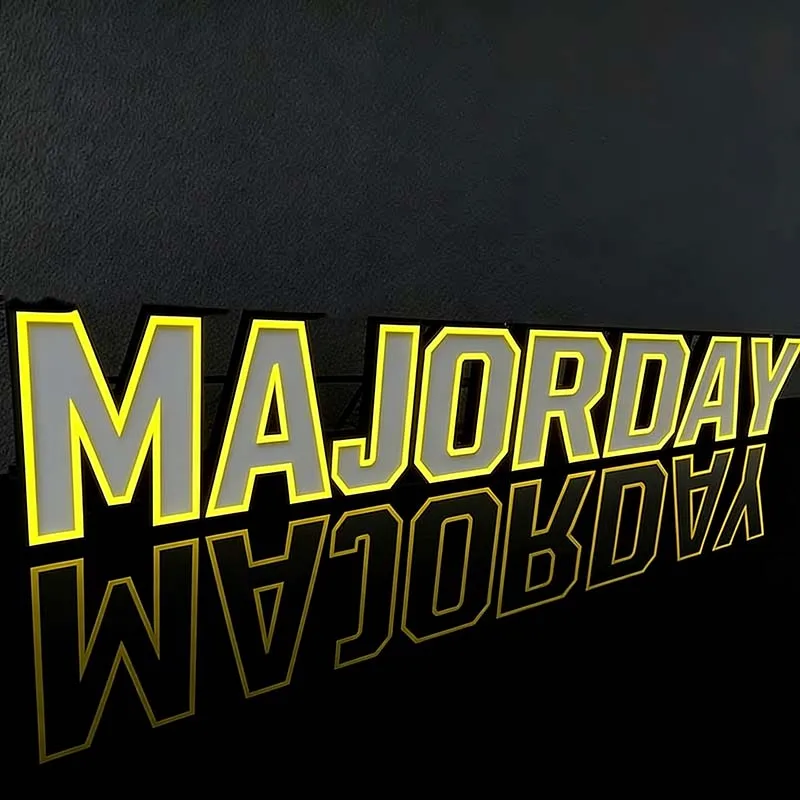
Real photo from our production floor — every sign we ship is made here.
From $24/letter · MOQ 1 piece · Flexible lead time · CE & UL certified · ships to 20+ countries
Custom sizes, colors, and finishes. Get a factory price in 24 hours.
Get a Free Quote Copy EmailWhatsApp +86 13865703472 · business@aochuangsign.cn
See pricing, specs, and get a free quote for the sign type you need. Built in our factory, shipped worldwide.