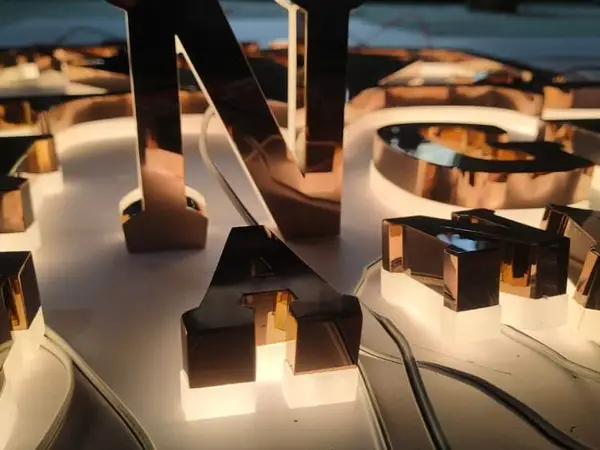
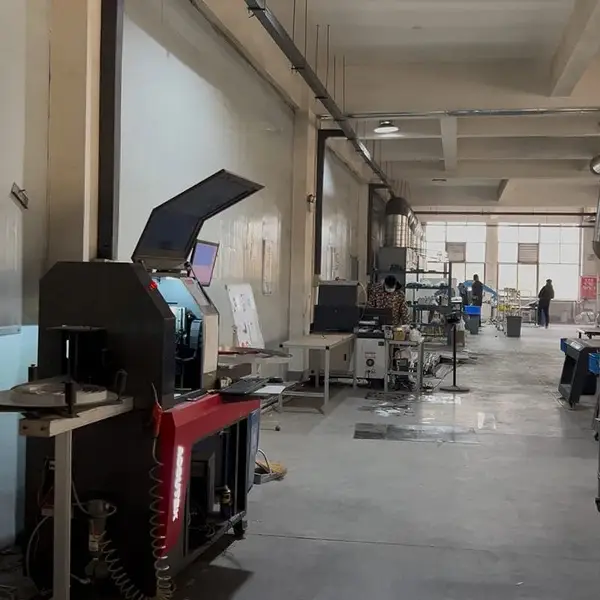
Look, I've been building signs since before your website had a template. And in 16 years, I've learned one thing: a warranty is just a piece of paper until you actually need it.
Here's what nobody tells you: most "5-year warranties" from
sign factories are marketing fluff. They'll cover the LED module burning out — if you can prove you installed it right, didn't power it wrong, and didn't wire it to a cheap Chinese power supply that surges at 3AM.
The ugly truth is that real coverage comes down to three things: who's backing it, what exactly they're covering, and whether they'll still be in business when you call.
I've watched sign shops pay $800 for a front-lit letter. Same 304 stainless, same Samsung LEDs. We ship that letter for $120. But price means nothing if the damn thing dies in 8 months and nobody answers the phone.
So let's talk about what "real coverage" actually means when you're ordering from a factory — not from a local installer who's reselling you something they bought off Alibaba.
The 3 Questions You Must Ask Before You Order
Before we get into materials and LEDs, you need to understand the questions that separate the people who got burned from the people who got a working sign.
**1. Who is actually issuing the warranty?** If you're buying through a middleman, the warranty is only as good as the middleman's ability to get the factory to fix it. If you're buying factory-direct, ask to speak to the QC manager. Not the salesperson. The salesperson will promise you the moon. The QC manager will tell you what their aging test actually shows.
**2. What is specifically covered?** A real sign warranty covers manufacturing defects: failed LEDs, cracked acrylic, faulty wiring inside the letter, corrosion from poor sealing. It does NOT cover: shipping damage, improper installation, electrical surges after you've connected it, or your client backing a truck into the sign. I'm shocked at how many buyers don't understand this.
**3. What does it cost to enforce the warranty?** This is the big one nobody thinks about. If a letter fails from a 50-letter sign, the factory will replace it. But who pays the freight? Who pays for a technician to remove and reinstall it? A $120 replacement letter is cheap. A $2,000 service call to swap it out on a 40-foot building is not. That's the real cost of a warranty.
LEDs: The Heart of Every Warranty Claim
LEDs are where 90% of warranty claims happen. So listen up, because this is where the factories cut corners.
The industry standard is the SMD 2835, pumping out 100-150 lumens per watt. Quality modules using Samsung or Osram chips have a real lifespan of 5+ years. The cheap stuff? Twelve to eighteen months. Then they start flickering like a horror movie.
Why the difference? It's not the chip. It's the thermal management and the power supply. An LED module that runs too hot will burn out regardless of the brand. Cheap modules don't have proper heat sinks. Quality modules do.
Here's a question that will expose a factory fast: "What's your L70 rating?" If they can't answer immediately, find another supplier. L70 ≥50,000 hours means the LED will still be at 70% of its original brightness after 50,000 hours. That's the baseline for a quality product.
I've seen this go wrong: a contractor bought 200 LED modules for a
channel letter job at half the price of our quote. They were SMD 2835s, same size, same color temp. But they used cheap drivers and thin copper traces inside. By month nine, forty of them were dead. The factory blamed the contractor's wiring, the contractor blamed the factory, and the sign shop got stuck with the repair bill.
Here's our honest stance: we warranty our LED modules for 2 years. Our
LED modules use Samsung or Osram chips. We run an 8-12 hour aging test on every single letter before it ships — because we'd rather find the failure now than fly a tech out to fix it later.
Materials: What the Warranty Covers (and What It Can't)
The material is the skeleton of your sign. And the warranty terms on materials are where you'll find the fine print traps.
**Acrylic: The Transmittance Lie**
Acrylic transmittance matters more than most buyers understand. Good acrylic from Mitsubishi or Degussa hits 90-92% light transmittance and stays UV-resistant for 5-8 years. Domestic acrylic? It'll start yellowing in 1-2 years.
If a factory tells you their acrylic won't yellow for 5 years, check the spec sheet. If they can't name their acrylic supplier, run. The warranty should list the acrylic thickness as well. Common sizes are 2mm, 3mm, and 5mm. Anything over 2.5 meters should use 5mm or thicker — otherwise, the face will warp, the LED hotspots will become visible, and you'll hear about it.
**304 Stainless: The Rust Contradiction**
Stainless steel sign letters are all 304 grade. That's a solid material: 18% chromium, 8% nickel, designed for a 10+ year outdoor life. But here's the dirty secret: stainless steel RUSTS if the fabrication process damages the surface grain.
If a factory grinds down the welds too aggressively and doesn't re-passivate the surface, you'll get rust spots in six months. The warranty should cover manufacturing defects in the finish — not normal weathering. Look for the finish spec: a brushed #4 finish for most outdoor applications, or a mirror #8 if you want to be fancy.
For coastal or industrial environments, step up to 316 stainless. That's marine grade because it has 2-3% molybdenum added to stop chloride corrosion. It costs 20-30% more than 304. But for Miami Beach or anywhere near salt air, pay for 316. You'll thank me in year five when the sign still looks brand new.
**Aluminum: Lightweight but Needs the Right Coat**
A good aluminum sign should last 8-12 years outdoors. It's naturally rust-proof, and at 1.0-1.6mm thickness, it's about a third of the weight of steel. That saves on shipping. The finish — powder coated or anodized — is where the warranty matters. Cheap powder coating chips. Quality powder coating carries a 5-year fade and chalk resistance warranty.
What Your Warranty Should Cover: The Fine Print
Now let's get specific. When you're comparing warranties from factories, here's what the real coverage tiers look like.
A basic factory warranty (which most offer, including us) covers:
- **Defective LED modules** — failed emitter, dead diode, color shift beyond 500K color temperature.
- **Failed power transformers** — we cover those for 1 year, because power supplies are the most fragile link in the chain.
- **Workmanship failures** — cracked welds, delaminated faces, poor sealing (all covered under our 2-year LED / 1-year power supply warranty).
- **Consistent color temperature** — your neon flex should match color. If you order 6000K from us, we make sure it's not 5500K on one side and 6500K on the other.
What NO factory warranty covers:
- **Shipping damage** — if it arrives cracked, that's a freight claim. Period. We pack with foam + carton + plywood crate, but if a fork truck slams a pallet 15 feet into the dock, that's not our issue.
- **Improper installation** — underpowered wiring, installing letters on a surface that traps water, over-tightening screws in acrylic causing stress cracks.
- **Power surges** — we've all seen a $300 Chinese power supply fry a letter after an electrical storm. Use the right transformer.
- **Condensation damage** — a letter with a poor seam will breathe moisture. That's why we require drain holes and proper venting. If your installer seals it completely airtight, you've made a humidity trap.
- **Color degradation** — LEDs naturally dim over time. So if you expect a luminous flux test to pass in year five, you're going to be disappointed.
Certifications: The Real Cost of Trust
You want a warranty that means something? Look at the certifications.
**UL 48** is the American standard for electric signs. It costs $4,000-15,000 to get a product certified, plus quarterly factory audits. That's why most Chinese factories DONT have it. They'll show you a UL certificate for their LED module, not for the complete sign assembly.
If you're selling to the US market, you need NEC Article 600 compliance anyway. If the factory doesn't have UL or ETL certification for the complete sign, you're taking a liability risk that no warranty can cover.
**CE marking** is cheaper — 20,000-50,000 RMB, done in 2-8 weeks. But every factory claims it. Ask to see the certificate with today's date. Most of them expired years ago.
For outdoor signs, make sure you get **IP65** minimum, which is dust-tight and water jet resistant. IP65 sounds impressive. It means water jets from any direction. It does NOT mean your sign survives a Florida hurricane. That's an engineering question.
Our Factory: What We Can and Can't Guarantee
Alright, enough about the industry. Let me tell you exactly what we can and can't do — because our warranty is only as honest as our production process.
We're Aochuang Sign, in Lu'an, Anhui. We've been doing this since 2010. We've got a 3,000m² production facility and 50+ skilled workers pushing out signs worldwide. And I'll tell you the same thing I'd tell a buyer who walked into my workshop: we can't guarantee a sign will survive being installed wrong.
**What we CAN guarantee:**
1. **Your order arrives on time.** Lead time is about 5-15 days. That starts when you approve the design proof. Not when you pay the deposit. We build in the 10-step process — laser cutting to ±0.1mm, TIG welding, grinding, acrylic CNC, LED assembly, silicone sealing, aging test, QC inspection, export packaging.
2. **It works when it arrives.** That's not empty talk. That's the 8-12 hour aging test we run before boxing your
front-lit channel letters. We've seen too many lights die after customers install them. We'd rather find the bad ones here in Guangzhou than have you call us at 2AM because a letter went dark.
3. **Materials match the spec.** We say 3mm acrylic, you get 3mm acrylic. We say 304 stainless, we hand you a mill certificate. This is the heart of what a warranty means — it's the factory betting on its own quality control.
4. **We stand behind what we build.** We know the cost to honor a warranty is a fraction of the cost of a bad reputation. A $40 replacement letter is cheaper than a lost customer who never orders again.
**What we CAN'T guarantee:**
1. **Your installer doesn't mix up the wiring.** We've seen it happen a dozen times. If a sign fails at 10 months due to reverse polarity, that's not a manufacturing defect. It's a "you didn't read the diagram" defect.
2. **The customer doesn't change their use case.** We build a
stainless steel letter that's rated for outdoor use. If they want to submerge it in a saltwater aquarium, that's out of our spec.
3. **Color matching across batches.** We can hit a 500K color tolerance within a single run. Across multiple batches, or if you order 6 months later, we'll try our best, but LED binning variance exists. Any factory that promises otherwise is lying.
The Shipping and Tariff Math That Kills Profit
Here's where most importers get a rude awakening. The sign might be $120 per letter, but shipping and tariffs add up fast.
Express shipping (7-10 days) runs $30-100 for small packages. Air freight (about 10 days) runs $4-12 per kilogram. Sea freight (about 65 days) runs $80-200 per cubic meter for LCL — less than a full container.
And don't forget the US Section 301 tariffs. Those add about 30% on top of your landed cost. Some importers forget this until the broker bill arrives.
The factory-direct savings of 50-65% on the product can easily get wiped out by poor freight planning. A good factory will help you consolidate a partial container. A bad one will tell you to order a full FCL (at $1,200-3,000) just to make their life easier.
The Rookie Mistakes I See Every Single Week
Brutal honesty time. Here are the two rookie mistakes that will void warranties faster than a bad wiring job.
**Mistake #1: Assuming "IP65" means "waterproof."** It means water jets from any direction. It's the minimum spec for outdoor use. It does NOT mean the sign survives a hurricane, a high-pressure wash from your cleaning crew, or a stray bullet from the gun range across the street. Buy for your environment — IP66 if it's coastal, IP68 if it's submersible.
**Mistake #2: Buying on price without asking about the power supply.** The LED modules are only half the story. A cheap transformer will kill quality LED modules in weeks. We use quality power supplies on our
back-lit halo letters and get a 5-year real lifespan out of them. Want to see the difference? Open up a $30 power supply and a $60 one. The $60 one has proper heat dissipation. The $30 one has components pretending to be components.
How to Actually Compare Warranty Offers
Stop comparing price per letter. Stop comparing fancy PDF brochures. Here's what I'd do if I were buying from a factory today:
1. **Ask for a sample.** A real factory will send you a single letter for a small fee. Pay it. Put it through your own tests. Run it for 72 hours straight. Measure the color temp. Hit it with a pressure washer. See if the seam holds.
2. **Call the factory on a Saturday.** If a real human answers, that's a good sign. If it goes to voicemail, ask yourself what happens when a sign fails at 7PM on a Saturday before a grand opening.
3. **Read the warranty clause like a lawyer.** Get the specific language: "Manufacturer will replace any component that fails due to defects in materials or workmanship within 24 months of the shipping date." If it says "business days" or "reasonable time," press for specifics.
4. **Calculate the enforceability cost.** If a $40 letter fails, is it worth your time to raise a claim? The real value is a factory that pre-tests everything so you never have to make the claim.
5. **Ask for photos of your actual sign being boxed.** At 3,000m² with 50+ workers, we have the time to send you a "before the crate closes" photo. Any factory that says they're too busy for that doesn't have enough QC.
The Bottom Line
Here's the honest truth about signage warranties: they're not a transferable risk. The factory's warranty is only as valuable as their QC process before they ship.
My favorite customers are the demanding ones. The ones who ask to see the LED datasheet. Who check the acrylic brand on the face. Who request the
rimless channel letters instead of just the cheap set. Because those are the customers who will be signing my purchase order again next year.
You want a warranty that means something? Find a factory with 20 million reasons to keep their name clean. That's not us being humble — that's us being honest about why a 10-year-old factory with 21 export markets doesn't take shortcuts. We've built a reputation that's worth hundreds of thousands of dollars. We're not going to torch it over a $120 letter.
A quality sign isn't about the warranty you get. It's about whether you need to use it in the first place.
If you have specific specs on your door sign project, send them over. If you want to
dual-lit channel letters visible day and night, we'll build them with dual LED circuits. And if you want to know whether 304 or 316 is right for your climate, ask. That's what we're here for.
Just don't ask us to break a discount for 10,000 letters with a warranty that lasts a decade. We both know that's not real.